
Landscape Study with a Ravine — History & Facts
Could a single brushstroke hold eternity? In Landscape Study with a Ravine, the quiet beauty of nature becomes a vessel for deeper revelations, inviting viewers to reflect on the passage of time as it is captured in paint. Look to the center of the canvas, where the ravine carves a path through the landscape, both formidable and inviting. The artist employs a rich palette of greens and browns, allowing the interplay of light and shadow to reveal the texture of the earth. The brushwork is delicate yet assertive — each stroke contributes to a sense of movement, as if the landscape itself breathes.
The sky above, awash in soft blues and whites, hints at the transient nature of clouds, creating a harmonious dialogue between earth and air. Beneath the surface lies an exploration of solitude and connection. The ravine, while isolating, also symbolizes the journeys we undertake, both physically and emotionally. The contrasting light and dark areas evoke a tension between hope and uncertainty, suggesting that beauty often resides in the depths of our struggles.
This duality speaks to the human experience, making the viewer ponder their own relationship with the landscape and their inner thoughts. August Cappelen created this landscape in 1850, during a time of personal and artistic exploration in Norway. As a prominent figure in the Romantic movement, he sought to combine realism with emotional expression, reflecting the emerging appreciation for nature in his work. The mid-19th century was marked by a growing interest in landscape painting, as artists turned to the natural world not merely for its beauty but as a source of inspiration and introspection.
More Artworks by August Cappelen
Browse all →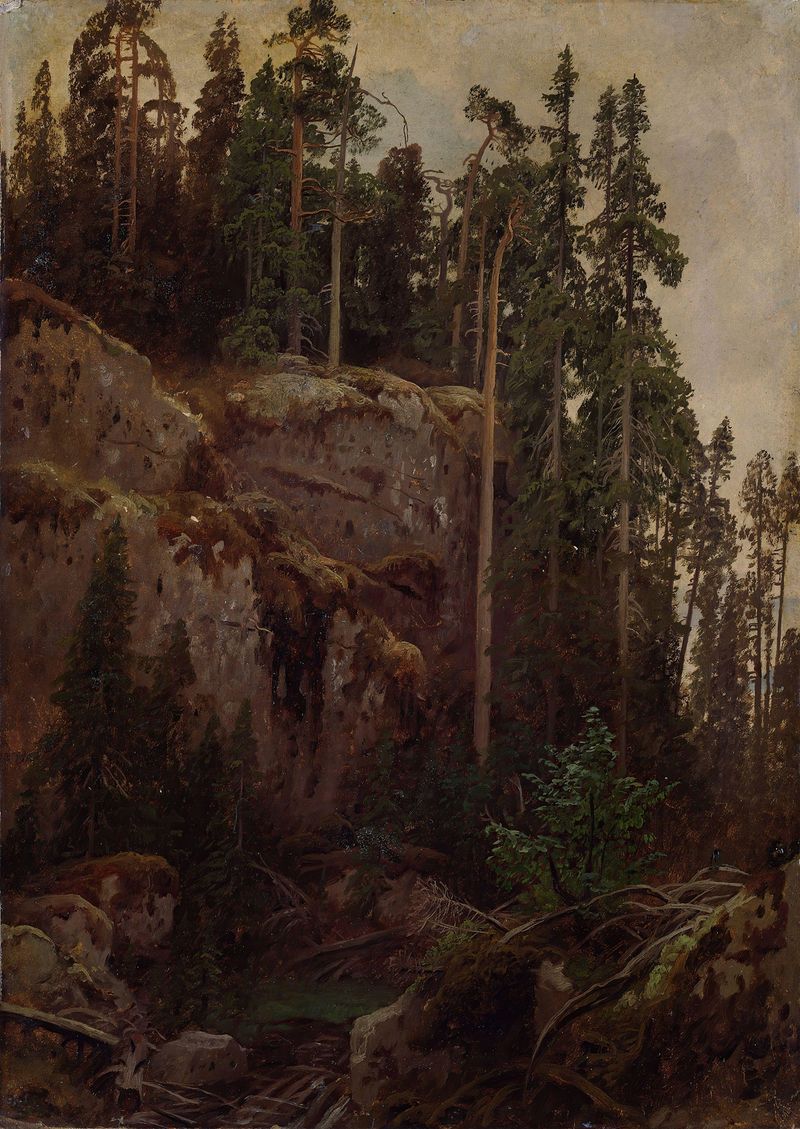
Landscape Study with a Precipice
August Cappelen
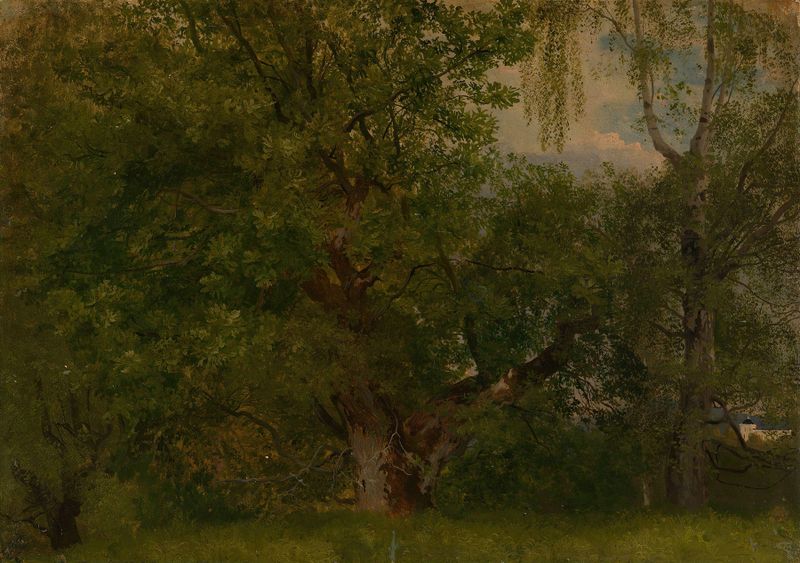
Wood near Ulefoss
August Cappelen

Forest Study
August Cappelen
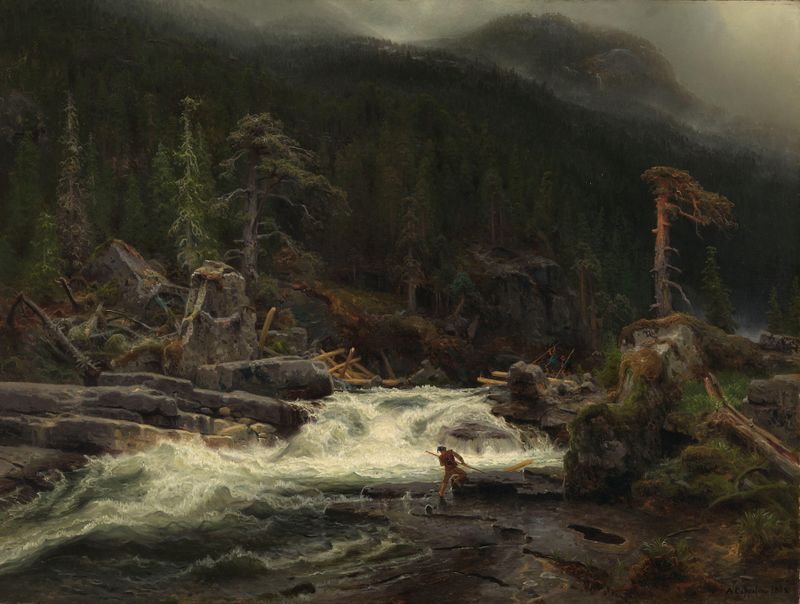
Waterfall in Telemark
August Cappelen
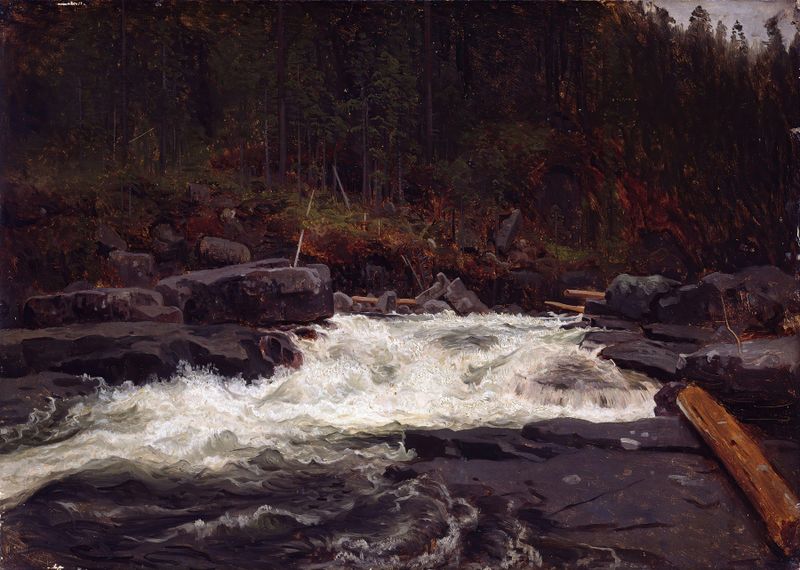
Waterfall in Telemark, Study for Inv.No. 427
August Cappelen
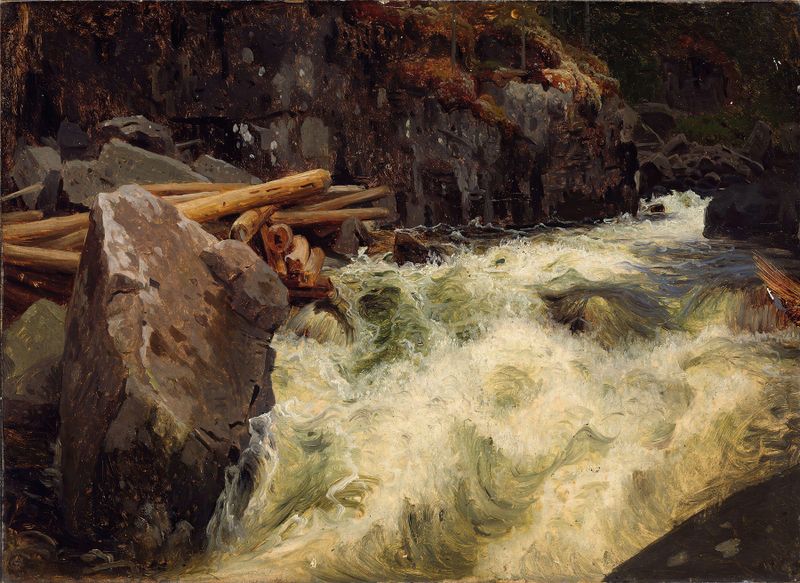
Study of a Waterfall
August Cappelen
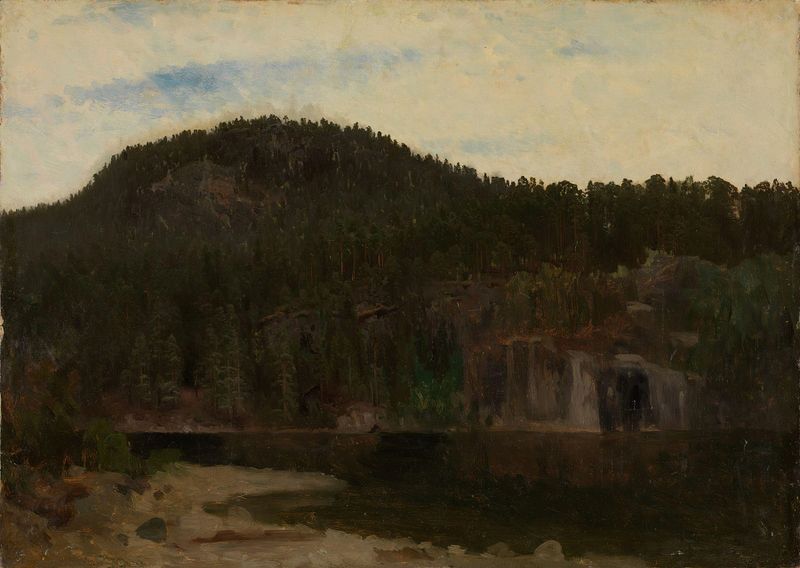
Landscape Study with a Lake
August Cappelen

Study of a Wood
August Cappelen

Study of a Rock
August Cappelen
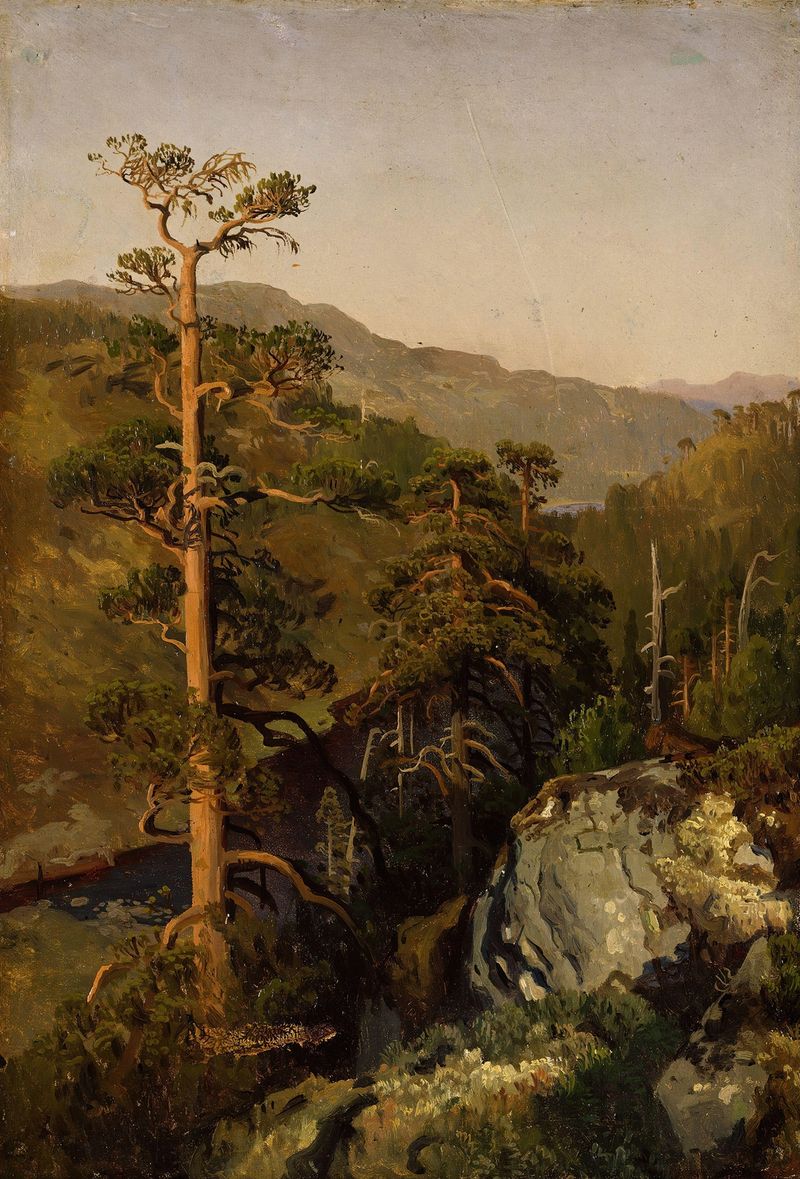
Rocky Landscape with Pinetrees
August Cappelen





