
Landscape Study with a Precipice — History & Facts
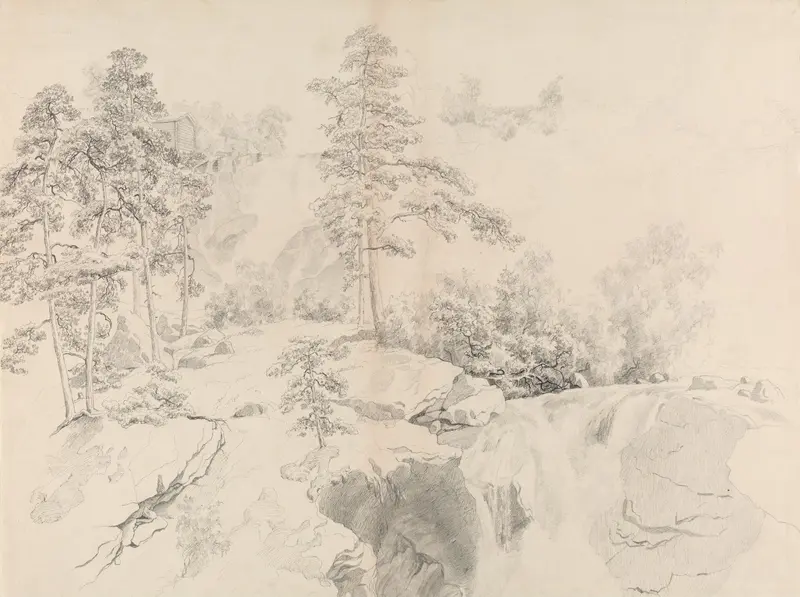
Look to the foreground, where rugged cliffs rise sharply against a backdrop of rolling hills and a tumultuous sky. The artist uses a palette of muted greens and browns, punctuated by stark whites and greys, to create a sense of foreboding. Notice how the light cascades over the precipice, illuminating the jagged edges, which seem to beckon yet warn.
The texture of the brushstrokes adds depth, conveying the raw, untamed energy of this landscape, drawing viewers into its embrace. The contrast between the vibrant sky and the dark, imposing cliffs evokes a struggle between serenity and chaos. Here, in this dramatic interplay, one can sense the weight of history—the beauty of the landscape tempered by its inherent dangers. The precipice signifies not just a physical edge, but a metaphorical boundary between the familiar and the unknown, suggesting that legacies are often forged in the balance of beauty and peril. In 1850, August Cappelen painted this piece amidst a burgeoning Romantic movement in Norway, where artists sought to express the sublime power of nature as a reflection of human emotion.
During this period, Cappelen was navigating his own artistic identity, contributing to a rich dialogue about the relationship between landscape and the human experience. This work exemplifies his dedication to capturing both the magnificence and the menace of the world around him.
Sources: Wikidata Q55412619
More Artworks by August Cappelen

Decaying forest
August Cappelen
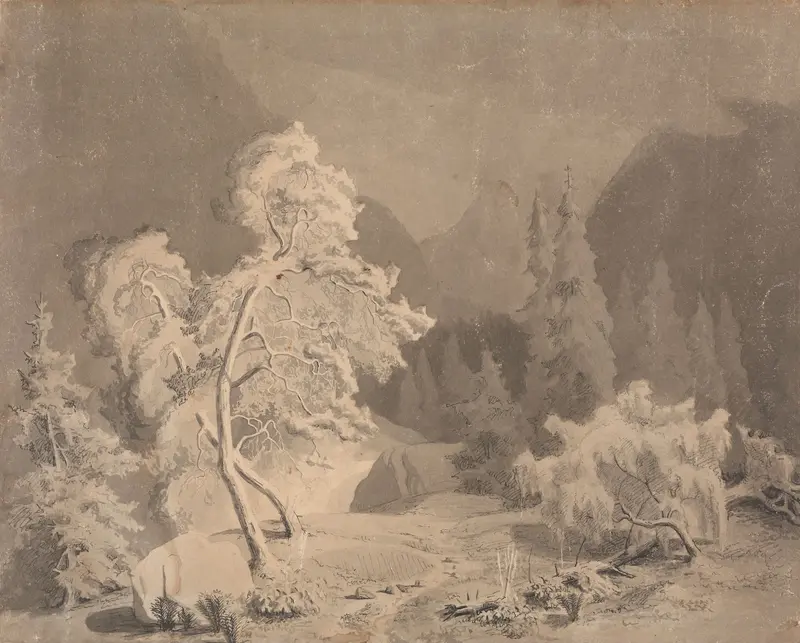
Forest Landscape
August Cappelen
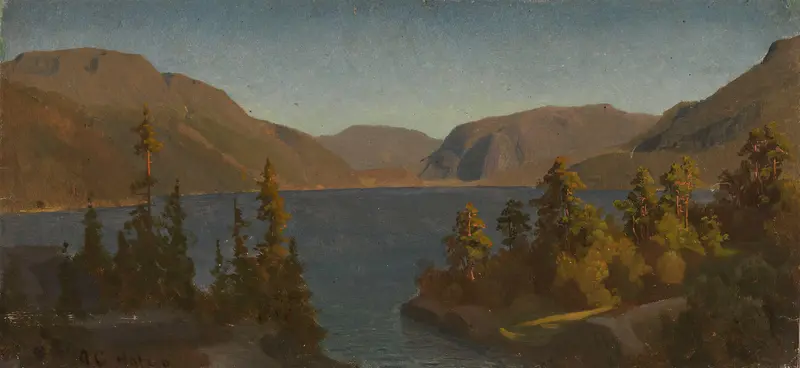
Lake in Telemark
August Cappelen
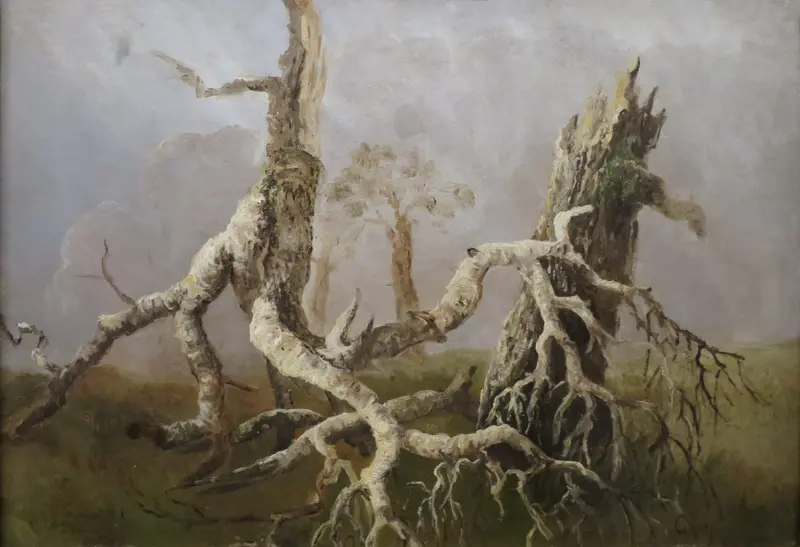
Dying Trees
August Cappelen
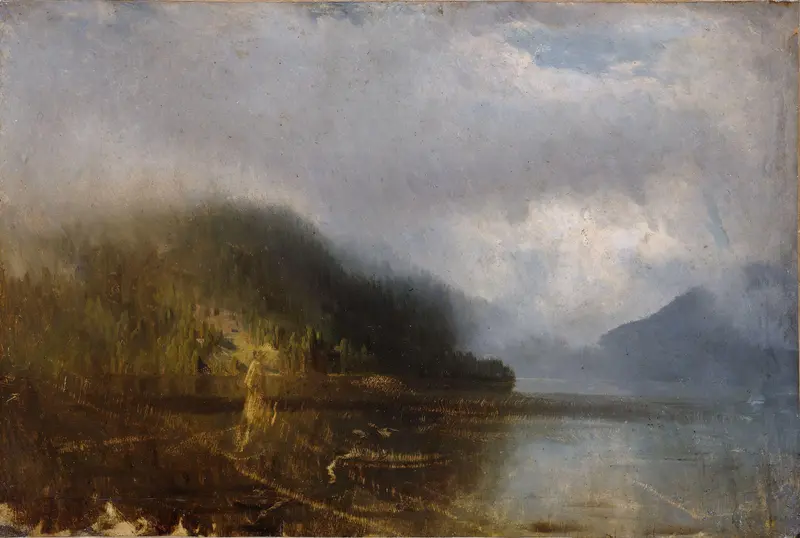
Lake in Fog
August Cappelen
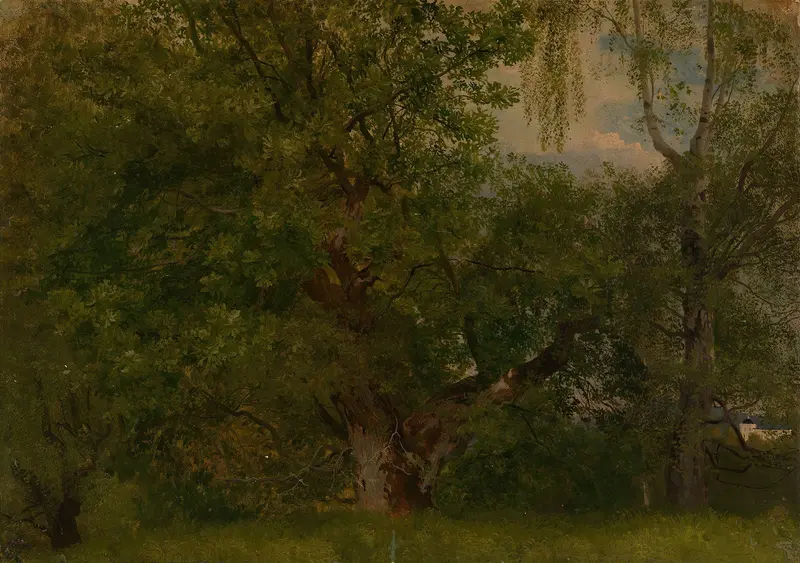
Wood near Ulefoss
August Cappelen
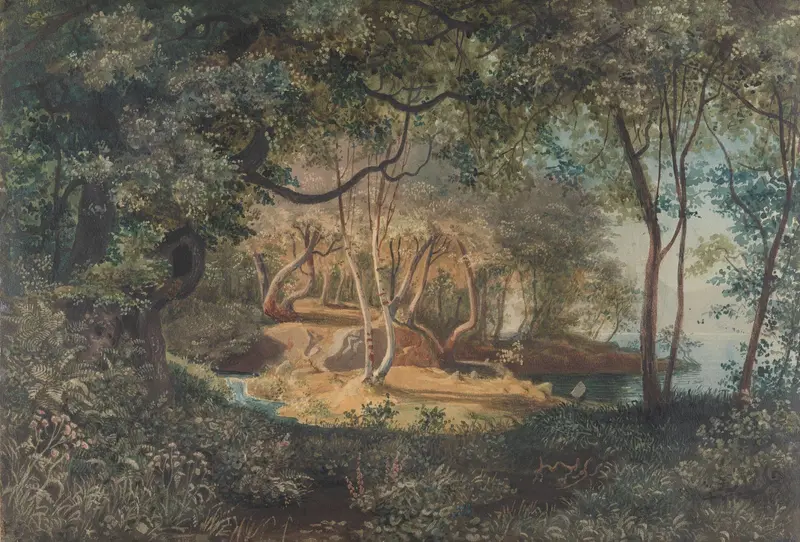
Woodland by the Fjord
August Cappelen
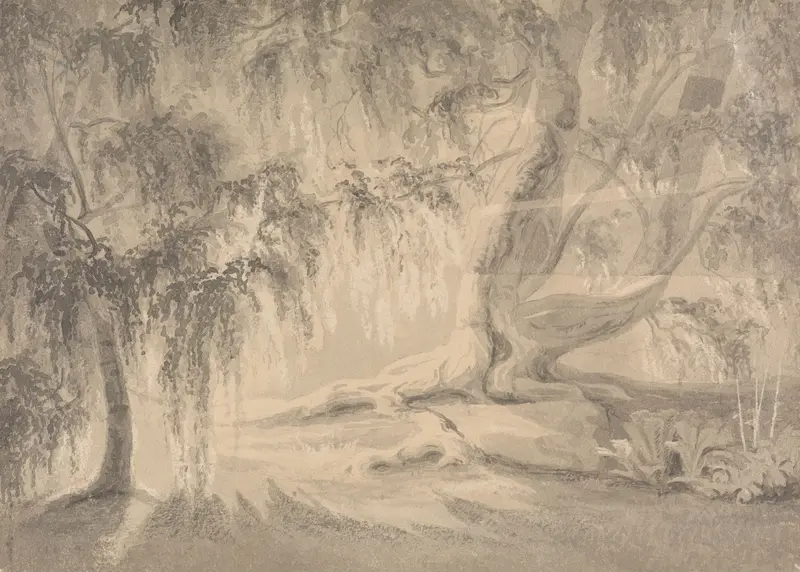
Forest Landscape with Sun Rays
August Cappelen
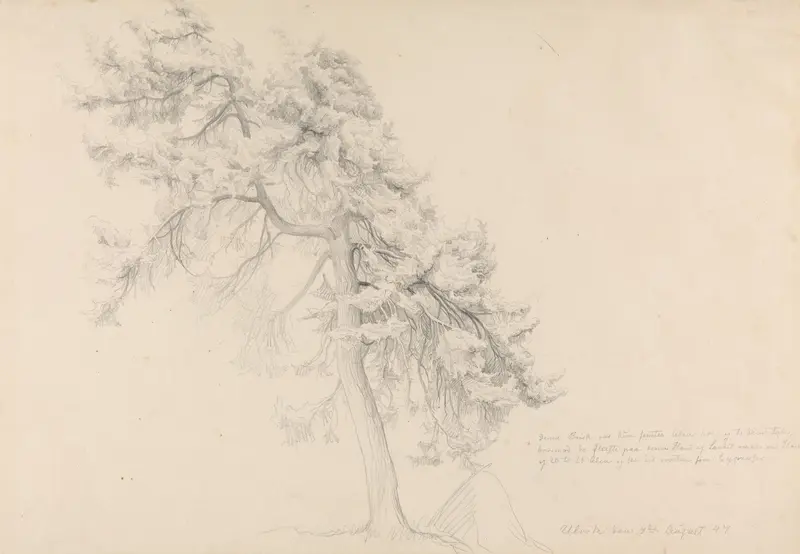
Juniper, Ulvik
August Cappelen
Landscape with Mill House and Waterfall
August Cappelen
More Landscape Art

The Starry Night
Vincent van Gogh

View of Delft
Johannes Vermeer

Water Lilies
Claude Monet

The Grand Canal, Venice, looking north-west from the Ca' Corner to the Ca' Contarini degli Scrigni, with the campanile of Santa Maria della Carità
Canaletto

Windsor Castle
Canaletto

The Grand Canal looking North-East from the Palazzo Dolfin-Manin to the Rialto Bridge
Canaletto