Landscape with a Man Driving Sheep — History & Facts
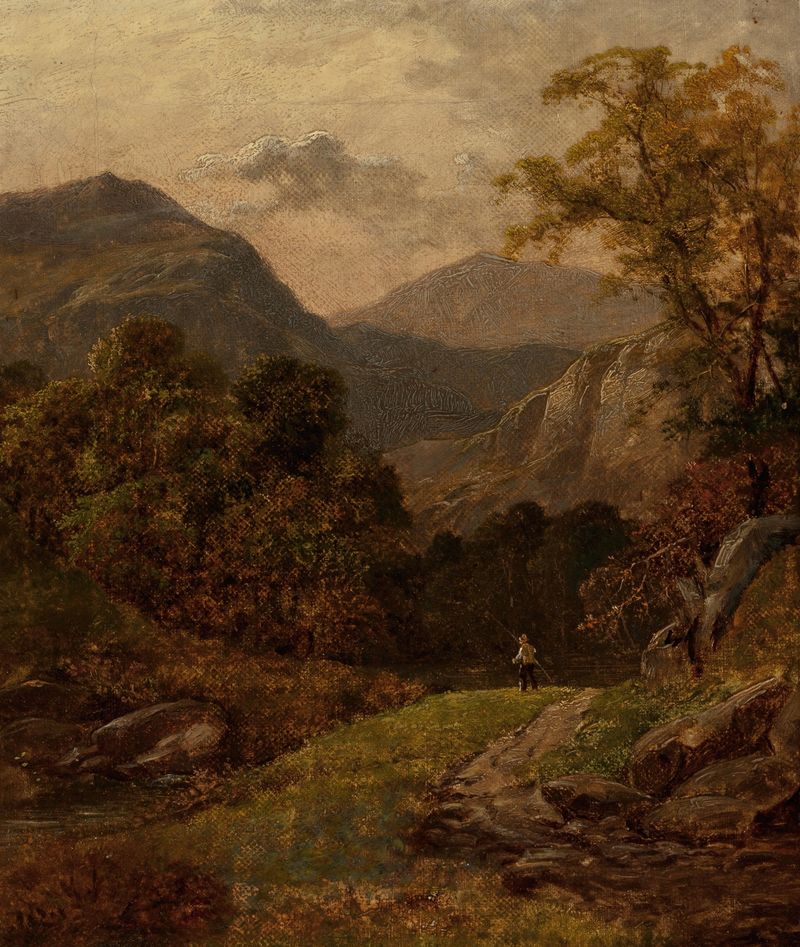
What if beauty was never meant to be finished? This notion lingers in the air like the gentle breeze that sweeps across the verdant hills of an unspoiled landscape, evoking a sense of timelessness and serenity. Look to the center, where a solitary figure guides a flock of sheep along a winding path. This man, clad in rustic attire, embodies a harmonious relationship with nature, his posture relaxed yet purposeful. Notice how the artist’s delicate brushstrokes create a soft interplay of greens, browns, and muted sky blues, inviting you to step into this rural haven.
The composition draws the viewer’s eye from the foreground into the distance, where hills rise and fall, punctuated by wisps of clouds that seem to cradle the horizon. Barker captures a moment suspended in time, where human toil seamlessly intertwines with the raw beauty of the landscape. The sheep, dotted like cotton against the lush grass, suggest both the simplicity and complexity of pastoral life. There’s a palpable contrast between the tranquility of nature and the labor of the shepherd, a reminder of the coexistence of beauty and hardship.
Each element in the painting serves as a testament to the relationship between man and the land, hinting at deeper themes of sustainability and communion with one’s surroundings. Created in an era when romanticism was blossoming in art, this work showcases Thomas Barker's mastery of landscape painting during the late 18th to early 19th century. Working primarily in Wales, he was influenced by the picturesque beauty of the natural world, striving to capture the essence of rural life. This period marked a growing appreciation for the sublime beauty of the English countryside, reflecting broader cultural shifts towards valuing nature's enduring, unrefined splendor.