Woodland Landscape — History & Facts
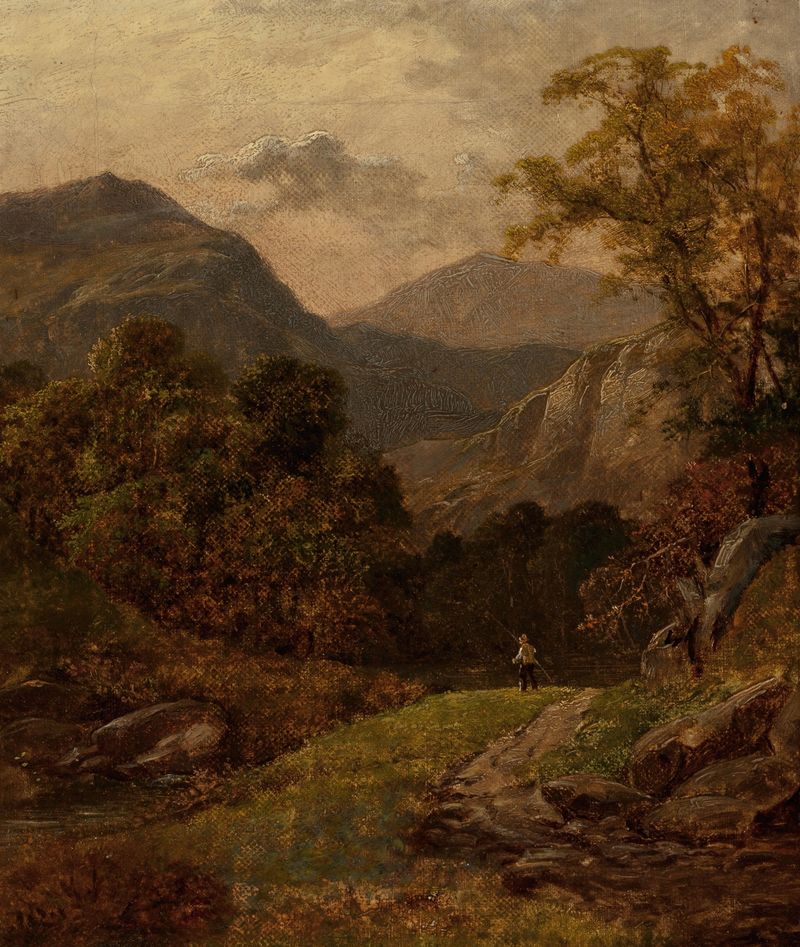
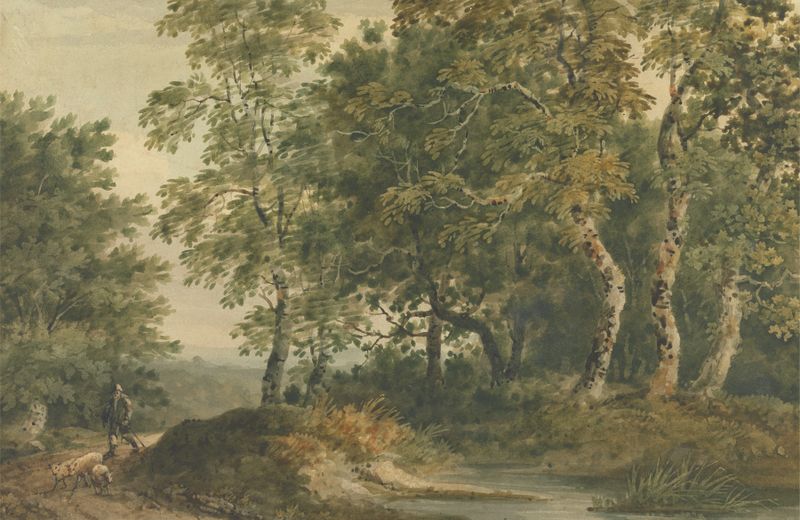
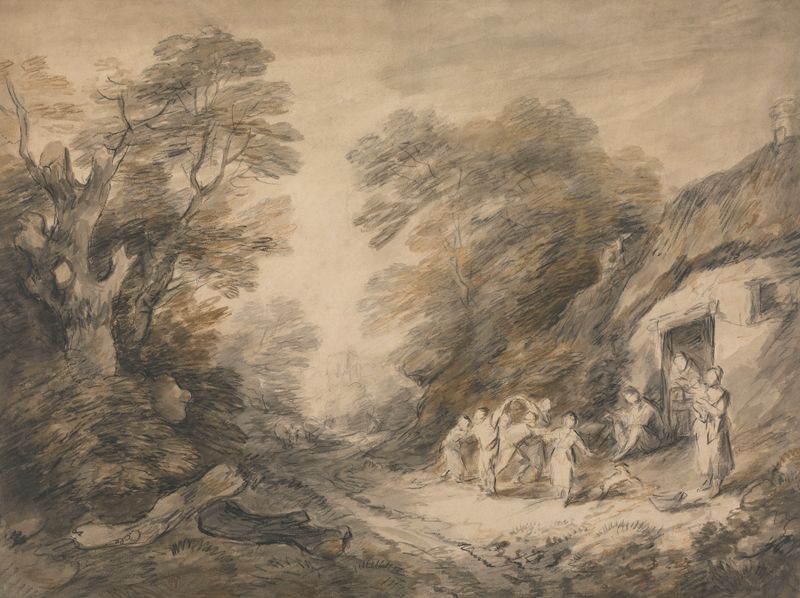
In the quiet embrace of a woodland, we find the essence of memory woven into the fabric of nature. Each brushstroke whispers the stories of longing and loss, evoking a sense of melancholy that lingers in the air. Focus on the verdant greenery that draws you in, the trees standing sentinel, their branches arching gently. Notice how the dappled light dances through the leaves, creating a mosaic of shadow and brightness upon the forest floor.
The muted palette—earthy greens, soft browns, and hints of twilight blue—exudes a tranquil yet somber atmosphere, inviting contemplation and reflection. The composition leads the eye through a winding path, a journey both physical and emotional, hinting at passages of time and memory. Barker captures a profound contrast between the serene beauty of the landscape and the underlying sense of longing it evokes. The stillness of the scene carries a weight, as if the trees are aware of the passage of time that has rendered their surroundings both beautiful and ephemeral.
The interplay of light and shadow serves as a reminder of the transient nature of life, while the path suggests both choice and uncertainty, inviting viewers to ponder their own journeys within the embrace of nature. This artwork emerged during a time when Thomas Barker was deeply engaged with the Romantic ideals of the natural world, likely in the early 19th century in Britain. The period was marked by a growing appreciation for nature as a source of inspiration and a counterpoint to industrialization. It reflects his struggle to reconcile the beauty of the landscape with the inevitable changes brought by time, leaving a legacy of introspective landscapes that resonate with the viewer's emotions.