
Landscape with a Road Leading Past a Place of Execution — History & Facts
Did the painter know this moment would outlive them? In a world so steeped in mortality, Landscape with a Road Leading Past a Place of Execution exposes the intersection of beauty and horror, inviting us to ponder over the fleeting nature of life and the obsession with memory. Look to the left where the road gently winds through the serene landscape, leading the eye toward the distant figures gathered at the execution site. Notice how the sun bathes the scene in a soft glow, contrasting the horror of the event unfolding beneath it. The artist’s meticulous brushwork captures the lush greenery, delicate clouds, and rich earth tones, creating a striking juxtaposition between the placid beauty of nature and the grim reality of human actions. As your gaze travels deeper into the composition, consider the emotional tensions at play.
The vibrant colors surrounding the execution site contrast sharply with the grim fate of the figures, evoking feelings of both fascination and repulsion. The road serves as a metaphor for life's journey, leading us toward a darker truth that lurks within even the most idyllic settings. This duality reflects a profound obsession with the human condition — a desire to capture the transient while confronting the eternal specter of death. Joos de Momper painted this work between 1618 and 1621 during a time when Northern European art was increasingly exploring themes of morality and nature.
Living in Antwerp, he was influenced by the burgeoning Baroque movement, characterized by heightened emotional content and dramatic contrasts. This painting embodies those ideals, serving as both a captivating landscape and a stark reminder of the darker aspects of existence.
More Artworks by Joos de Momper
Browse all →
Mountainous Landscape
Joos de Momper

An Extensive Mountainous River Landscape With Horsemen Conversing On A Raised Plateau
Joos de Momper

Mountain Landscape
Joos de Momper

Mountain Landscape
Joos de Momper
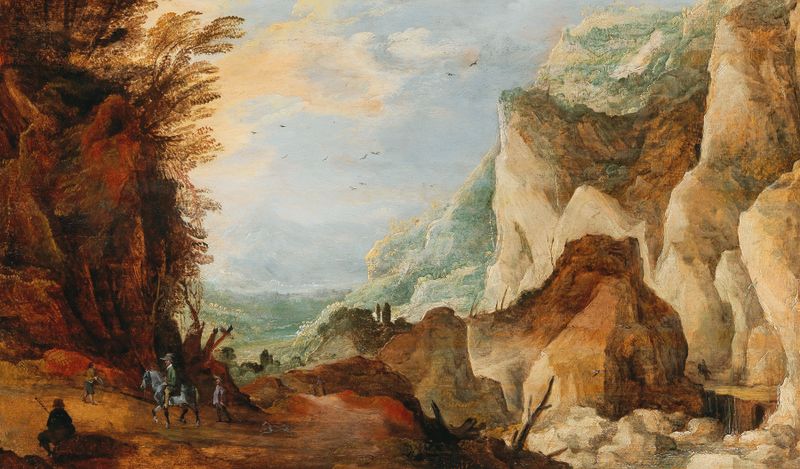
A mountainous landscape with travellers
Joos de Momper

Mountain Landscape
Joos de Momper
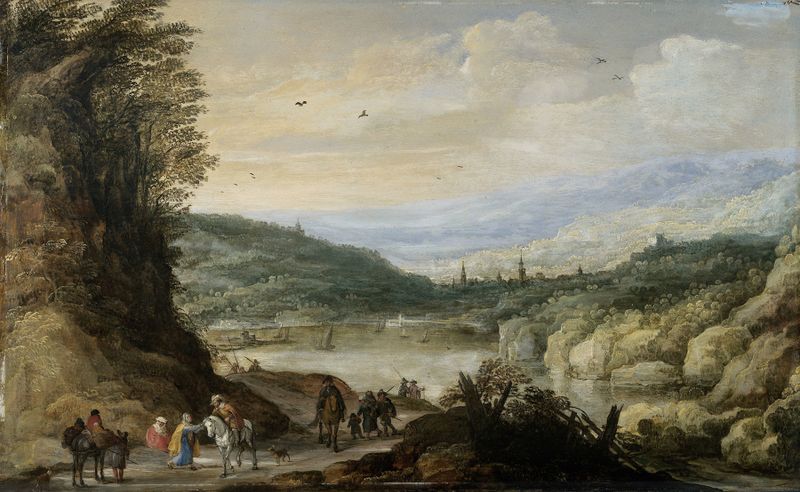
Landscape
Joos de Momper

An extensive mountainous landscape with hunters on a path
Joos de Momper

A mountainous landscape with travellers on paths along a riverbank
Joos de Momper

A wide mountainous landscape with travellers
Joos de Momper





