
Landscape with a Stone Bridge — History & Facts
Did the painter know this moment would outlive them? In Landscape with a Stone Bridge, time stands still, capturing not just a view, but an echo of longing that resonates across centuries. Look to the left at the sturdy stone bridge arching gracefully over a gentle stream, its weathered texture juxtaposed against the soft, ethereal light that bathes the landscape. The horizon is adorned with distant trees, their silhouettes melting into a warm palette of browns and greens, while the sky above transitions from soft azure to hints of golden light. Each brushstroke is deliberate, breathing life into the scene, inviting the viewer to explore its tranquility. Delve deeper into the painting, and you’ll find a poignant dialogue between humanity and nature.
The bridge serves as a metaphor for connection and passage—perhaps a pathway to memories long past or dreams yet to unfold. The tranquil waters reflect not just the physical environment but the emotional currents that ripple beneath the surface, hinting at the fleeting nature of time and the yearning for permanence in a world steeped in change. In around 1638, Rembrandt created this work during a period of personal and professional struggle. Living in Amsterdam, he faced financial challenges while emerging as a master of chiaroscuro and storytelling.
The art world was undergoing a shift, embracing more nuanced expressions of realism, and Rembrandt’s landscapes, like this one, embody a profound sense of introspection, capturing both beauty and the yearning that accompanies the passage of time.
More Artworks by Rembrandt van Rijn
Browse all →
The Night Watch Militia Company of District II under the Command of Captain Frans Banninck Cocq
Rembrandt van Rijn

The Return of the Prodigal Son
Rembrandt van Rijn

The Hundred Guilder Print: the figures leaning on the wall in the centre left
Rembrandt van Rijn

The Hundred Guilder Print: the central piece with Christ preaching, the plate arched
Rembrandt van Rijn

Isaac and Rebecca, Known as ‘The Jewish Bride’
Rembrandt van Rijn
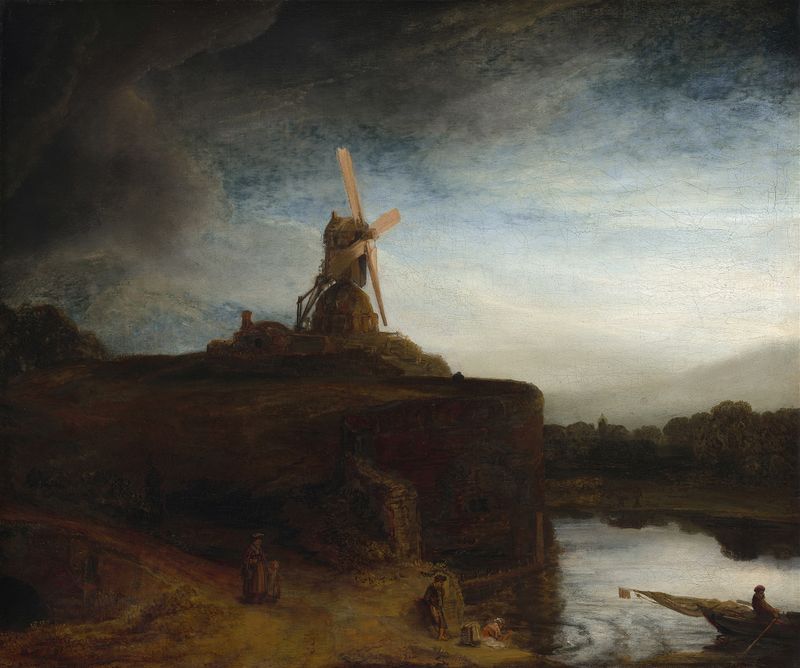
The Mill
Rembrandt van Rijn

The Sampling Officials of the Amsterdam Drapers’ Guild, Known as ‘The Syndics’
Rembrandt van Rijn

The return of the prodigal son
Rembrandt van Rijn
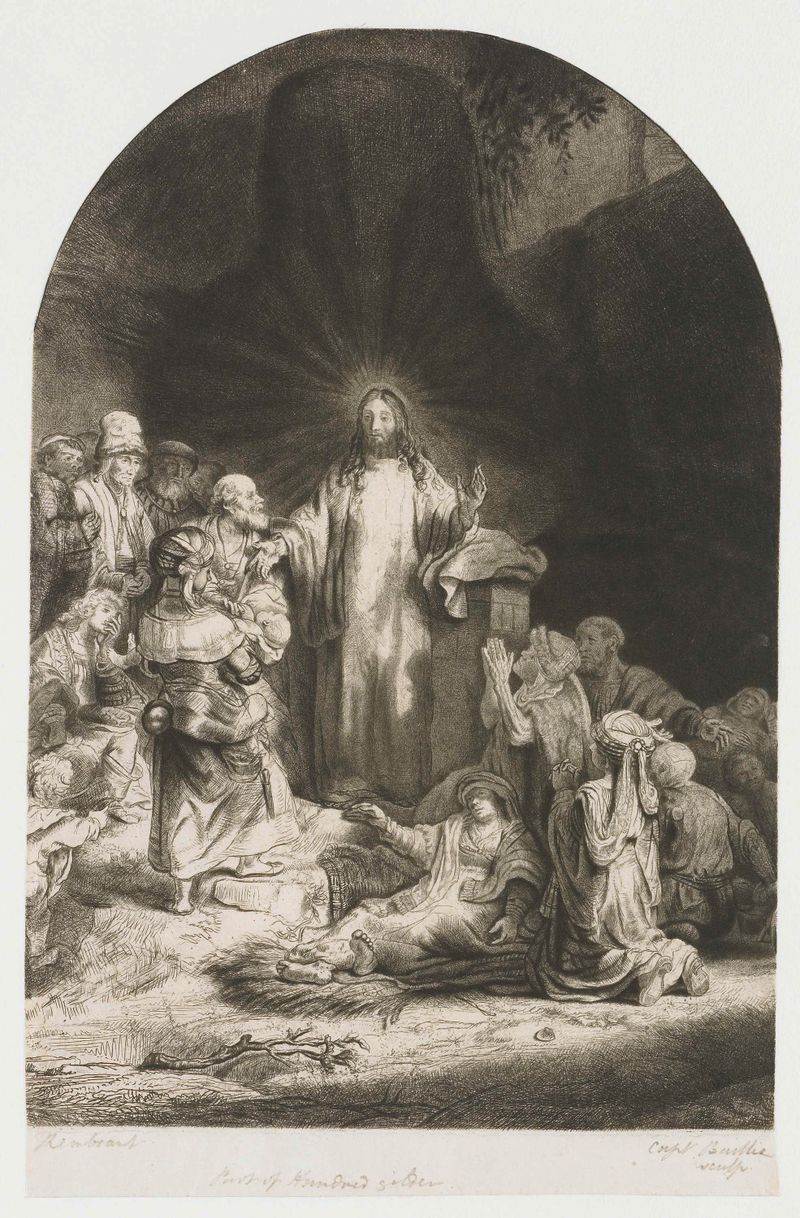
The Hundred Guilder Print: the central piece with Christ preaching, the plate arched
Rembrandt van Rijn

The Hundred Guilder Print: the man seen on the back in the lower left corner
Rembrandt van Rijn





