
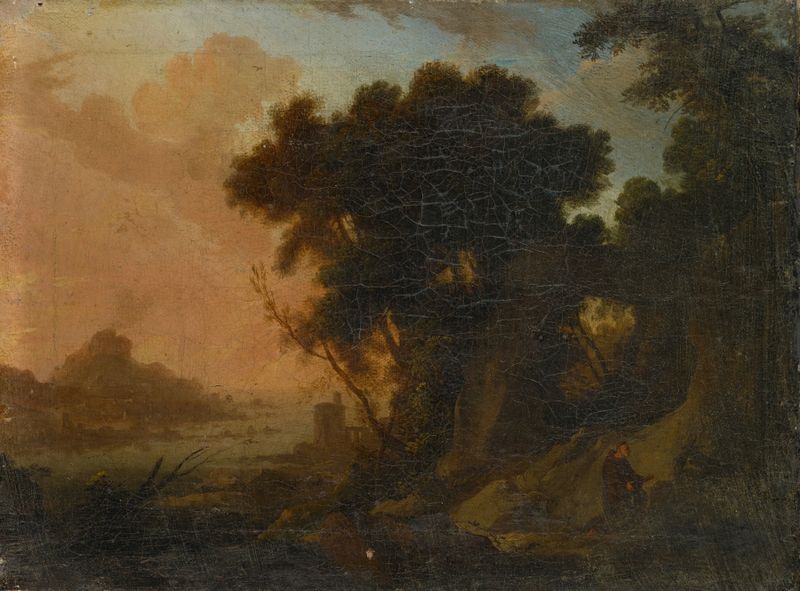
Landscape with architecture and staffage — History & Facts
In the delicate interplay of life and decay, we find ourselves compelled to confront the transient nature of existence. Look to the left at the harmonious blend of nature and man-made structures, where soft greens cradle rows of meticulously painted architecture. Notice how the warm hues of ochre and earth tone invite the eye to wander through the tranquil landscape, guiding us along a path that meanders through the scene. The artist’s deft brushwork brings to life the texture of the trees, their leaves whispering in a gentle breeze, while the light dances on the water's surface, illuminating subtle ripples that echo the fleeting moments we cherish. Hidden within this idyllic tableau lies a poignant tension between permanence and impermanence.
The vibrant buildings stand resolute, yet their surroundings suggest the inevitable passage of time, as nature encroaches upon man’s creations. The presence of small figures, absorbed in their daily lives, reminds us of our shared mortality, each gesture hinting at stories untold and moments lost. This intricate balance of stillness and activity invites introspection, as we grapple with our own place in the continuum of life. During the years 1700 to 1707, Pierre Antoine Patel the younger found inspiration in the world around him while based in France.
The era was marked by a flourishing of landscape painting, influenced by both Baroque and emerging Rococo styles. Patel's work reflects a unique synthesis of these trends, capturing a moment where architectural precision meets the fluidity of nature, ultimately revealing the quiet elegance of human existence in a vast, ever-changing world.
More Artworks by Pierre Antoine Patel the younger
Browse all →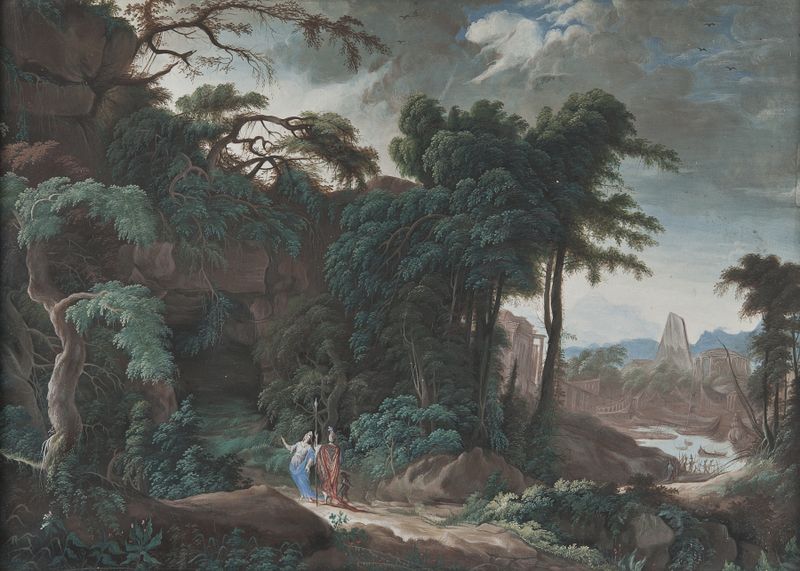
Forest landscape with figures
Pierre Antoine Patel the younger
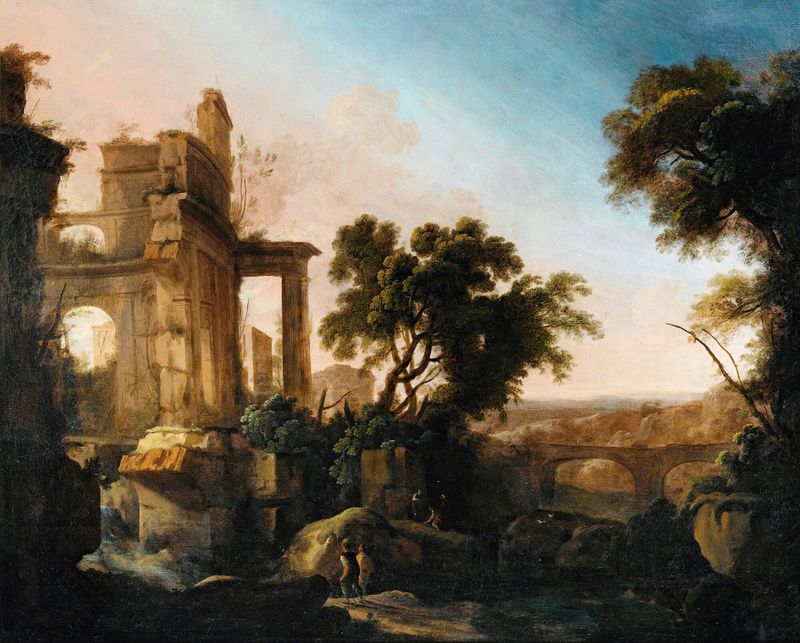
Landscape With Ruins
Pierre Antoine Patel the younger
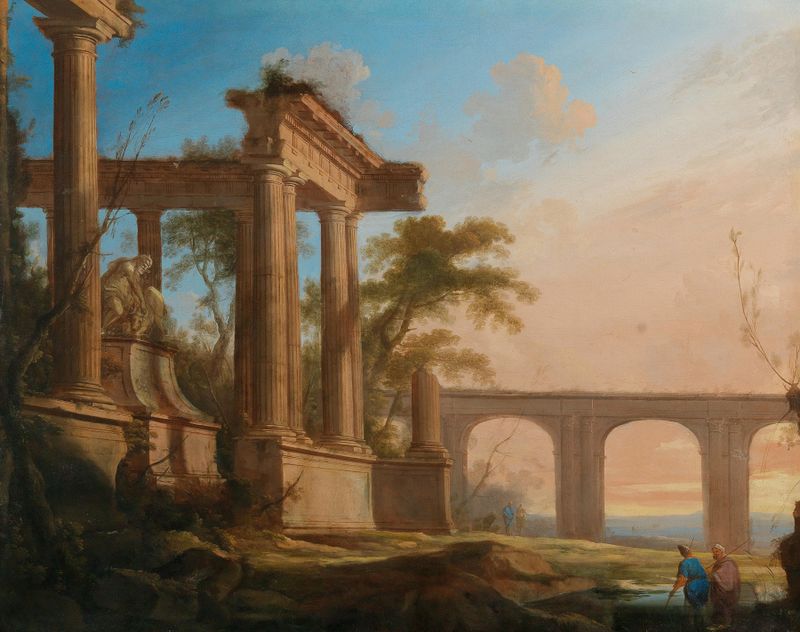
Landscape with ruins and an aqueduct
Pierre Antoine Patel the younger
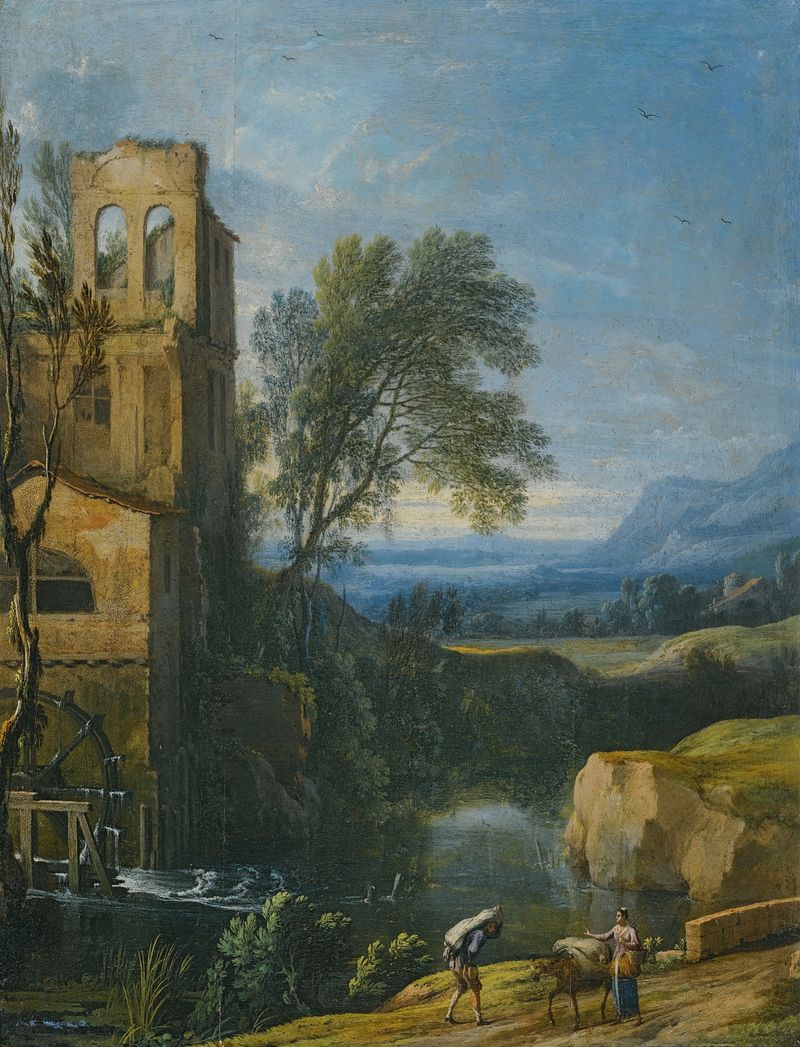
A River Landscape With A Watermill To The Left And Figures With A Donkey In The Foreground
Pierre Antoine Patel the younger
Landscape with Hermit
Pierre Antoine Patel the younger





