
Landscape with Black Italian Poplars — History & Facts
When did color learn to lie? In a world where vibrant hues mask lurking dread, the landscape unveils a disquieting truth beneath its apparent beauty. Look to the center of the canvas, where the ominous black Italian poplars rise like sentinels against an expansive sky. Their dark forms contrast sharply with the muted earth tones and pale blues, creating a tension that pulls the viewer in. Notice how the brushstrokes pulse with energy, yet the colors remain unnaturally subdued, hinting at a foreboding atmosphere where light struggles to penetrate.
The composition is both expansive and claustrophobic, inviting us to explore yet prompting an instinctual retreat. Delve deeper into the interplay of shadows and light, where the trees appear not just as part of the landscape but as guardians of a secret realm. The carefully layered textures evoke a sense of unease, suggesting that nature, despite its beauty, is rife with hidden fears and uncertainties. The horizon looms, a reminder that even the most serene vistas can hold a darkness that reflects the anxieties of the human experience. In 1942, amidst the turmoil of World War II, the artist painted this work during a time when Europe was engulfed in chaos.
Living in Belgium, De Smet found inspiration in the landscape that surrounded him, yet the conflict seeped into his art. This painting is not just a representation of nature, but a profound response to the fear and uncertainty that marred the era, revealing how even the most tranquil scenes could echo the distress of a world at war.
More Artworks by Gustave De Smet
Browse all →
Landscape
Gustave De Smet
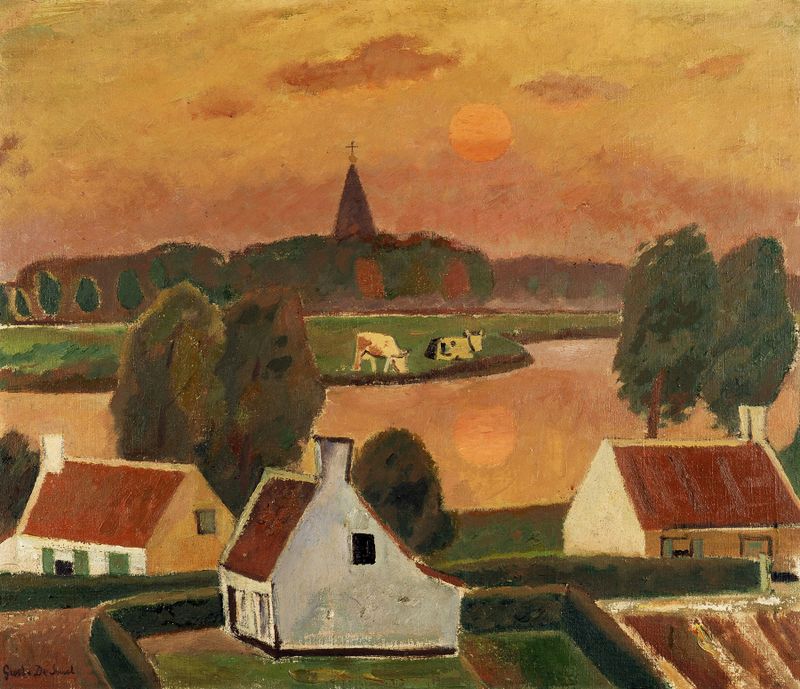
Dorpsgezicht
Gustave De Smet
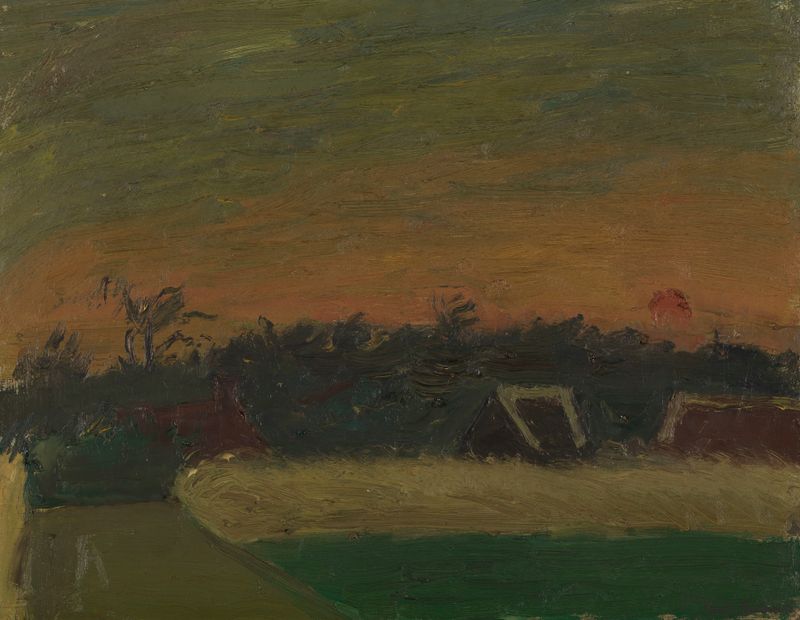
Sunset
Gustave De Smet

Fair in Deurle (Sint-Martens-Latem)
Gustave De Smet
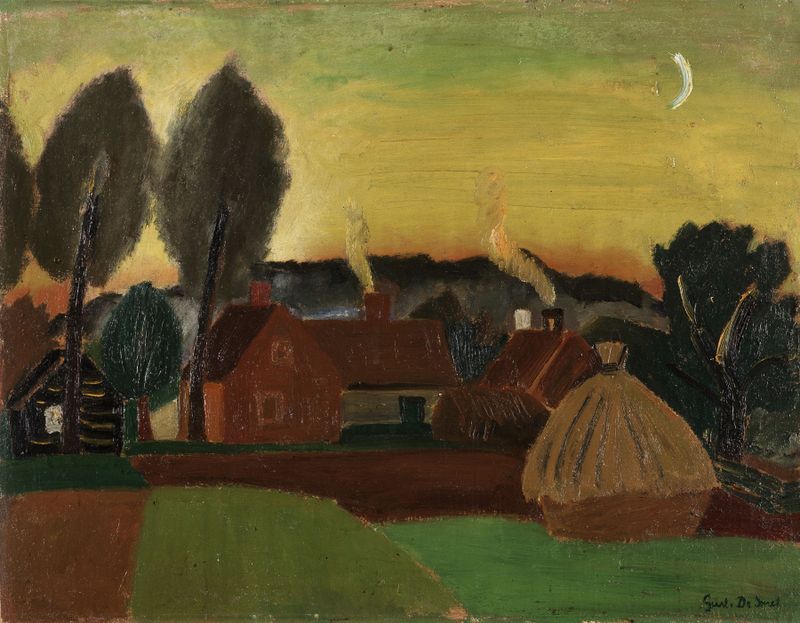
Landscape in the Evening
Gustave De Smet
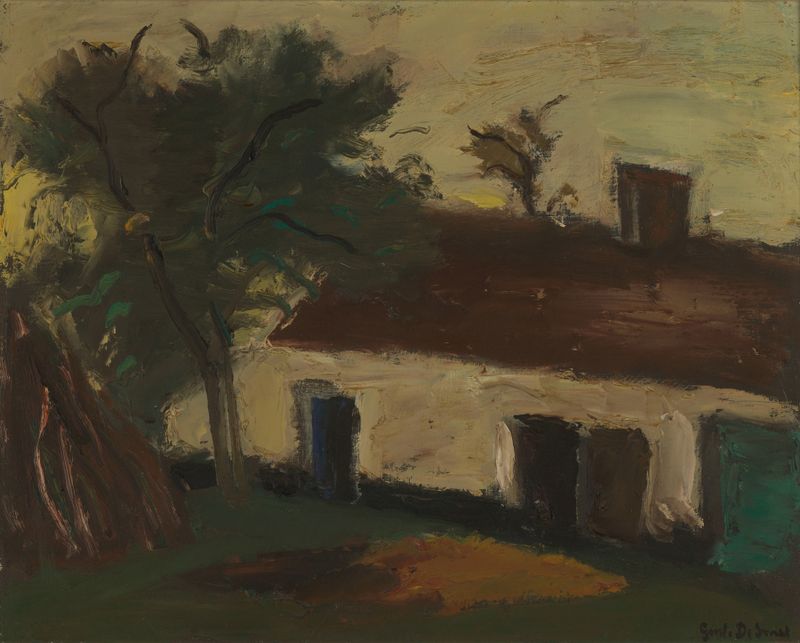
Stable
Gustave De Smet
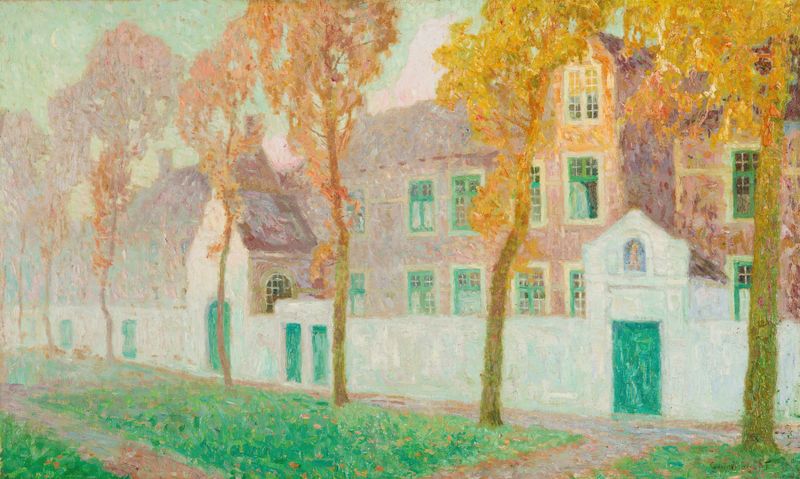
Le Béguinage À Bruges
Gustave De Smet

Oies Dans Un Jardin Avec Deux Enfants
Gustave De Smet
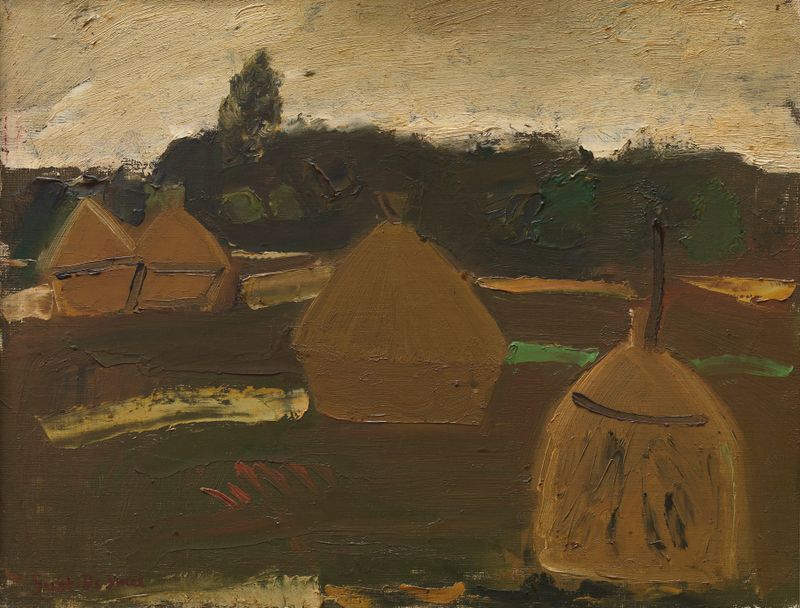
Haystacks
Gustave De Smet
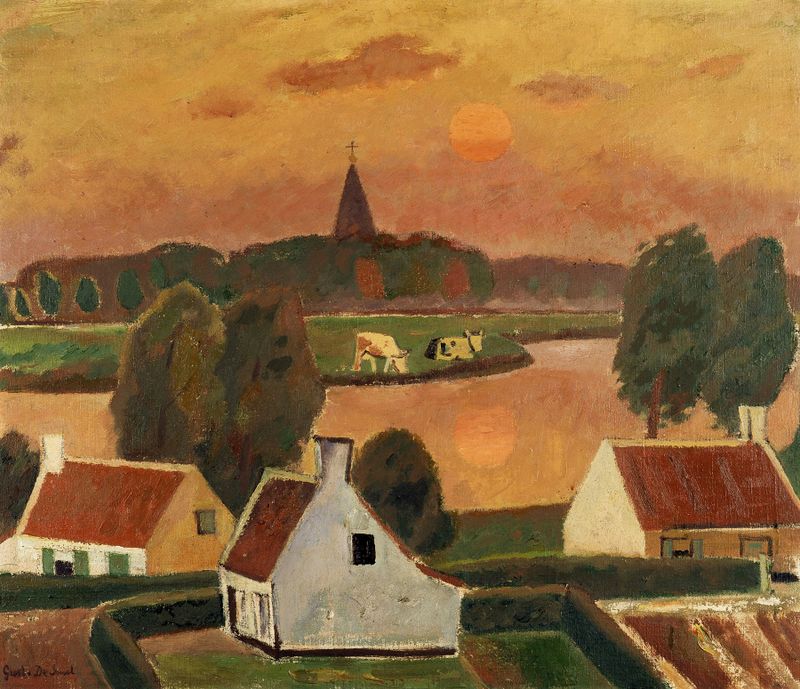
View of a Village
Gustave De Smet





