
Landscape with Elias and the Widow of Sarefat — History & Facts
Is this a mirror — or a memory? In Landscape with Elias and the Widow of Sarefat, beauty intermingles with the poignant weight of human connection, inviting the viewer to explore deeper than the surface. Look to the left at the serene pose of Elias, whose figure emerges with gentle hues of earth and sky. The widow stands nearby, her sorrow delicately captured in soft, flowing garments that intertwine with the verdant landscape. Notice how the light falls upon the rich greens and browns, imbuing the scene with a kind of warmth that contrasts with the emotional gravity of their interaction.
The composition draws the eye through an arc of natural elements, leading us into a world where humanity and nature exist in quiet harmony. The juxtaposition of light and shadow reflects an inner turmoil beneath the idyllic setting. The calmness of the landscape belies the widow's grief, provoking a tension that speaks to the fragility of life and relationships. Each brushstroke suggests a narrative unfolding beyond the canvas, hinting at loss and hope intertwined.
This duality compels us to question the nature of beauty: is it a surface quality, or something deeper, tied to our experiences and memories? In 1613, during a period marked by artistic exploration and the burgeoning popularity of Dutch landscape painting, the artist captured a scene rich in emotional resonance. Living in a time of transition, from the Renaissance to the Baroque, his work reflects both personal and societal changes. As he painted, he was likely influenced by the humanist ideals shaping the world around him, transforming the landscape into a vessel for deeper storytelling.
More Artworks by Gillis Claesz. de Hondecoeter
Browse all →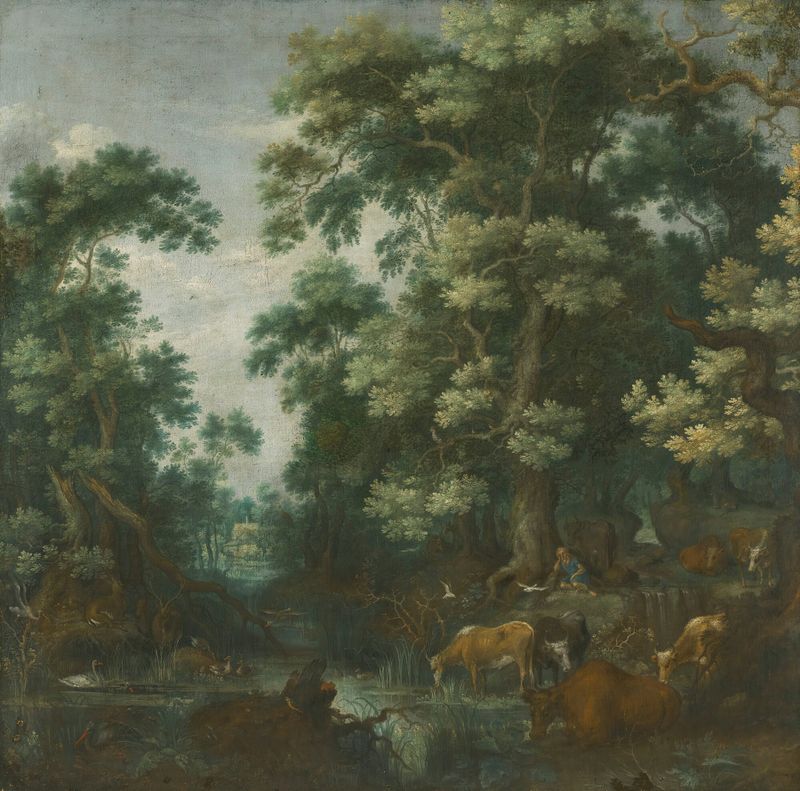
A Wooded Landscape With Deer And Cattle By A River, A Sleeping Herdsman Nearby
Gillis Claesz. de Hondecoeter
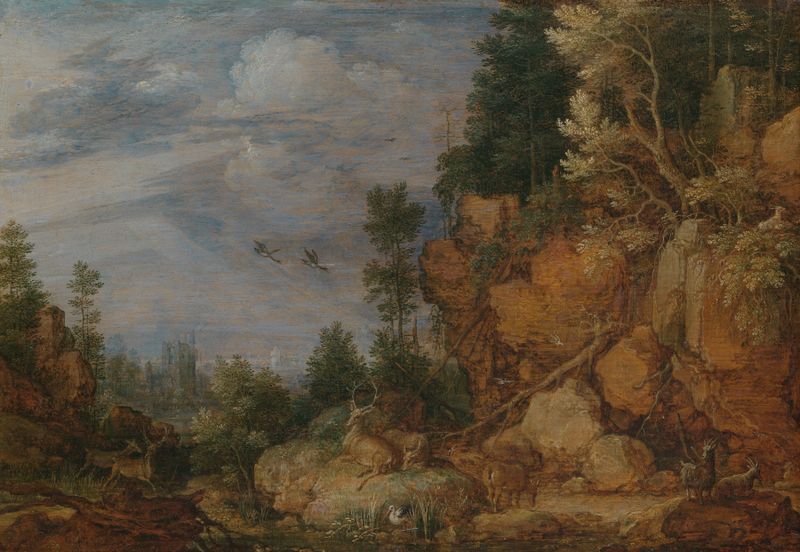
Rocky Landscape with Deer and Goats
Gillis Claesz. de Hondecoeter
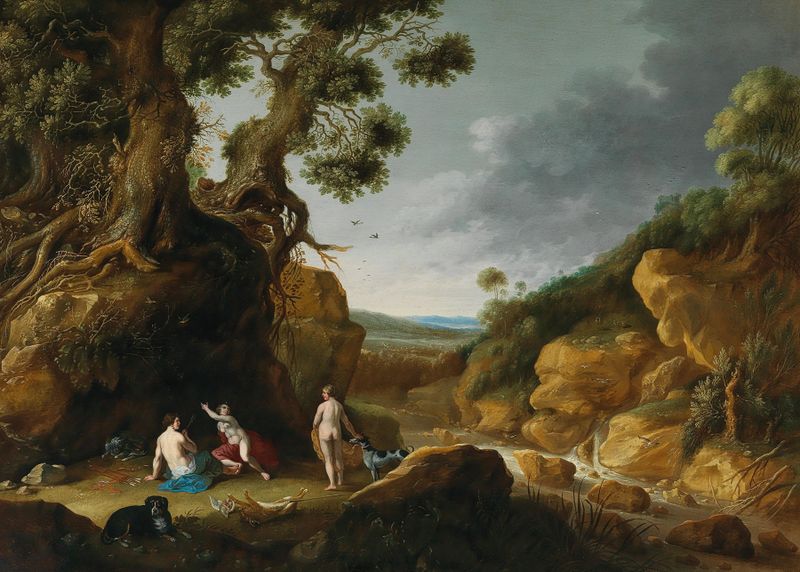
Diana and her nymphs in a rocky wooded river landscape
Gillis Claesz. de Hondecoeter
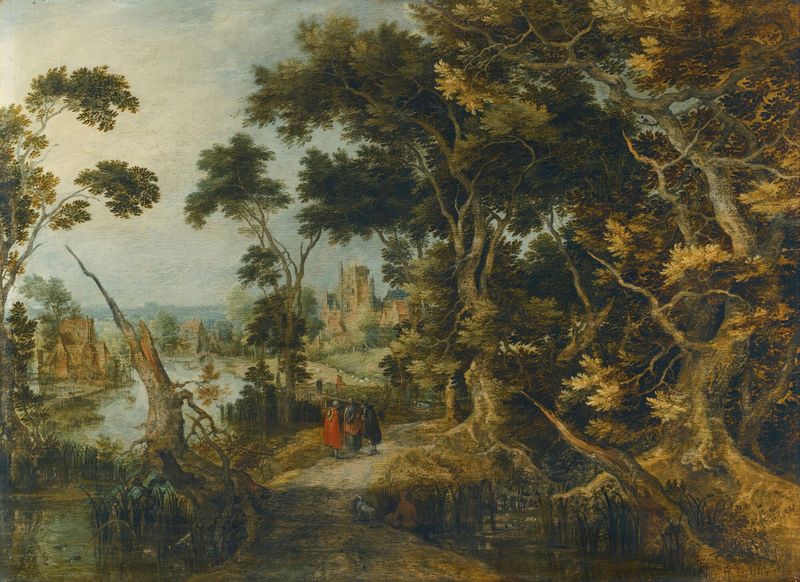
A Landscape With Christ And His Disciples On The Road To Emmaus
Gillis Claesz. de Hondecoeter
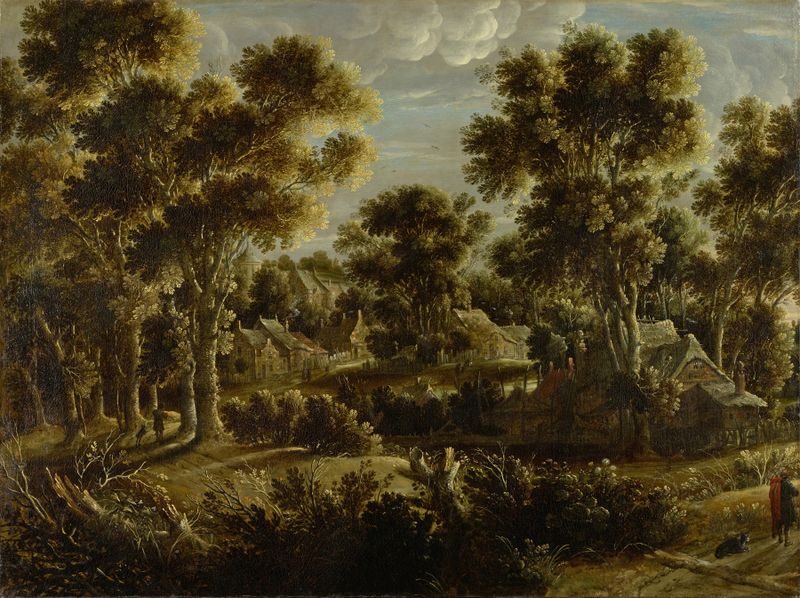
Forest Landscape with Village
Gillis Claesz. de Hondecoeter

A wooded river landscape
Gillis Claesz. de Hondecoeter
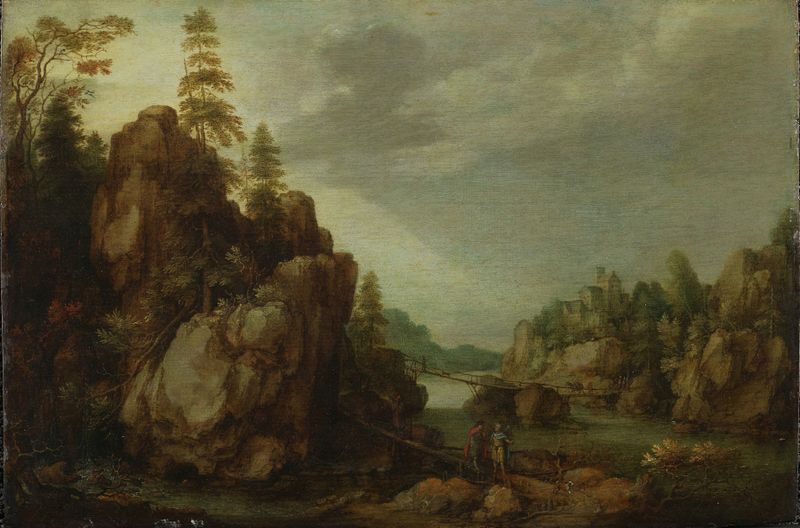
A Mountainous River Landscape with Tobias and the Angel
Gillis Claesz. de Hondecoeter

Rocky Landscape
Gillis Claesz. de Hondecoeter
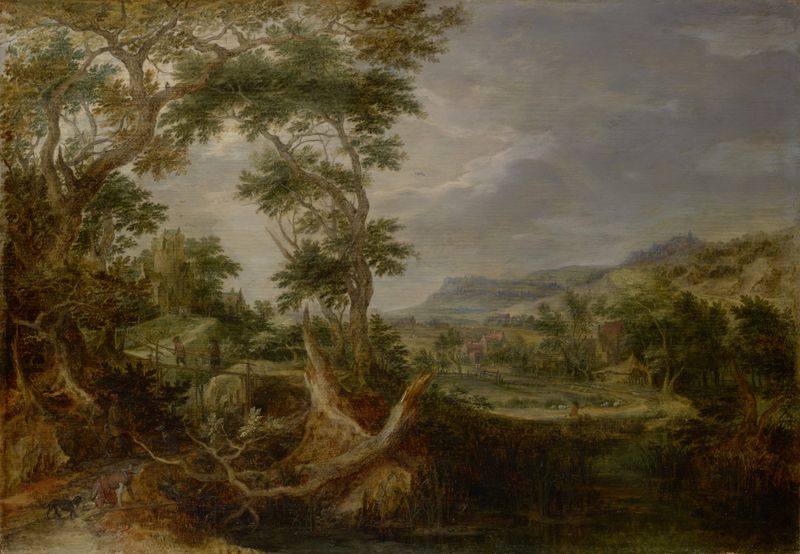
Swampy Valley with Castle on a Hill and Distant Farms
Gillis Claesz. de Hondecoeter
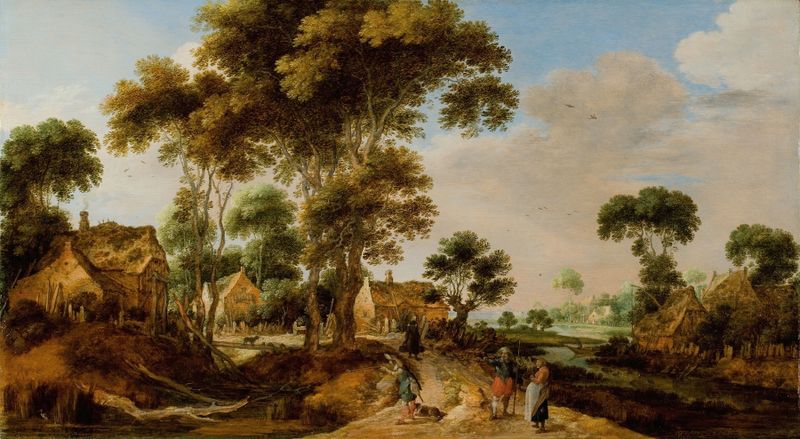
The Country Road
Gillis Claesz. de Hondecoeter





