
A Mountainous River Landscape with Tobias and the Angel — History & Facts
In the vast expanse of nature, moments of solitude echo louder than words, whispering tales of longing and introspection. Look to the left at the majestic mountains, their peaks touched by white wisps of clouds. The blues and greens blend seamlessly, establishing a serene yet haunting backdrop. Now turn your gaze to the central figures, Tobias and the angel, who stand poised at the water's edge, their forms contrasting against the rich, earthy tones of the landscape.
The gentle ripples of the river mirror the emotional currents within the scene, while the soft light filtering through the trees casts intricate shadows, emphasizing their isolation amidst the grandeur. Delve deeper into the details: the expression on Tobias's face speaks volumes of vulnerability, as if he is caught between the divine and the earthly. The angel, with an open posture, invites connection, yet his ethereal presence further underscores the loneliness felt by Tobias. Each brushstroke not only captures the physical beauty of the landscape but also conveys the emotional weight of the moment—an intersection of the human experience with the enduring forces of nature. In 1618, Gillis Claesz.
de Hondecoeter was working in a period marked by burgeoning interest in realism and the sublime beauty of landscapes. Living in the Netherlands, he was influenced by the prevailing artistic movements of his time, which sought to capture the interplay between light and color. This painting reflects not only his technical prowess but also a personal exploration of solitude and introspection within the broader context of life and art in the early 17th century.
More Artworks by Gillis Claesz. de Hondecoeter
Browse all →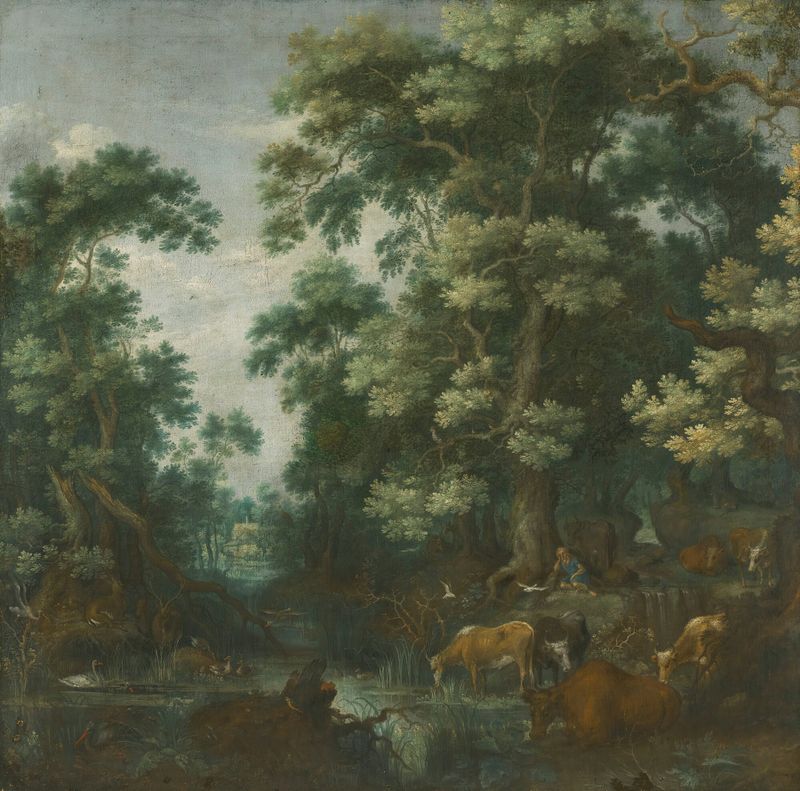
A Wooded Landscape With Deer And Cattle By A River, A Sleeping Herdsman Nearby
Gillis Claesz. de Hondecoeter
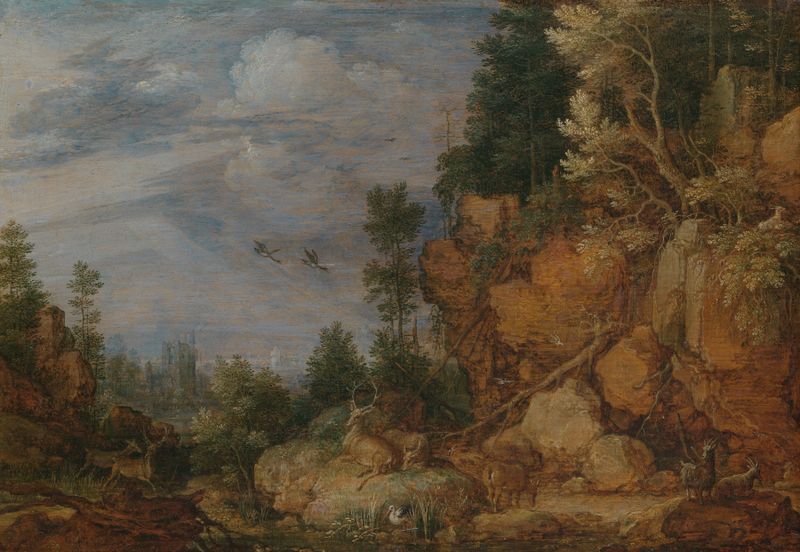
Rocky Landscape with Deer and Goats
Gillis Claesz. de Hondecoeter
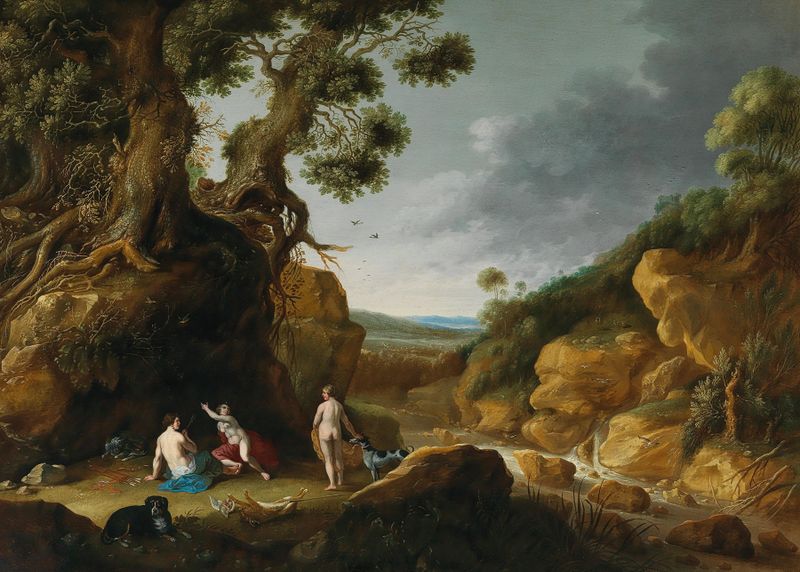
Diana and her nymphs in a rocky wooded river landscape
Gillis Claesz. de Hondecoeter
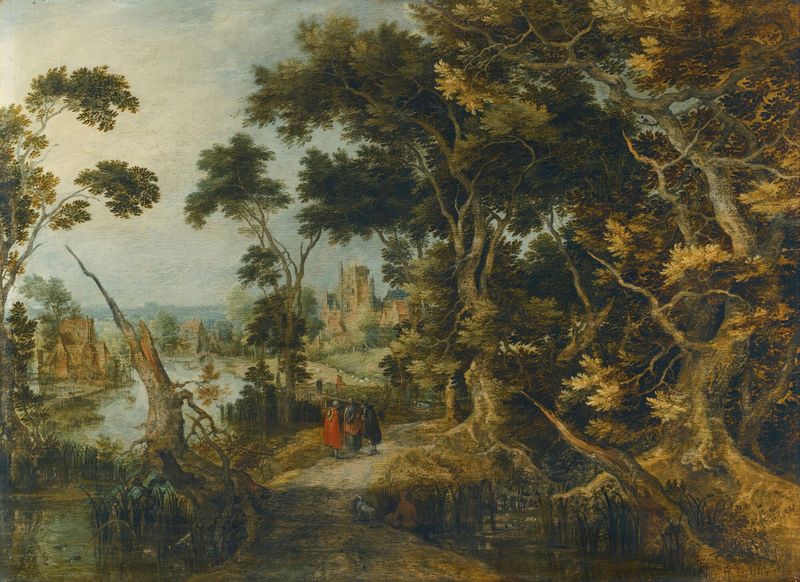
A Landscape With Christ And His Disciples On The Road To Emmaus
Gillis Claesz. de Hondecoeter
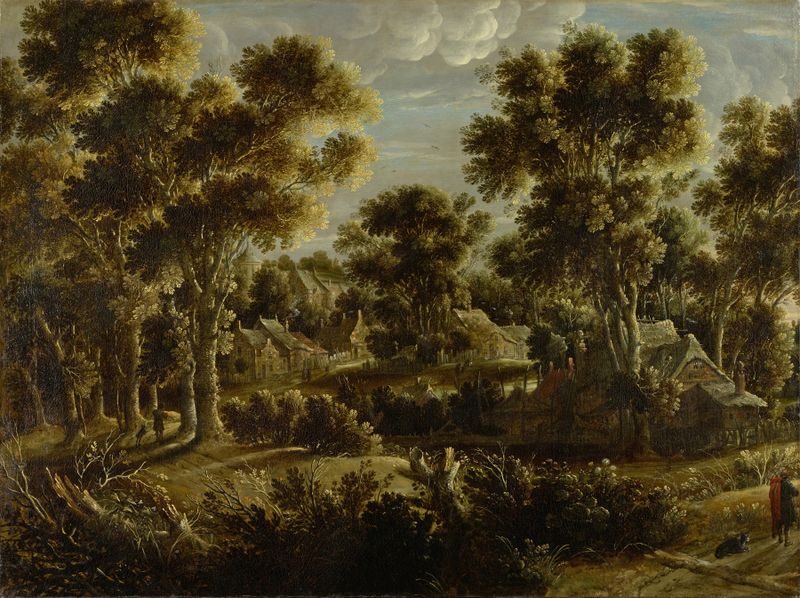
Forest Landscape with Village
Gillis Claesz. de Hondecoeter

A wooded river landscape
Gillis Claesz. de Hondecoeter

Rocky Landscape
Gillis Claesz. de Hondecoeter
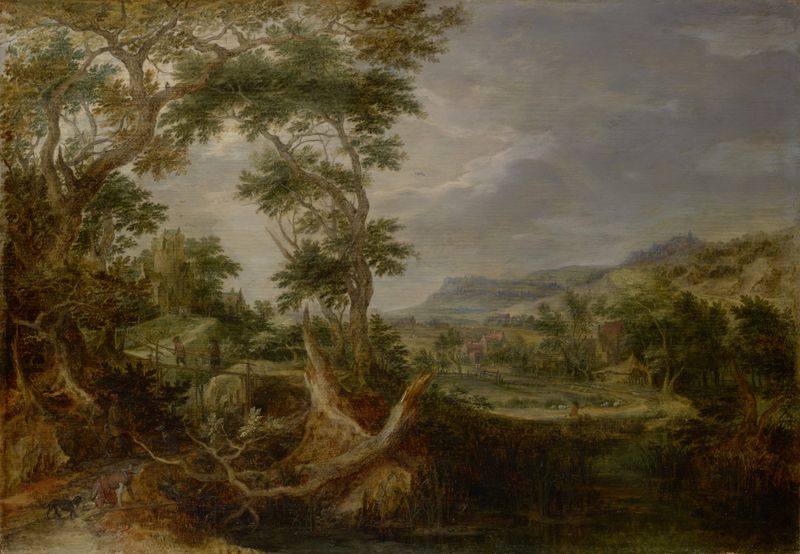
Swampy Valley with Castle on a Hill and Distant Farms
Gillis Claesz. de Hondecoeter
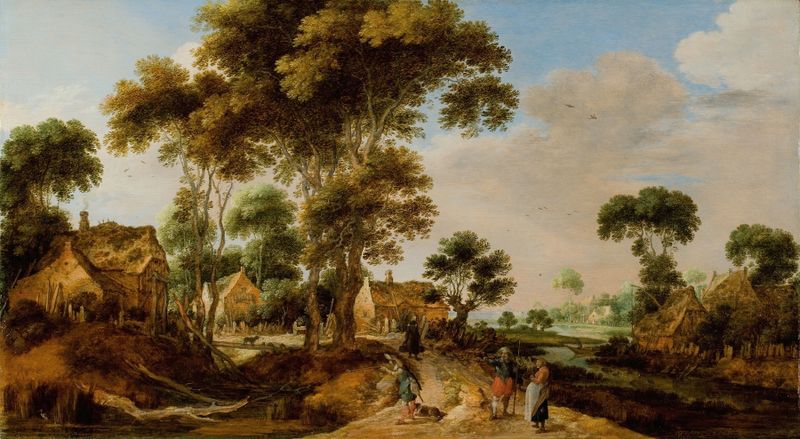
The Country Road
Gillis Claesz. de Hondecoeter
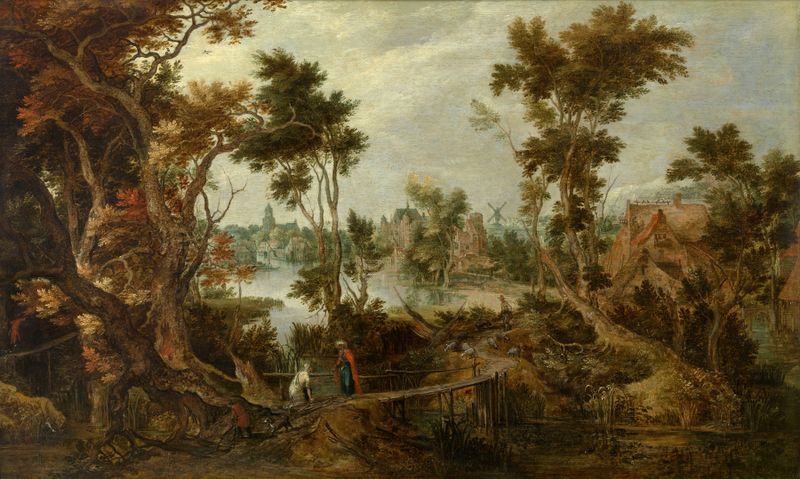
Landscape with Elias and the Widow of Sarefat
Gillis Claesz. de Hondecoeter





