
Landscape with Fables — History & Facts
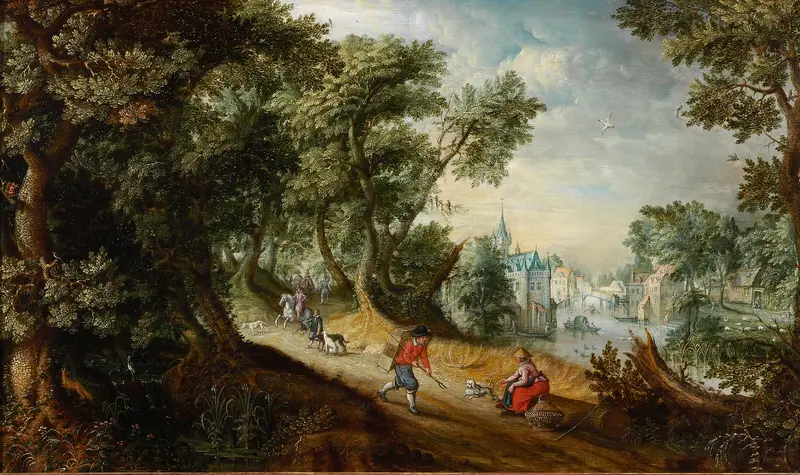
A fox crouches at the water’s edge, its gaze fixed on a stork whose beak dips into the pond—two animals caught in a moment of wary coexistence, each absorbed in its own pursuit. The dense forest presses in from all sides, its ancient trees arching overhead and casting deep shadows that seem to swallow the left half of the scene. Light pools in the clearing and glimmers on the water, guiding the eye toward distant cottages and a delicate wooden bridge, hints of human life just beyond the wild.
Every detail—curling leaves, the ripple of the pond, the fox’s tense body—invites the viewer to imagine the fables that might unfold here, stories of cunning and wit played out in the hush of the woods. Painted in 1620, this work by Adriaen van Stalbemt belongs to a world where landscape painting was a stage for both nature’s drama and human imagination. Artists of the early seventeenth century, especially in the Low Countries, delighted in weaving moral tales into their views, often drawing on the popular fables of Aesop and La Fontaine. Such paintings were prized by collectors eager for both beauty and meaning, and the genre flourished as cities like Antwerp grew wealthy and curious.
Today, Landscape with Fables resides in the Royal Museum of Fine Arts Antwerp—a quiet testament to a time when even the most tranquil glade might conceal a lesson for the attentive eye.
More Artworks by Adriaen van Stalbemt

Countryside landscape with staffage
Adriaen van Stalbemt
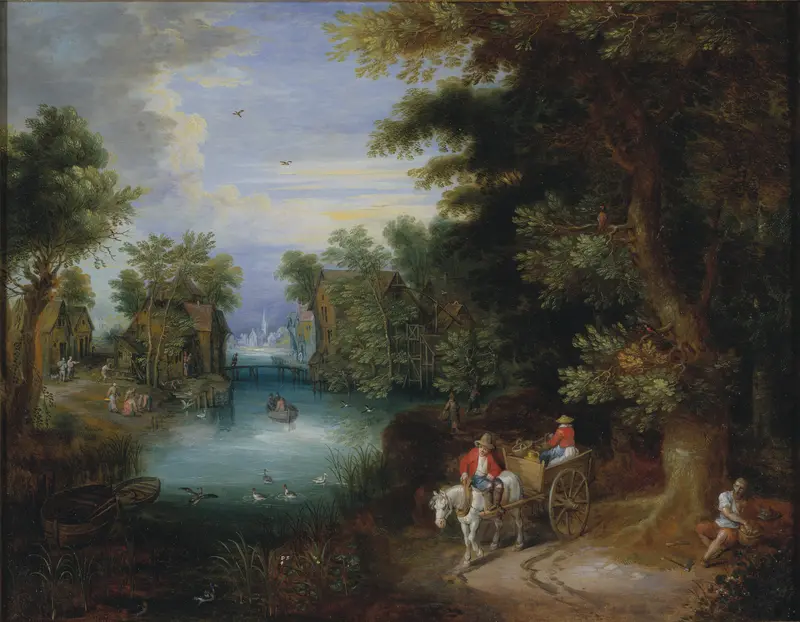
River Landscape with Peasants
Adriaen van Stalbemt
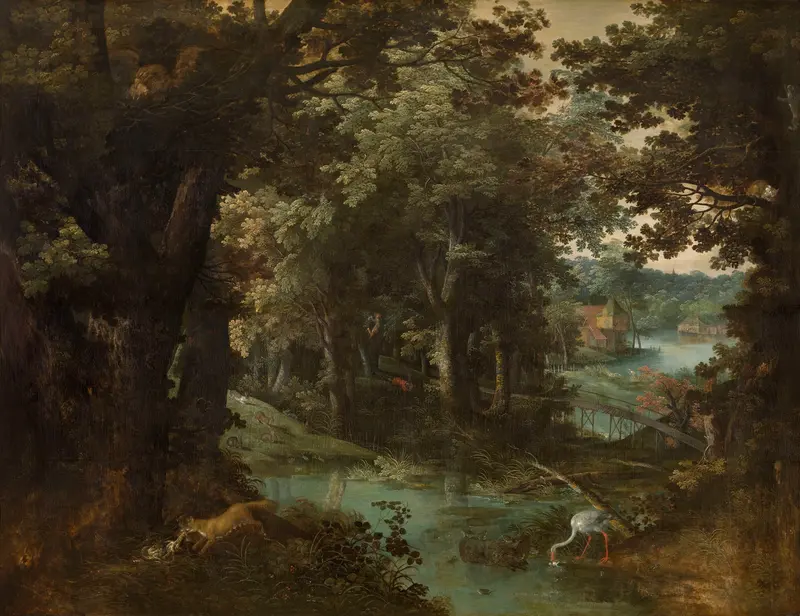
Landscape with Beast Fables
Adriaen van Stalbemt
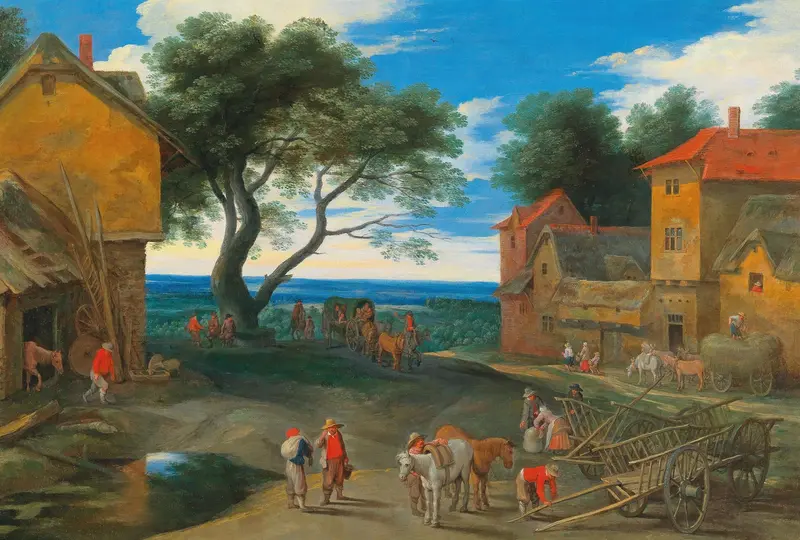
Travellers in a landscape with buildings
Adriaen van Stalbemt
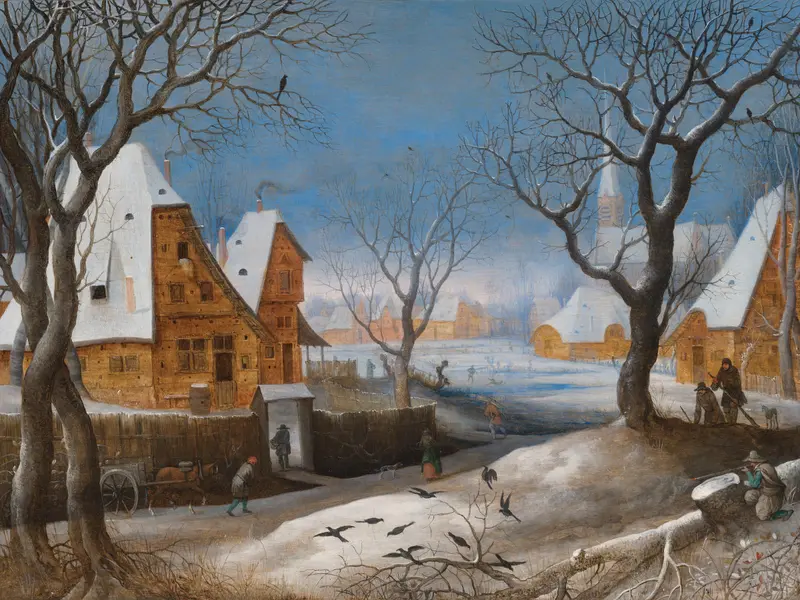
A winter landscape, with figures in a village
Adriaen van Stalbemt
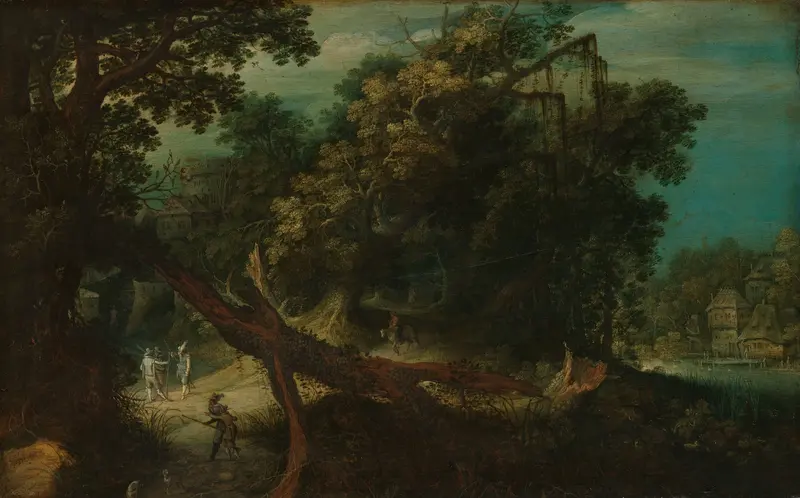
Shooters in a Forest Glade
Adriaen van Stalbemt
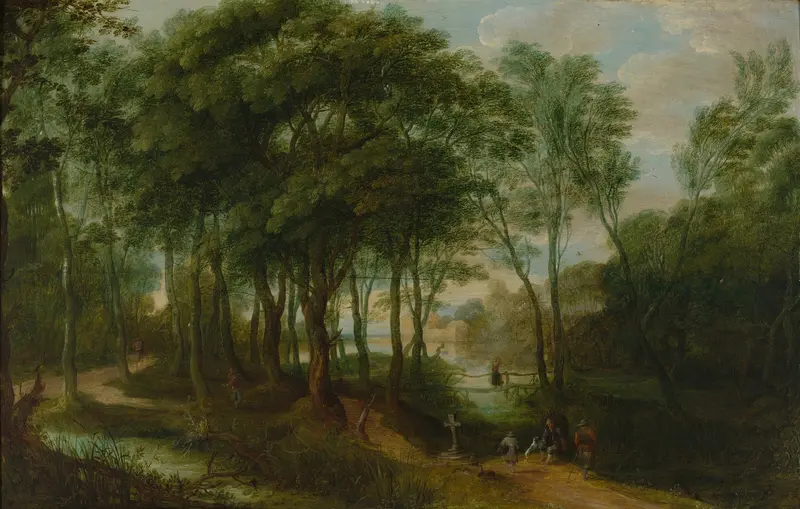
Figures On A Wooded Path, With A Building Behind
Adriaen van Stalbemt
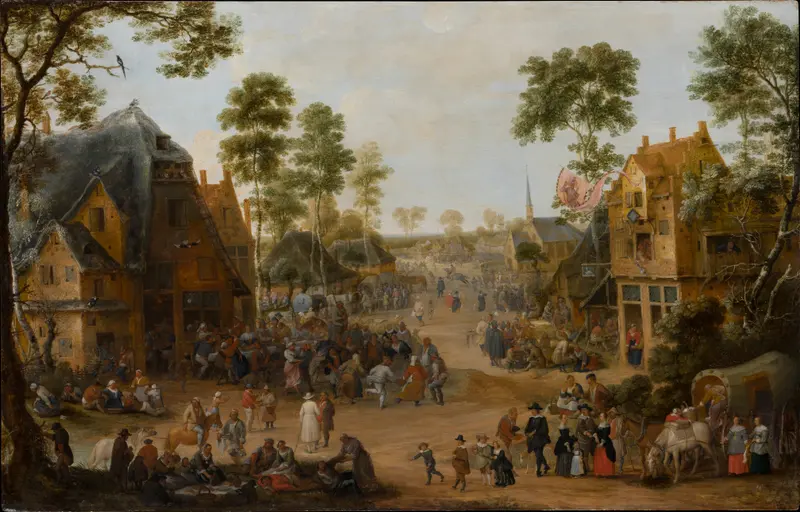
Village Church Festival
Adriaen van Stalbemt
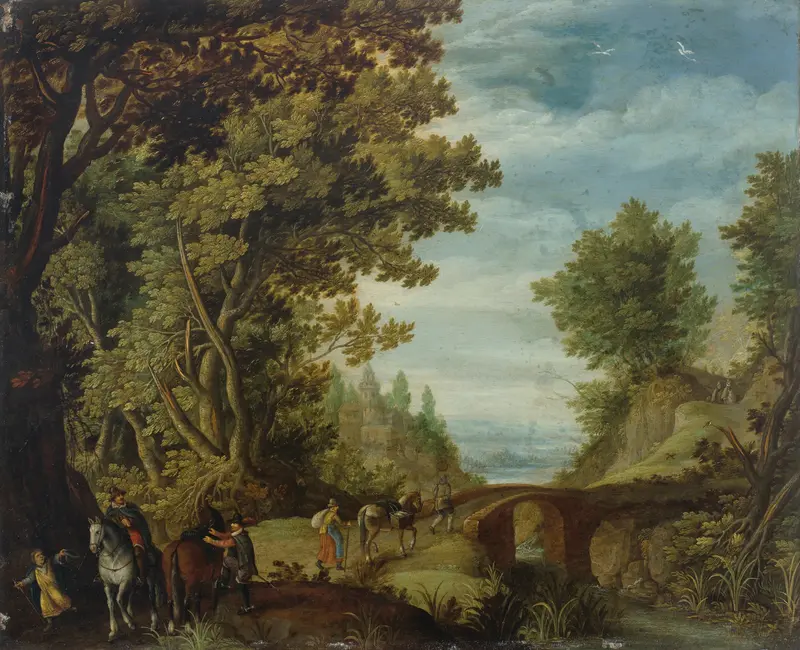
A wooded landscape with travelers crossing a bridge
Adriaen van Stalbemt
Landschap met rivier
Adriaen van Stalbemt
More Landscape Art

The Starry Night
Vincent van Gogh

View of Delft
Johannes Vermeer

Water Lilies
Claude Monet

The Grand Canal, Venice, looking north-west from the Ca' Corner to the Ca' Contarini degli Scrigni, with the campanile of Santa Maria della Carità
Canaletto

Windsor Castle
Canaletto

The Grand Canal looking North-East from the Palazzo Dolfin-Manin to the Rialto Bridge
Canaletto