Landscape with figures — History & Facts
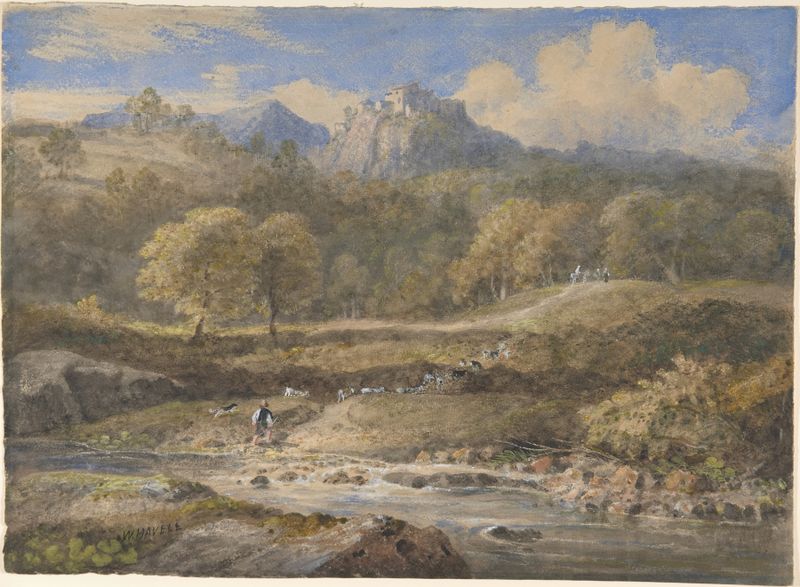
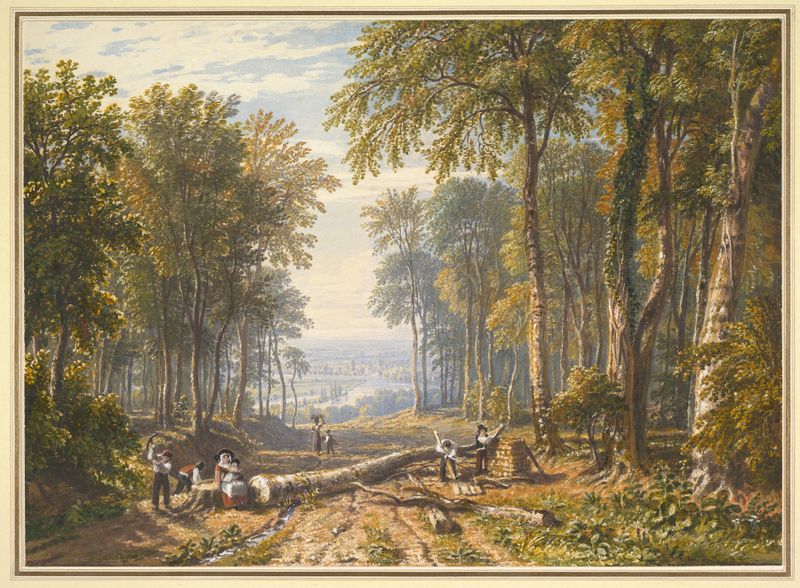
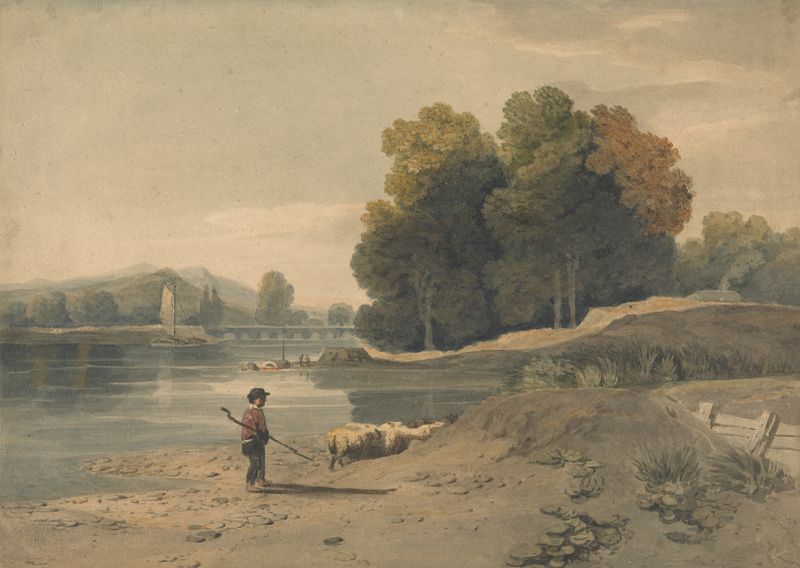
In the heart of revolution lies a quiet landscape, a moment of solace that offers a stark contrast to the upheaval surrounding it. Look to the left at the gentle slope of the hills, where figures, perhaps representing the common man, meander softly through the verdant hues of nature. Notice how the artist employs a delicate palette of lush greens and earthy browns, allowing light to dance across the canvas, illuminating the figures while enveloping the background in a serene glow. The composition draws the eye toward the horizon, where the sky meets the land in a harmonious embrace of blues and whites, a calming reminder of nature's constancy amidst human turmoil. However, amidst this tranquility lies a subtle tension.
The presence of the figures evokes the fragility of peace, suggesting a deeper narrative of longing or loss. Their postures are relaxed yet contemplative, hinting at an awareness of the tumult beyond the frame, while the expansive landscape encapsulates a world that is both inviting and foreboding. The juxtaposition of serene beauty and underlying unrest invites viewers to reflect on the tumult of the human experience. William Havell created this work in 1804, a time when the globe was engulfed in the fervor of change.
Living in England, he was influenced by both the Romantic movement and the political upheaval of the era, which inspired a new appreciation for nature as an escape from the chaos of society. His landscapes often conveyed a longing for stability, and this piece stands as a testament to that sentiment — a tranquil haven amidst the storm of revolution.