On the Kennet, Reading — History & Facts
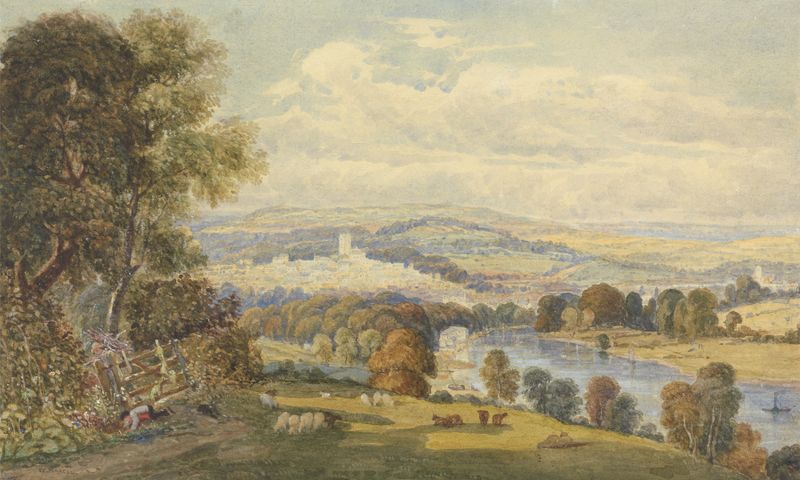
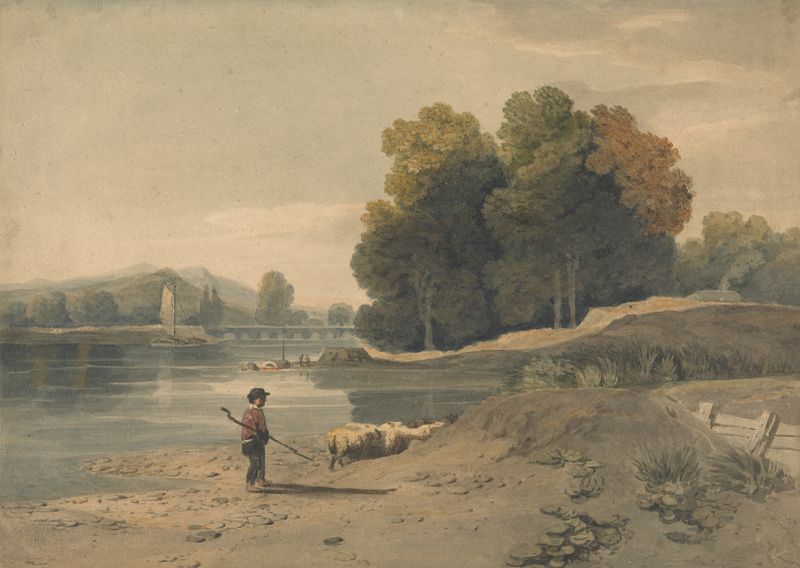
Is this a mirror — or a memory? The tranquil waters reflect not just the landscape but the innocence of a moment suspended in time, inviting contemplation of our own pasts. Begin your journey in the lower right corner, where gentle ripples dance across the surface of the Kennet. Look closely, and you’ll see how the light plays upon the water, illuminating specks of color that evoke the delicate brushwork of the artist. Notice how the soft greens of the trees and the hints of blue in the sky converge, forming a harmonious palette that breathes life into the scene.
The composition draws your eye through the serene riverscape, leading to the distant figures, whose leisurely demeanor enhances the sense of peace. As your gaze wanders, consider the contrast between the vibrant colors and the deep, reflective waters. The painted figures appear almost like echoes of youth, their innocence underscored by the idyllic surroundings. Small details, such as the gentle arch of a boat and the fluttering leaves, evoke a sense of nostalgia, suggesting that this moment is both fleeting and eternal.
The stillness of the water, mirroring the landscape, creates an emotional resonance that speaks to a universal longing for simpler times. William Havell created this work during a period of increasing artistic exploration in the early 19th century, likely in the 1810s. Living in England, he was influenced by the Romantic movement, which celebrated nature and emotion. This painting reflects his fascination with tranquil landscapes, capturing a serene moment amidst the changing tides of society and industry, inviting viewers to pause and appreciate the innocence of fleeting beauty.