Woodcutters at Park Place, Henley, the River Thames Beyond — History & Facts
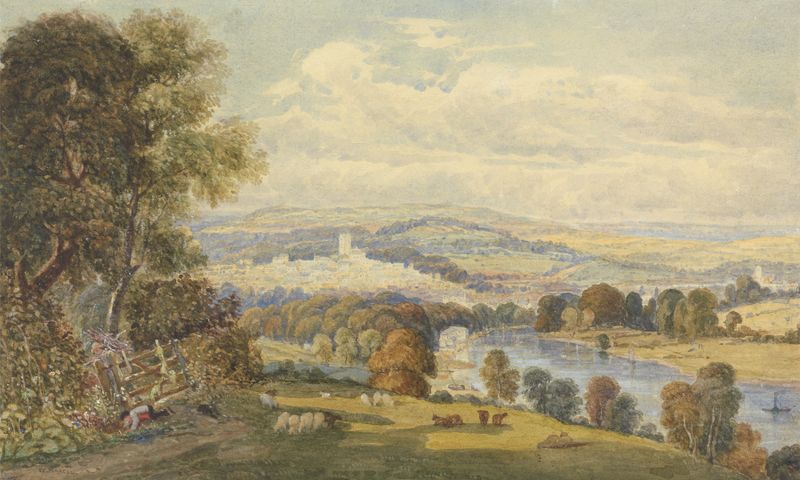
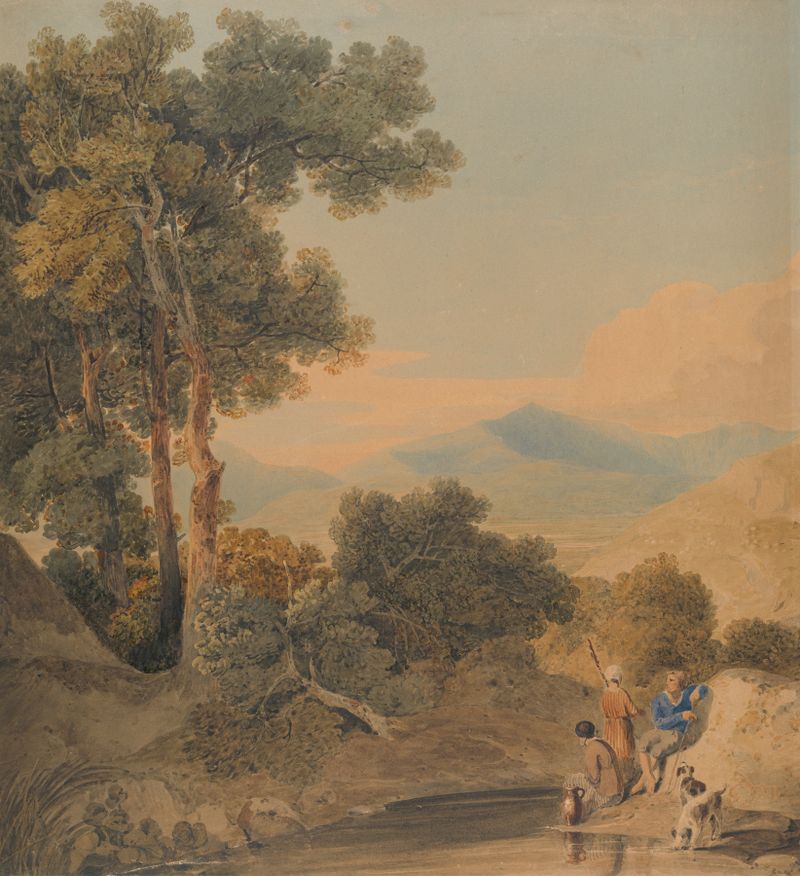
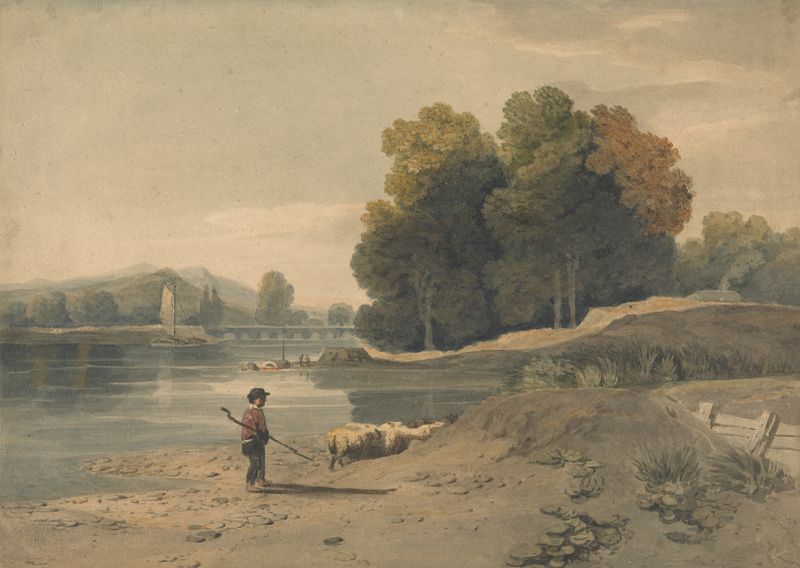
Who listens when art speaks of silence? In Woodcutters at Park Place, Henley, the River Thames Beyond, the stillness of nature becomes a poignant witness to the beauty of labor and life. Look to the foreground, where the rugged figures of woodcutters dominate the scene, their broad shoulders hunched in concentration. Notice how the warm earth tones of their clothing harmonize with the rich greens of the surrounding trees, creating a tapestry of texture and tone. The soft, dappled light filters through the foliage, casting a gentle glow on the men, illuminating their toil while shadowing the river, which sparkles enticingly in the distance.
This masterful use of light directs our gaze precisely where Havell intends, imbuing the painting with a sense of purpose and tranquility. Beyond the immediate scene, the juxtaposition of the laborers and the serene Thames hints at deeper themes of existence. The woodcutters, engaged in manual labor, symbolize the connection between humanity and nature, their hard work contrasting with the effortless flow of the river. This tension evokes reflections on beauty found in both effort and stillness, suggesting that both are vital to the human experience.
The looming trees, standing as silent sentinels, encapsulate the fragile balance between man and the wild, inviting the viewer to ponder where one ends and the other begins. In 1826, William Havell painted this work while living in London, a period marked by rapid industrial change. As the countryside was transformed by urban expansion, Havell sought to capture the timeless beauty of nature and human labor, illustrating the quieter moments often overlooked amidst the noise of progress. His brushwork reflects the Romantic movement's ideals, celebrating both nature's splendor and the dignity of labor, a testament to a world teetering on the brink of modernity yet yearning for connection with its roots.