
Landscape with Man on a Donkey — History & Facts
What if silence could speak through light? In Landscape with Man on a Donkey, a gentle interplay of color and shadow invites the viewer to listen closely to the unvoiced narratives of nature. Look to the horizon where the sun casts its warm embrace over a tranquil landscape, revealing a lush expanse of rolling hills. The central figure—a solitary man on a donkey—draws the eye with his subtle, yet deliberate, gesture. Notice how the brushwork captures the shimmering reflection of the sun upon the foliage, creating a tender dialogue between light and earth.
This luminous quality not only brings the scene to life but also evokes a sense of serene stillness, urging you to pause and absorb the moment. Beneath the surface, the contrast between the man’s solitary journey and the expansive landscape hints at themes of introspection and solitude. The donkey, a humble companion, symbolizes not just work but also the quiet acceptance of life’s rhythms. The lush greenery contrasts with the muted tones of the figure, signifying the balance between humanity and nature.
Each stroke speaks of a yearning for connection, both within oneself and with the world around. In 1849, Jongkind painted this piece during a pivotal time in his life, living in France as the Impressionist movement began to take shape. This era was characterized by experimentation with light and color, and Jongkind, often regarded as a precursor to the Impressionists, sought to capture fleeting moments in nature. His work reflects the changing world of art, where the immediacy of experience began to take precedence over strict realism.
More Artworks by Johan Barthold Jongkind
Browse all →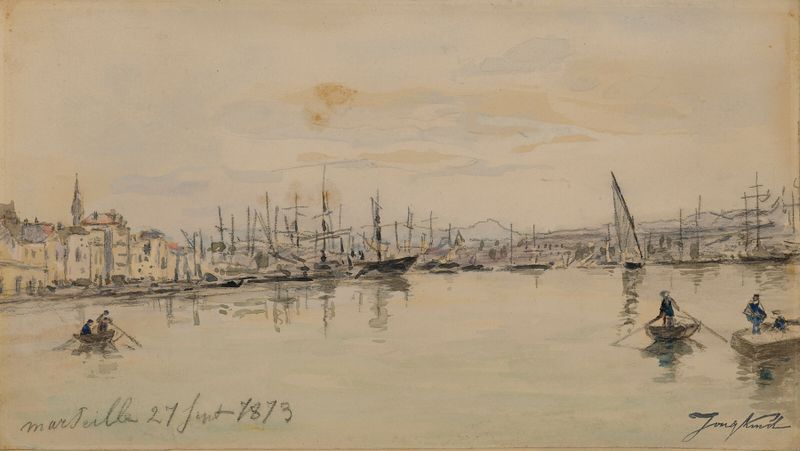
Le Port de Marseille
Johan Barthold Jongkind

Canal Saint-Martin
Johan Barthold Jongkind

Countryside near Brezins, between Grenoble and Vienne
Johan Barthold Jongkind

Notre-Dame vue du quai de la Tournelle
Johan Barthold Jongkind

Environs de Grenoble
Johan Barthold Jongkind

Clair de lune à Overschie (environs de Rotterdam)
Johan Barthold Jongkind

Port de Honfleur
Johan Barthold Jongkind
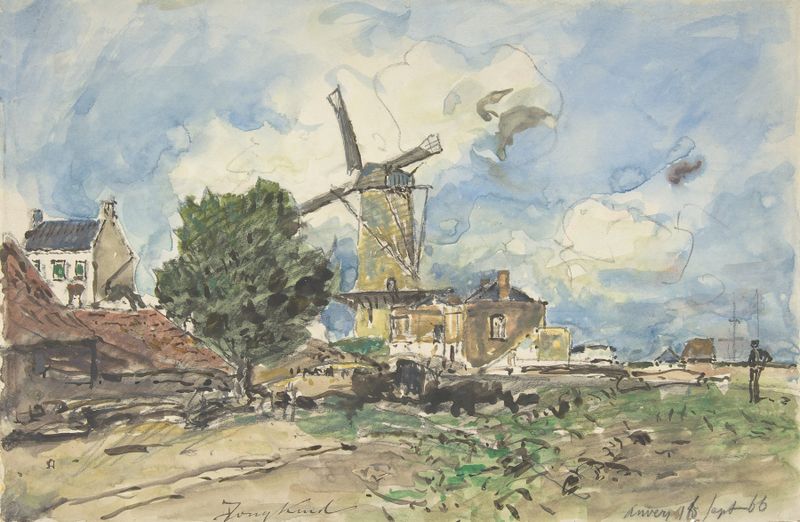
Wind Mill at Antwerp
Johan Barthold Jongkind

Le Havre
Johan Barthold Jongkind

The Church of Overschie
Johan Barthold Jongkind





