Landscape with Numa Pompilius and the Nymph Egeria — History & Facts
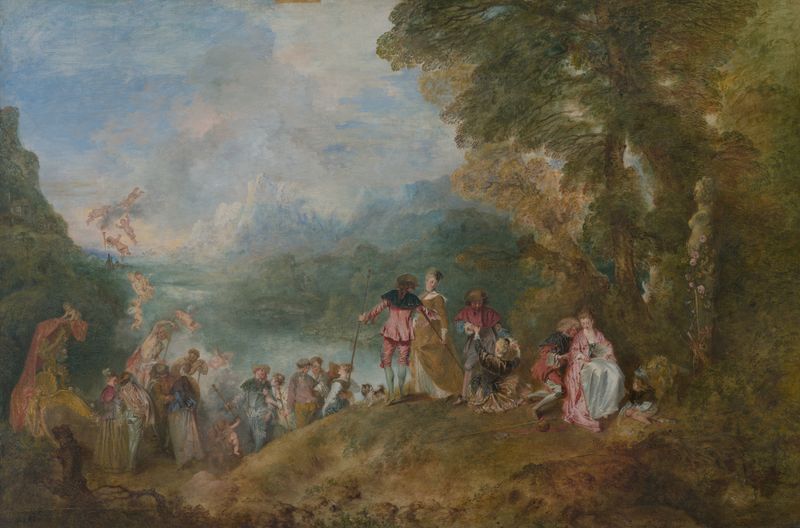
Did the painter know this moment would outlive them? In a world constantly shifting, the light captured here immortalizes a delicate interplay between myth and reality, beckoning viewers into an eternal embrace of nature’s beauty. Focus on the radiant sky, a soft blend of blues and gold, accentuating the serenity of the landscape. Notice how the light cascades through the trees, casting intricate patterns on the ground where Numa Pompilius stands, deep in contemplation. To the left, the nymph Egeria emerges gracefully from the shadows, her ethereal form almost blending into the surrounding foliage.
The colors—muted greens, warm browns, and the subtle sheen of a shimmering water source—invite you to linger and explore the tranquil dialogue between these figures and their environment. Within this composition lies an exploration of duality: the clash between the human experience and the divine, encapsulated in the figures’ expressions and gestures. The stillness of nature contrasts with the silent urgency of Pompilius' thoughts, while Egeria’s gaze reflects a timeless wisdom. This harmonious juxtaposition hints at the profound bond between humanity and the mythic, where light becomes a metaphor for enlightenment and awareness, guiding the viewer’s emotional journey. During the late 1560s, Francesco Primaticcio painted this work in France, where he was part of a vibrant artistic community that embraced Renaissance ideals.
At that time, the tumultuous political landscape and shifting allegiances inspired many artists to seek solace in classical and mythological themes, reflecting a yearning for stability through the lens of history and legend.