Landscape with Red Roof Building — History & Facts
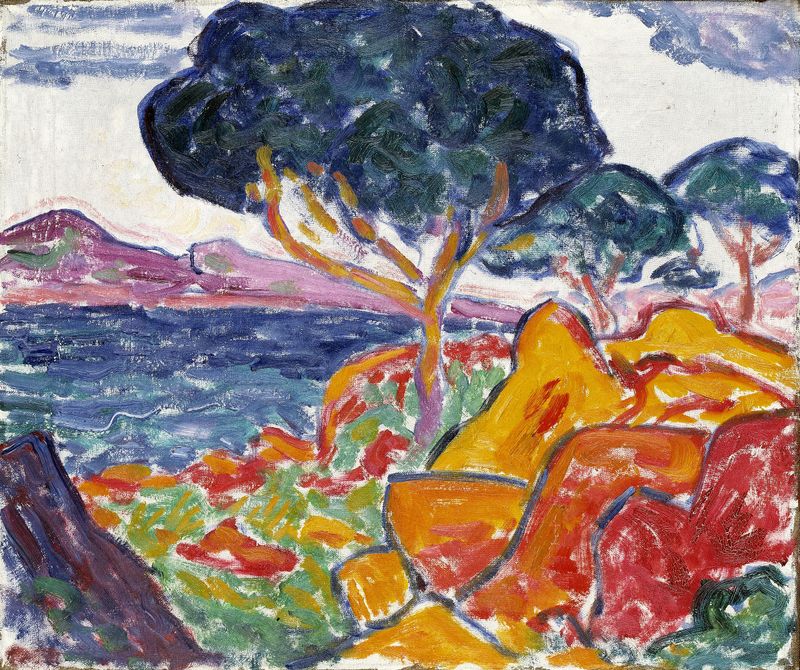
In a world saturated with noise, the chaotic beauty of a landscape can offer a rare moment of clarity. Look to the left at the vibrant red roof, a striking focal point amidst the muted greens and browns of the surrounding landscape. The contrast invokes a sense of urgency, pulling the eye to the building as if it holds secrets beneath its rustic surface. Notice how the brushstrokes evoke motion — the trees sway, the clouds linger, and the earth breathes under the painter's deft hand, capturing a moment that feels both transient and eternal. Yet, within this apparent calm, layers of meaning emerge.
The interplay of light and shadow suggests a tension between serenity and disorder, as if the landscape is caught in the throes of change. The disarray of nature surrounds the structure, hinting at the chaos of life that often exists beneath a tranquil façade. This duality invites the viewer to ponder what lies beyond the surface, in the essence of the scene that is both beautiful and disconcerting. During the period between 1880 and 1910, the artist found himself navigating a transitional time in art history.
Working in a world increasingly influenced by modernism, he sought to capture the essence of landscapes infused with personal emotion and individual perspective. His works reflect the struggles of an artist grappling with a diverse range of influences while seeking to express the chaotic beauty of the natural world.