
Landscape with Two Men — History & Facts
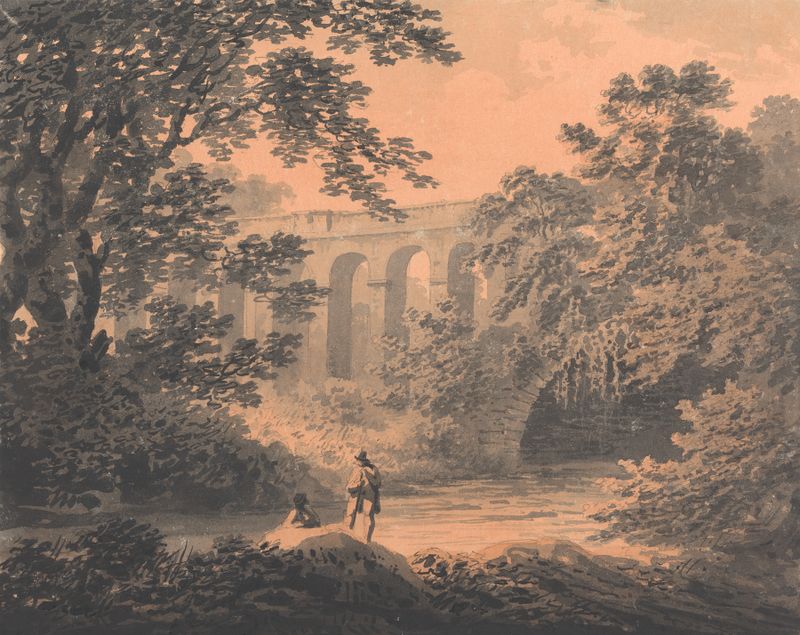
This paradox reminds us that within the void of nature, profound beauty emerges, evoking a longing for connection. Look to the center of the canvas where two men traverse a verdant expanse, their silhouettes set against a backdrop of rolling hills and a vast sky. The gentle palette of greens and blues invites the eye to wander, while the dappled light filters through the trees, illuminating the path ahead. Notice how the brushstrokes evoke movement; the flowing grass sways, whispering secrets of the landscape, as the figures seem both grounded and adrift in nature’s embrace. Amidst this serene tableau, tensions arise between the human presence and the wilderness, suggesting both companionship and isolation.
The distance between the men hints at individual journeys, while the expansive void around them speaks to the existential questions of existence and purpose. Each detail—the texture of the foliage, the interplay of light and shadow—invites contemplation on the fragility of life within the grandeur of the natural world. During the years between 1762 and 1783, the artist explored various aspects of landscape painting, influenced by emerging Romantic ideals. Working in England amidst shifting art philosophies, he sought to capture the raw beauty and emotional depth of nature, reflecting both personal and societal transformations.
This period marked a significant evolution in how landscapes were perceived, moving from mere representation to a canvas for deeper introspection.
More Artworks by William Gilpin
Browse all →
Bridgnorth Bridge, Shropshire
William Gilpin
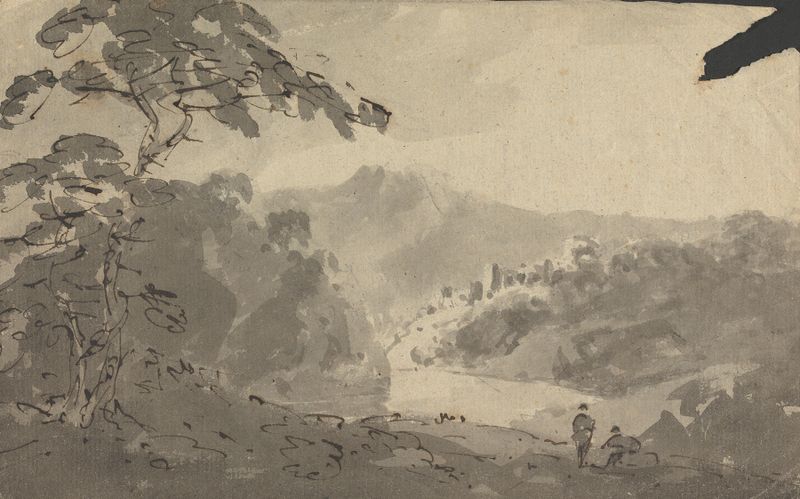
Two Men Looking Into Landscape with Castle, River and Mountain Scene
William Gilpin
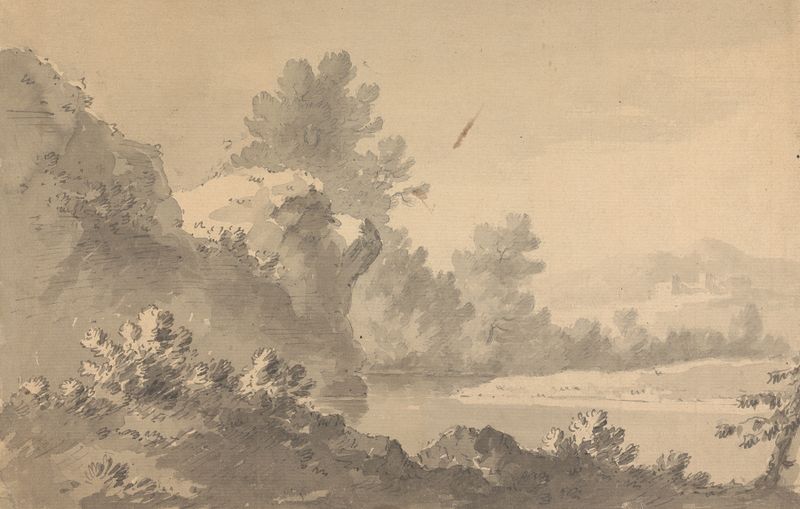
River Landscape with Castle in the Distance
William Gilpin
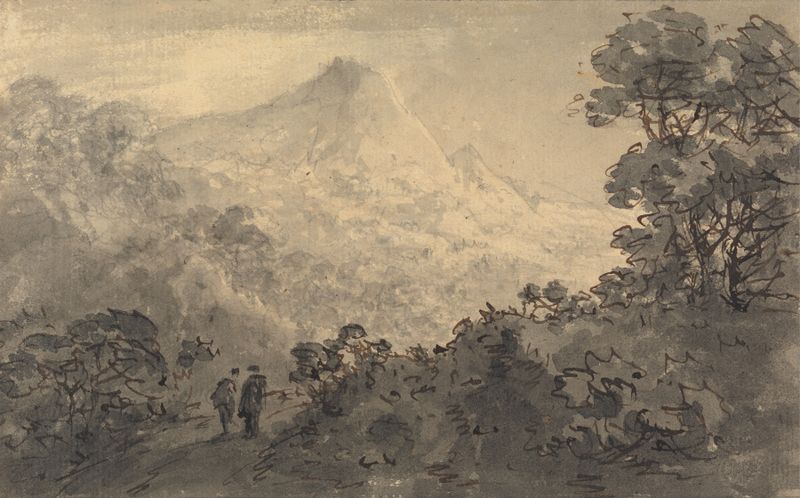
Snowdon
William Gilpin

Hilly Landscape
William Gilpin
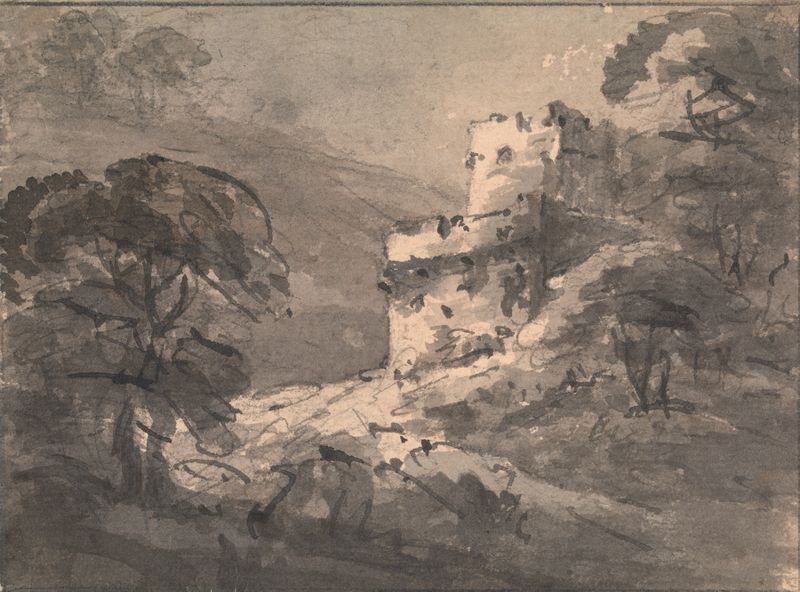
Landscape with a Ruined Castle on the Right
William Gilpin

Mountainous Landscape with Trees – High Crags to the Right
William Gilpin

View of Castle Ruin
William Gilpin
Bridge on the Malton Road from York
William Gilpin

Landscape with Two Trees and Castle
William Gilpin





