Landscapes and calligraphy Pl.1 — History & Facts
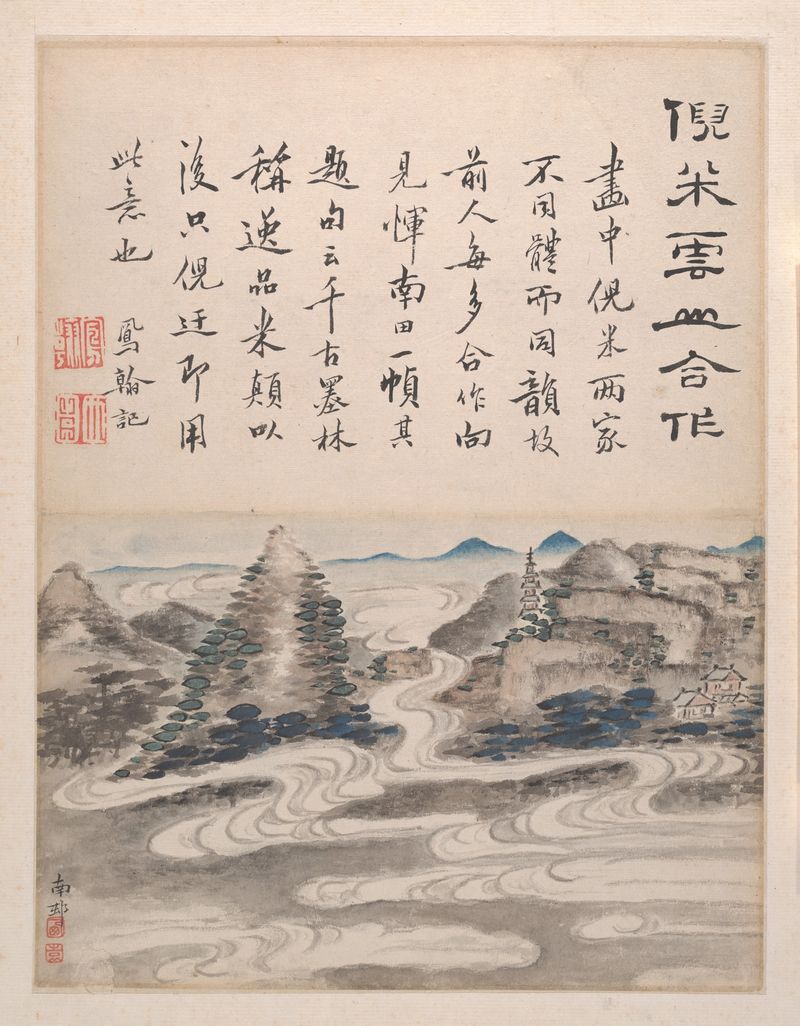
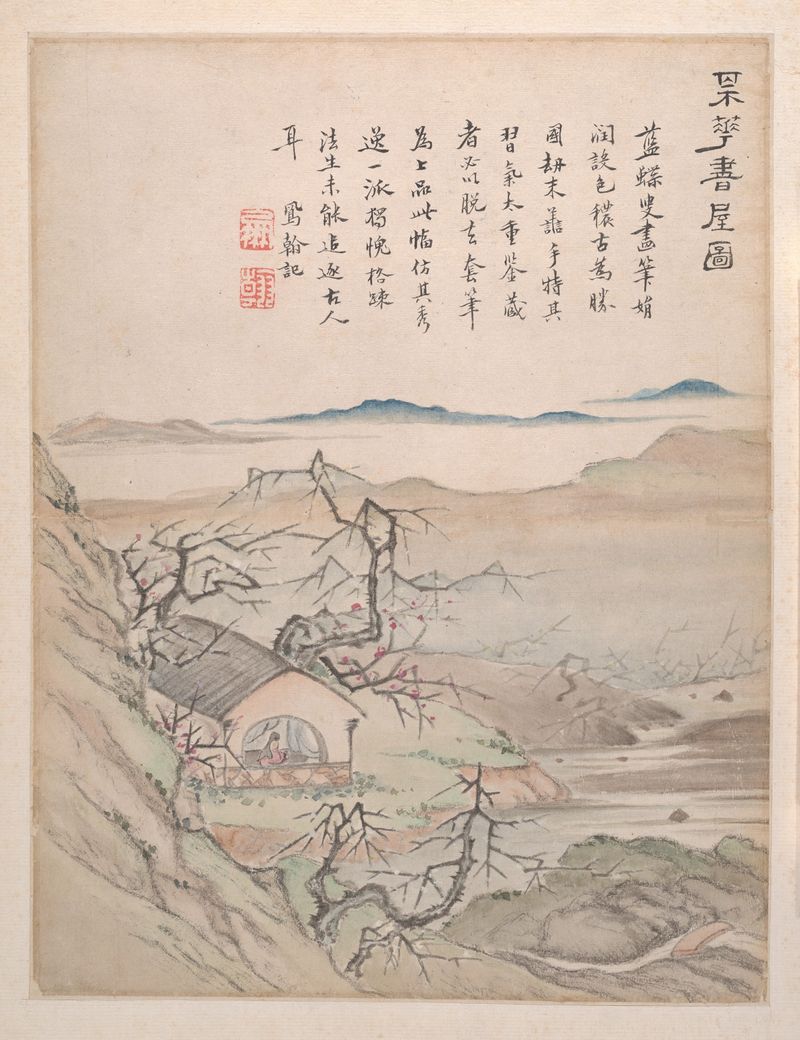
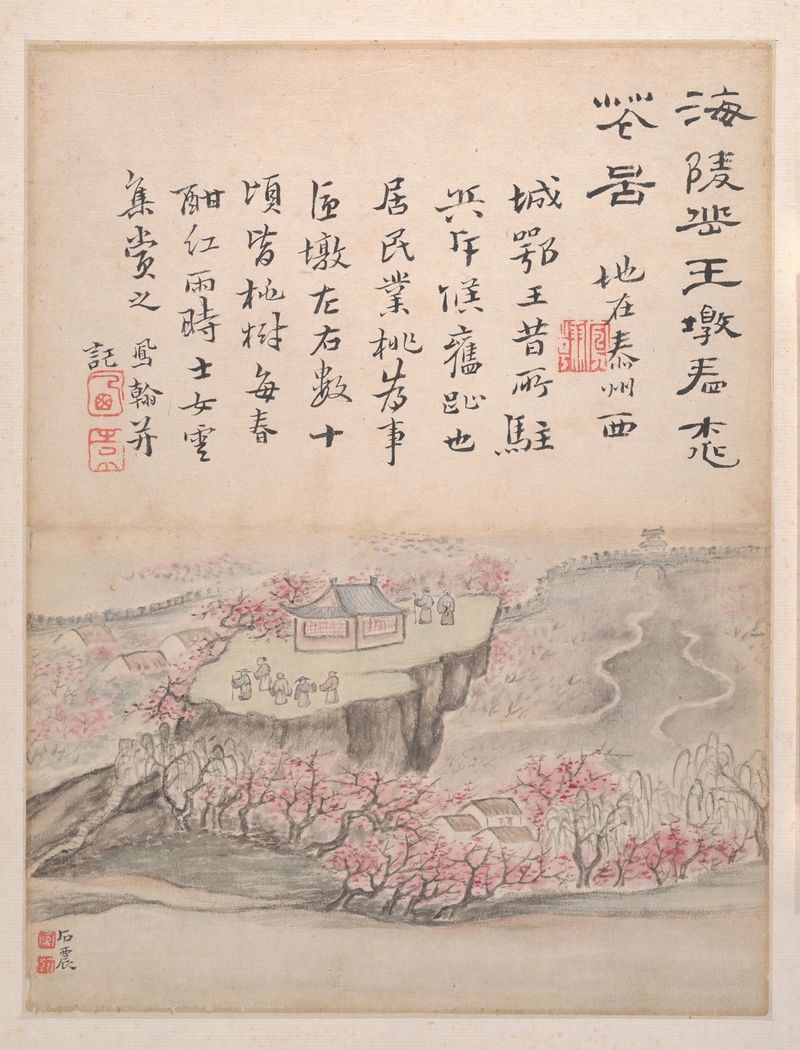
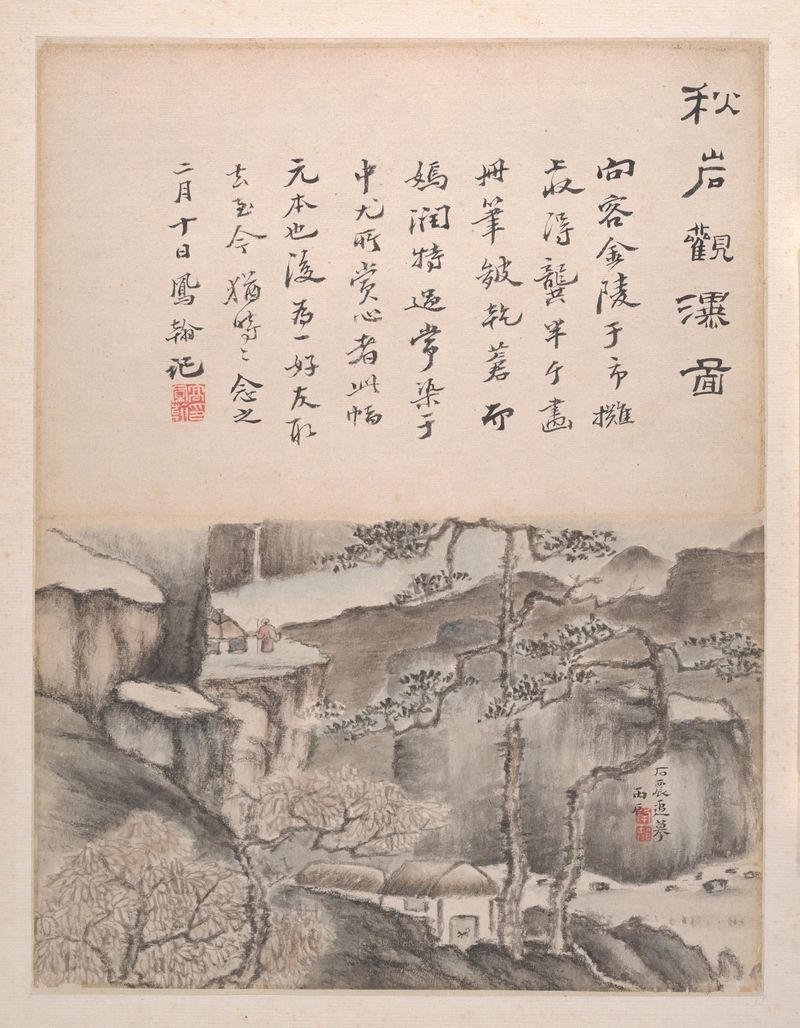
In the delicate dance of ink and pigment, there exists a profound connection between the earthly and the divine. The interplay of landscapes and calligraphy invites us to consider the universe’s vastness and our place within it. Focus first on the sweeping strokes that form the mountains in the background, their peaks gently kissed by wisps of cloud. The fluidity of the brushwork creates a rhythm, guiding the eye across the canvas from the bold, dark lines of the foreground to the ethereal softness of the horizon.
Notice how the layers of ink intertwine with flecks of color, suggesting not just a view but a journey into the sublime. Each character of the calligraphy flows seamlessly, merging the tangible landscape with the intangible essence of thought and emotion. Delve deeper into the contrasts presented here—the harmony of nature against the precision of text. The jagged edges of the mountains evoke strength and permanence, while the flowing script infuses the piece with a sense of fleeting beauty.
This duality reflects the artist’s internal dialogue, suggesting that spirituality can be found in both the natural world and the act of creation. Each element invites contemplation, urging viewers to reflect on their own aspirations and fears. In 1736, during the Qing Dynasty, the artist found himself at a pivotal moment in art history, exploring the interplay between traditional landscapes and the nuanced expression of calligraphy. Living in a time marked by cultural refinement and artistic patronage, he skillfully blended these disciplines, creating a work that resonates with the complexities of spirituality and nature.
This synthesis is not merely decorative; it is a testament to the era’s intellectual pursuits and the artist's personal quest for meaning.