Landscapes and calligraphy Pl.5 — History & Facts
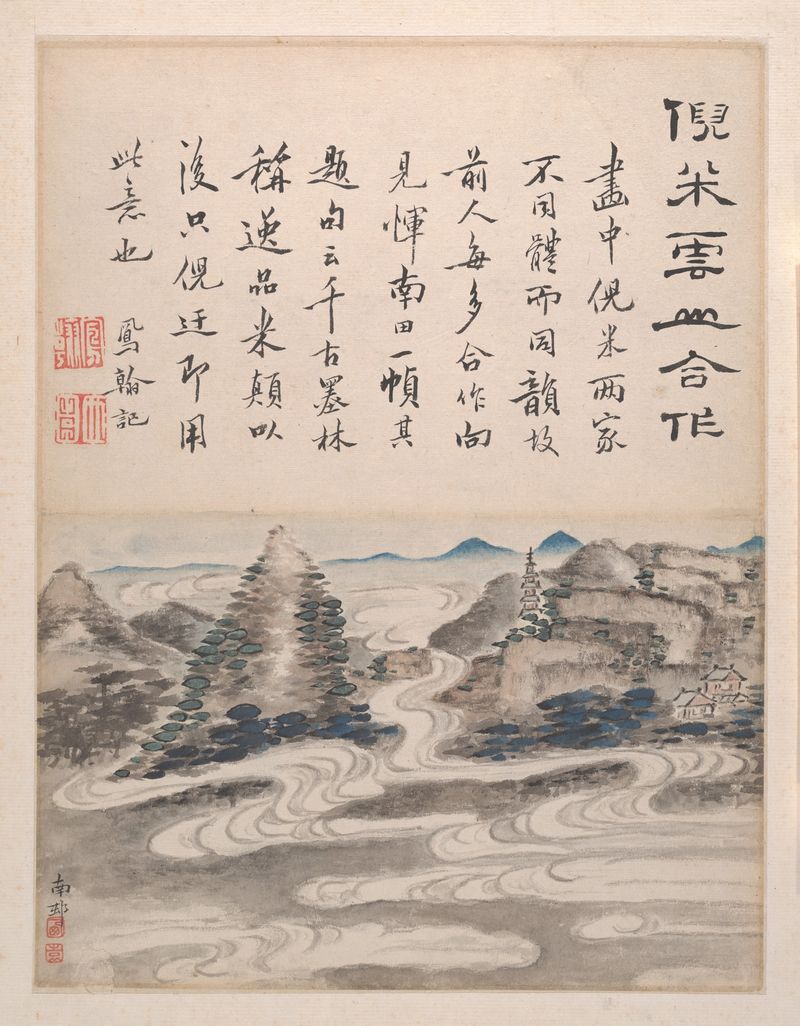
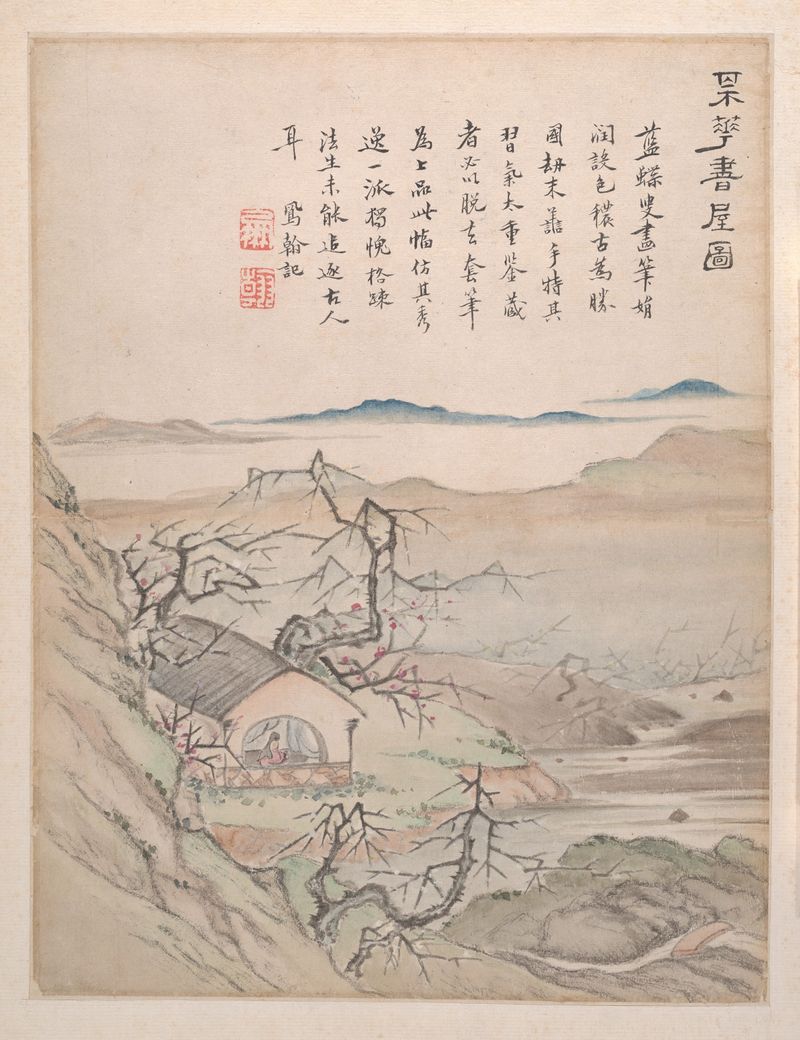
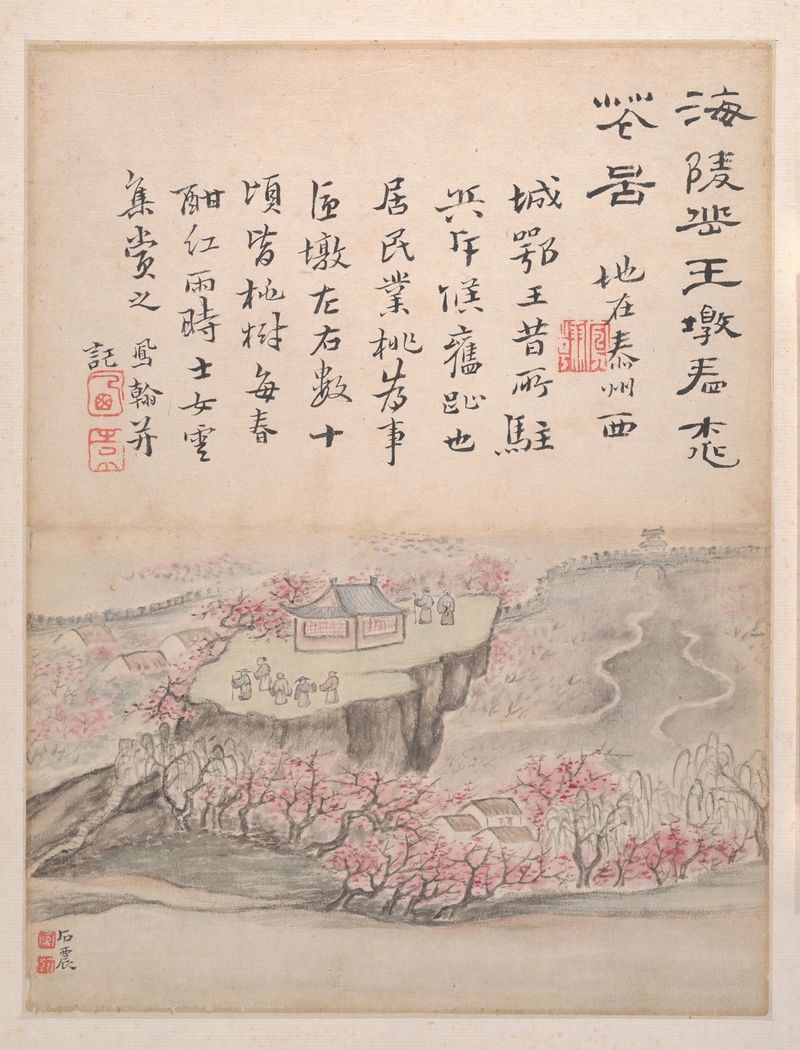
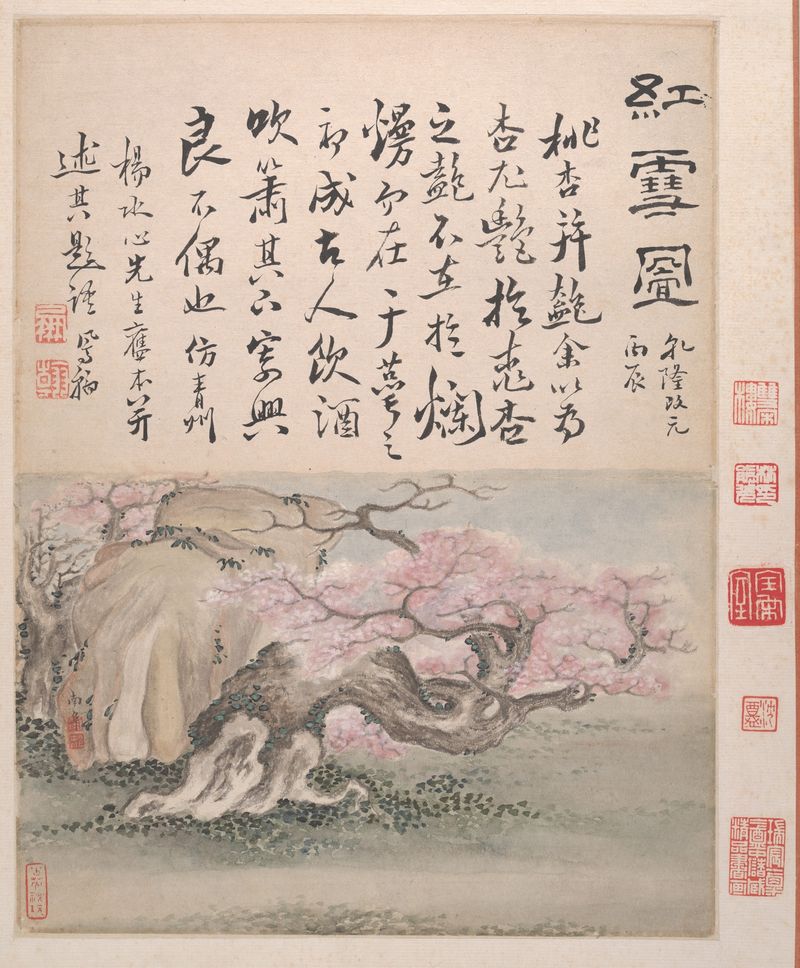
Can beauty exist without sorrow? In Landscapes and Calligraphy Pl.5, one might ponder this as the intertwining elements of nature and script evoke a profound emotional landscape. Look to the center, where the elegant brushstrokes of calligraphy dance seamlessly with the serene mountain backdrop. The muted earth tones highlight the delicate balance of strength and gentleness, guiding the eye from the rugged peaks to the softly flowing water. Notice how the ink's fluidity complements the tranquil nature scene, creating a harmonious relationship that speaks to the fusion of artistic expression and natural beauty. Hidden within the strokes, the tension between the bold calligraphy and the subtle landscape hints at life’s duality.
Each character carries weight, suggesting the burden of thought amidst the serene beauty surrounding it. The contrast between the sharpness of the written words and the softness of the landscape reflects an inner dialogue about creation—an exploration of how beauty often emerges from contemplation and, at times, sorrow. Gao Fenghan created this piece in 1736 while residing in China, during a period marked by the cultural reverberations of the Qing dynasty. This era was rich with a blend of traditional Chinese aesthetics and innovative artistic expression.
As an accomplished scholar and artist, Gao was deeply influenced by both the natural world and the literary traditions of his time, infusing his work with a sense of historical significance and personal introspection.