
Landschaft G 7088 Lenbachhaus — History & Facts
A sweep of open land stretches beneath a sky that seems to go on forever, drawing the viewer’s gaze from the foreground’s dark, textured trees to the far-off horizon where the fields dissolve into blue haze. The eye is led gently from the shadowed greens at the bottom edge up through the patchwork of ochre and olive, where tiny figures and cattle move almost unnoticed, their presence a quiet reminder of human life at work. The low horizon gives the sky the leading role, its shifting blues and soft-edged clouds suggesting a day of changeable weather, perhaps late summer or early autumn, when the land is busy and the air is thick with the scent of cut grass. Painted in 1856, Landschaft G 7088 Lenbachhaus by Adolf Heinrich Lier belongs to a moment in German art when landscape was more than a backdrop—it was a subject in its own right, a field for exploring light, atmosphere, and the rhythms of rural life.
Artists of this era, influenced by the Barbizon School in France, often worked outdoors to capture fleeting effects of weather and season. While little is recorded about the specific history of this painting, its home in the Lenbachhaus collection and its date place it firmly within this movement’s embrace of nature’s quiet drama. The painting invites you to linger, to let your eyes wander across its fields and sky, and to imagine the world as it was seen in the middle of the nineteenth century.
More Artworks by Adolf Heinrich Lier

Erntetag in Oberbayern bei Habach
Adolf Heinrich Lier

Küstenlandschaft mit Windmühle
Adolf Heinrich Lier
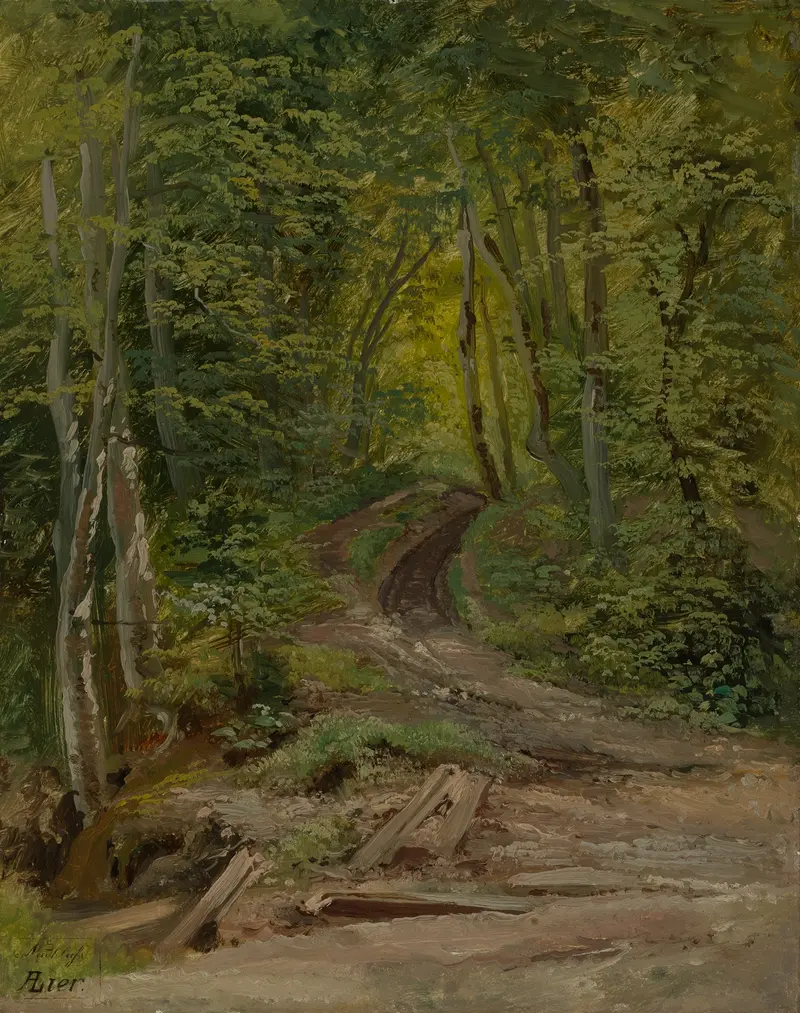
Waldinneres
Adolf Heinrich Lier
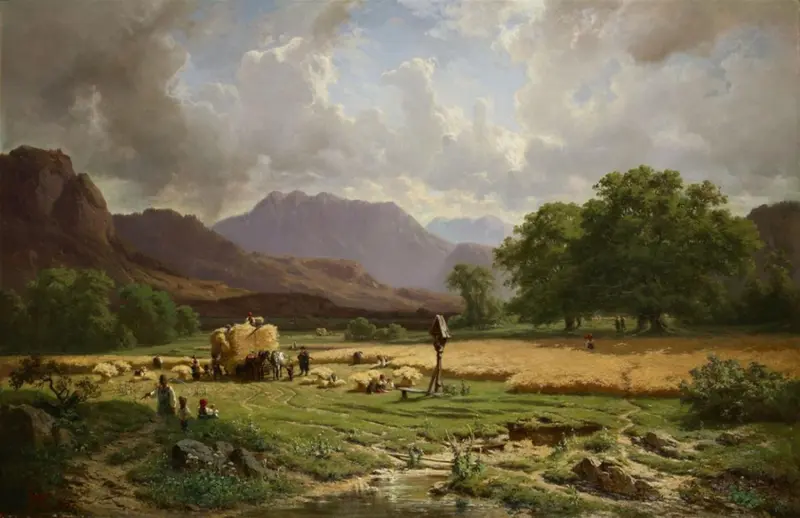
Grain Harvest in the Mountain
Adolf Heinrich Lier
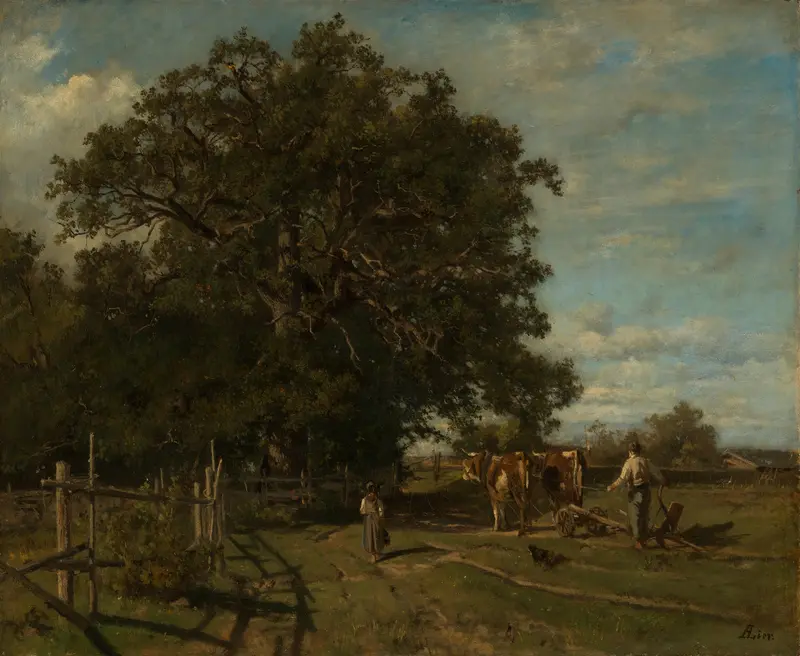
Eiche am Waldrand und pflügender Bauer
Adolf Heinrich Lier
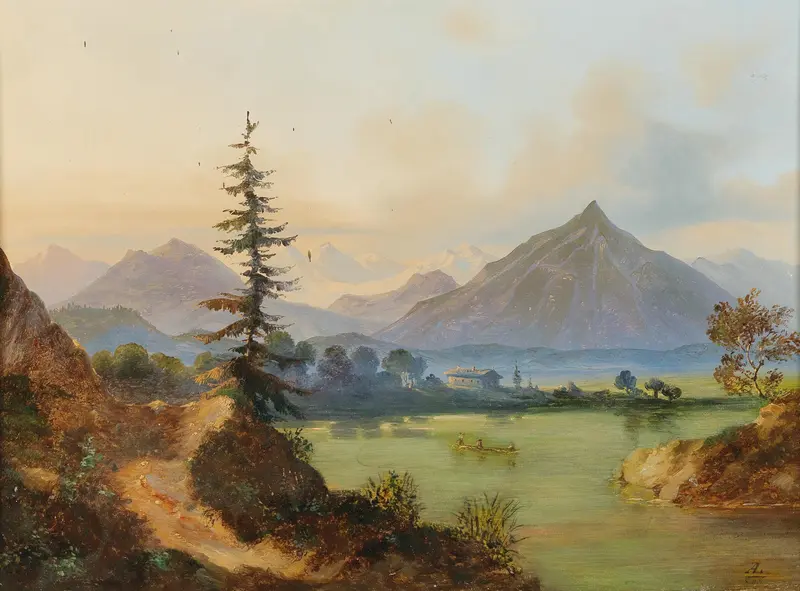
Lake In A Mountain Landscape
Adolf Heinrich Lier

Herbstlandschaft am Abend mit heimkehrender Schafherde
Adolf Heinrich Lier
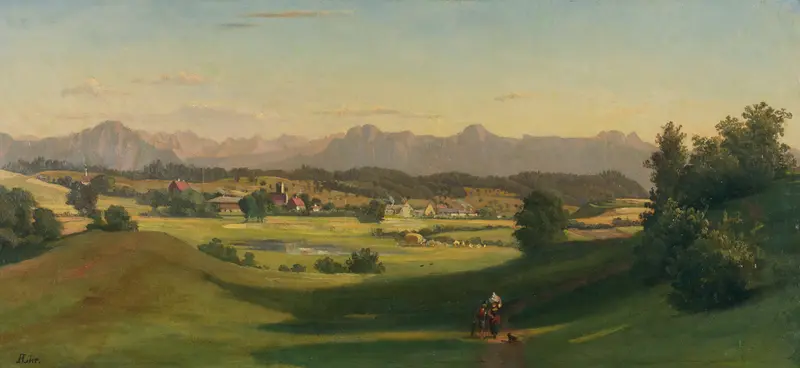
Landschaft bei Murnau
Adolf Heinrich Lier
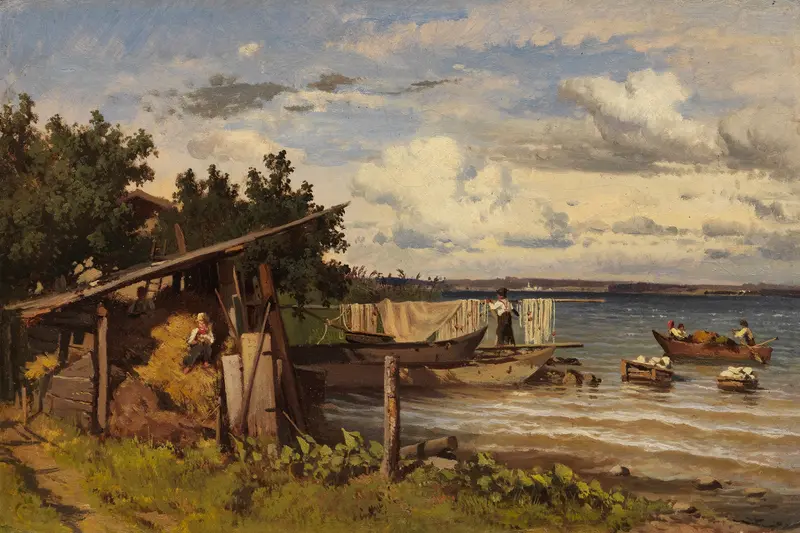
Fischer am Seeufer
Adolf Heinrich Lier
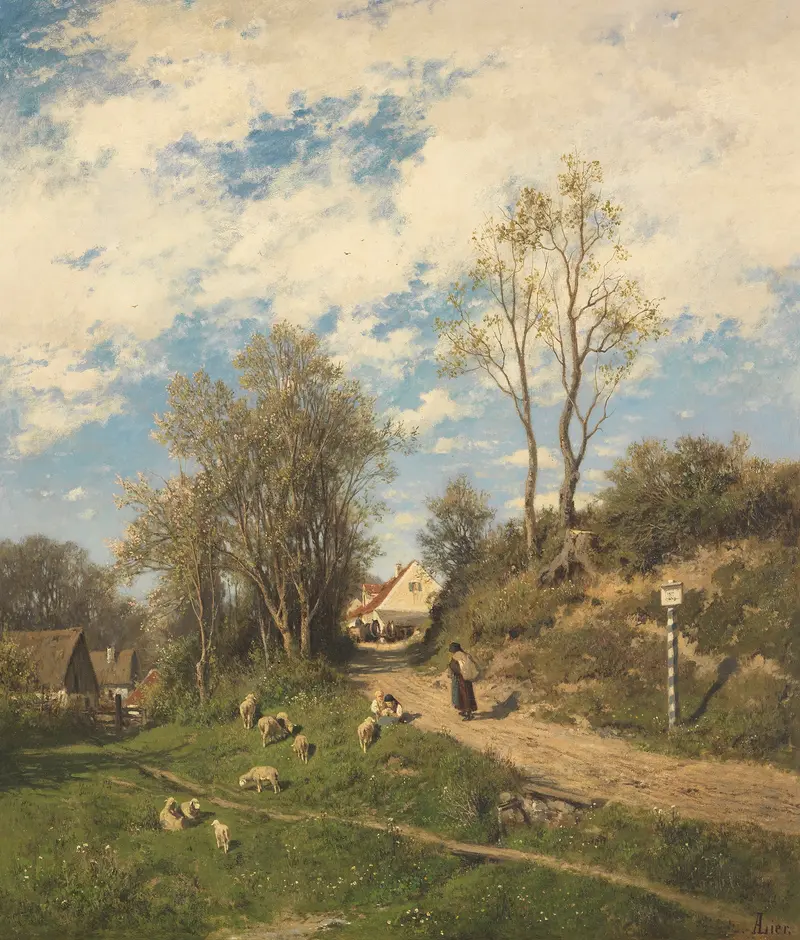
Frühlingsmorgen
Adolf Heinrich Lier
More Landscape Art

The Starry Night
Vincent van Gogh

View of Delft
Johannes Vermeer

Water Lilies
Claude Monet

The Grand Canal, Venice, looking north-west from the Ca' Corner to the Ca' Contarini degli Scrigni, with the campanile of Santa Maria della Carità
Canaletto

Windsor Castle
Canaletto

The Grand Canal looking North-East from the Palazzo Dolfin-Manin to the Rialto Bridge
Canaletto