Landschap met boerderij, brug en sloot — History & Facts
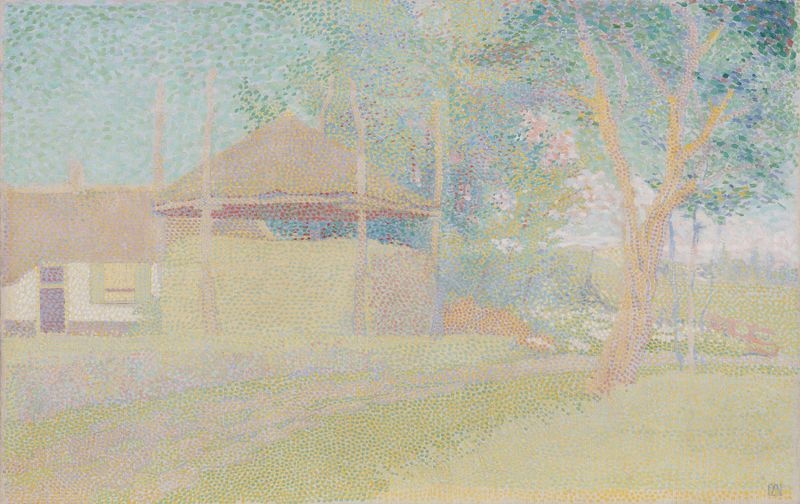
In the landscape of nostalgia, familiar scenes fade into the ether yet linger in the mind's eye. Memories become tangible, weaving the past and present into a tapestry of emotion and experience. Look to the left at the tranquil farmhouse, its soft hues of ochre and warm ivory inviting you into the scene. Notice how the gentle curves of the bridge lead your gaze across the water, where reflections shimmer like dreams half-remembered.
The palette of greens and blues envelops the viewer, grounding the composition in a rich, serene environment that seems to breathe with life. As you delve deeper, consider the contrasts in this seemingly idyllic scene. The sturdy farmhouse represents stability, while the bridge suggests a passage, perhaps a journey between nostalgia and reality. The subtle play of light across the water evokes transient moments, hinting at the fleeting nature of memory and the emotions tied to places left behind.
Each element, though serene, carries whispers of longing, nostalgia, and the ever-elusive passage of time. In 1905, the artist, working during a period of burgeoning modernism, found solace in landscapes that reflected the world around him. Living and painting in the Netherlands, he captured a moment in time when the countryside was beginning to evolve under the pressures of urbanization. This work not only emphasizes the beauty of rural life but also serves as a poignant reminder of the memories tied to landscapes that may soon vanish.