
Landschap met molen in de Binckhorst in Den Haag — History & Facts
In the quiet of a countryside, creativity takes flight amidst the pastoral beauty, revealing not just landscapes, but the essence of existence itself. Look to the horizon where gentle hills roll into the distance, leading your gaze to the rustic windmill standing resolute against the open sky. The soft palette of greens and muted browns dominates the canvas, punctuated by flecks of sunlight that dance across the water’s surface. Grondhout’s brushwork conveys an intimate familiarity with the land, each stroke breathing life into the peaceful scene. Yet, within the tranquility lies a subtle tension between nature and human presence.
The presence of the windmill signifies an enduring connection to the past, a reminder of the industrious spirit that shaped the landscape. Notice the shadows that stretch languidly across the field, hinting at the passage of time and the ephemeral nature of our existence. It captures a moment suspended between creation and decay, as the pastoral life continues, unfazed by the rush of modernity. In 1916, during a time of upheaval in Europe due to World War I, Grondhout painted this serene landscape as a tribute to the beauty of his homeland in The Hague.
His work reflects a longing for peace amidst chaos, embodying the movement toward a more personal and introspective approach in Dutch art. This painting represents not only a visual escape but also a testament to the resilience of the human spirit during troubled times.
More Artworks by Willem Adrianus Grondhout
Browse all →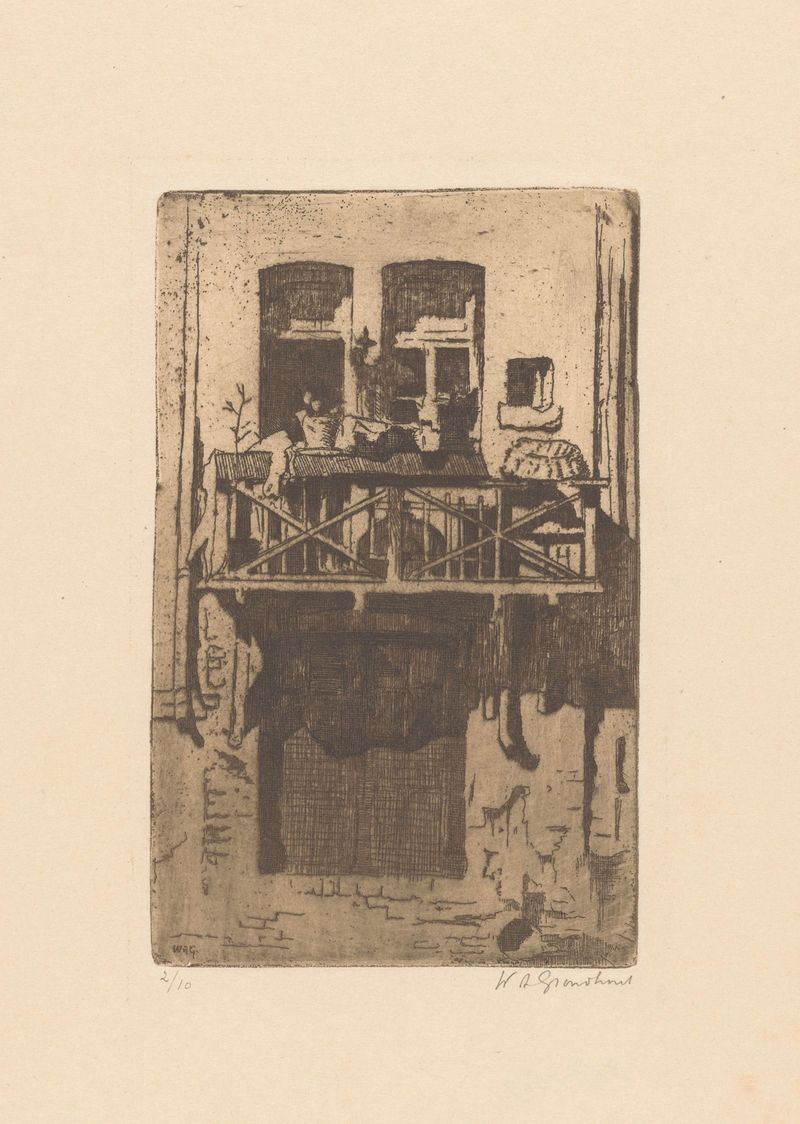
Balkon van een huis aan de Oudezijds Kolk in Amsterdam
Willem Adrianus Grondhout
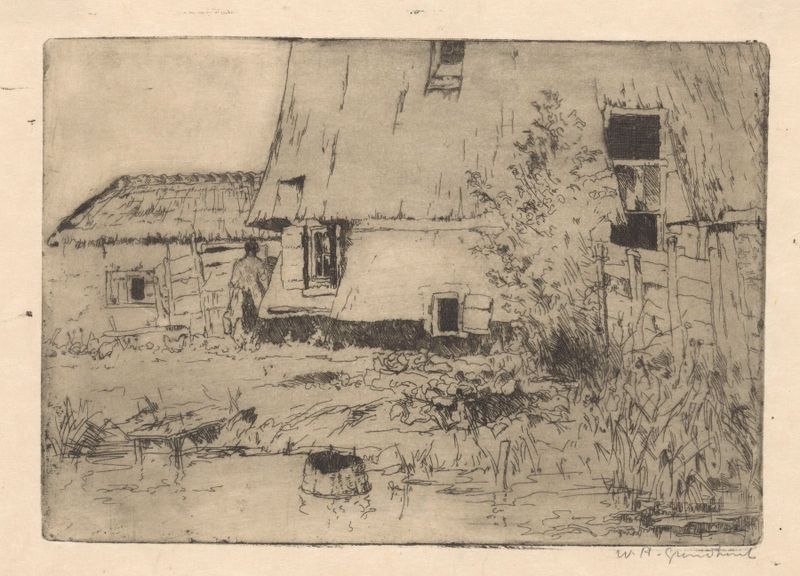
Voet van een molen in Voorburg
Willem Adrianus Grondhout
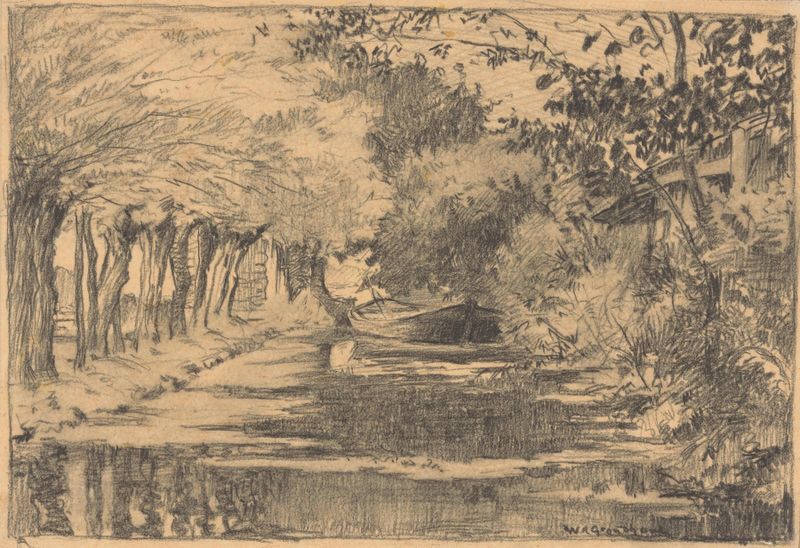
Broeksloot bij Voorburg
Willem Adrianus Grondhout
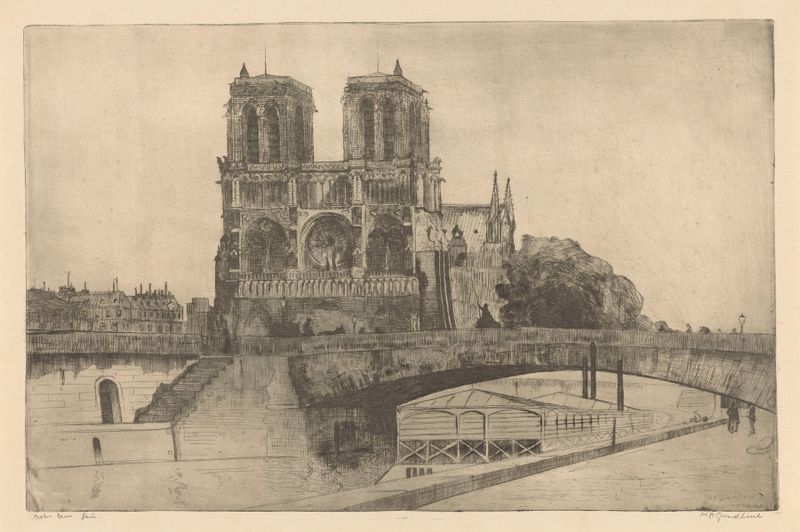
Notre-Dame, Paris
Willem Adrianus Grondhout
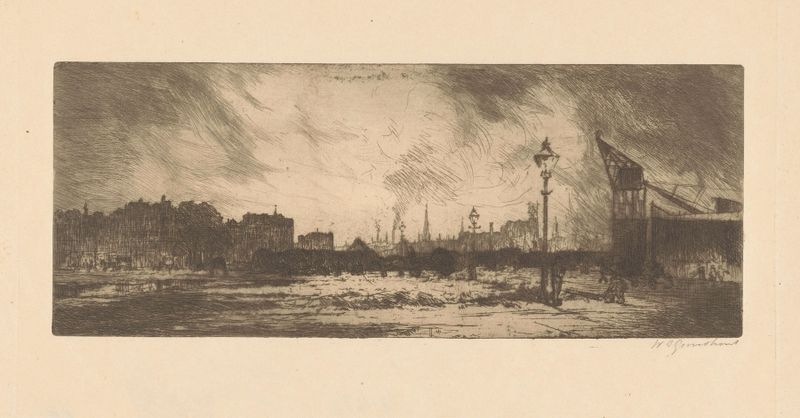
Havenkade met lantaarnpalen in Rotterdam
Willem Adrianus Grondhout
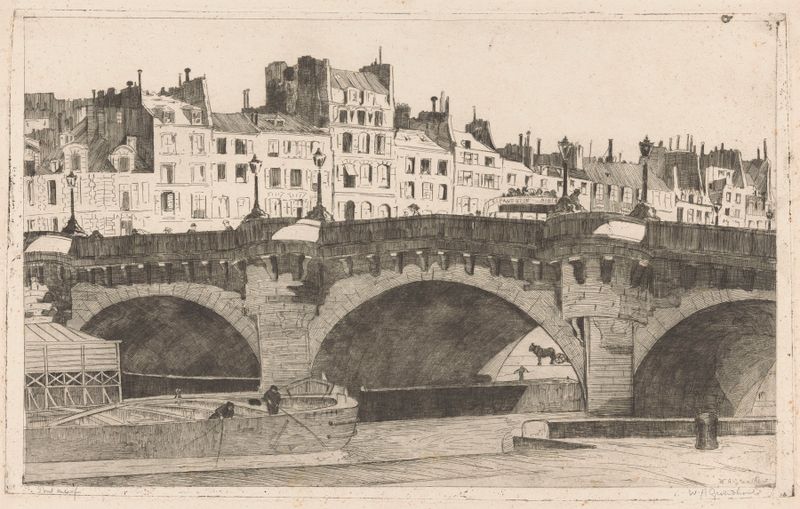
Pont Neuf
Willem Adrianus Grondhout
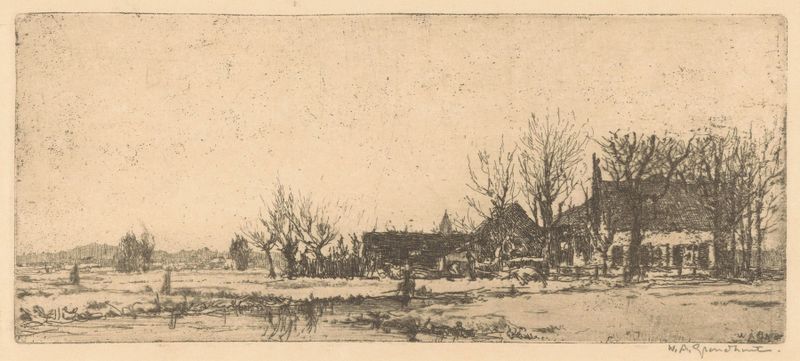
Boerderij bij Voorburg.
Willem Adrianus Grondhout
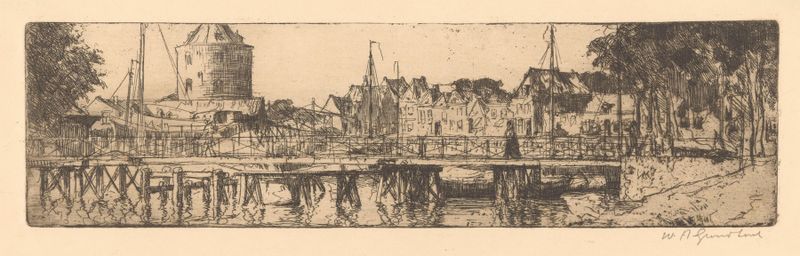
Enkhuizen
Willem Adrianus Grondhout
Huizen in Rijswijk
Willem Adrianus Grondhout
Smidswater in Den Haag
Willem Adrianus Grondhout





