
Landschap met molens en schaatsers — History & Facts
Could beauty survive in a century of chaos? In the heart of winter's embrace, a tranquil scene unfolds, where innocence finds refuge amidst the frosty landscape. Look to the foreground where skaters glide gracefully across the shimmering ice, their figures a delicate balance of motion and stillness. The gentle strokes of blue and white harmonize with the soft amber tint of the setting sun, casting an ethereal glow over the scene. Notice how the windmills rise in the background, their sails a poignant contrast to the joyful antics of the skaters, evoking both the industrious spirit and the serenity of rural life. Yet beneath the idyllic surface lies a tension between the stillness of nature and the fleeting joy of the moment.
Each skater embodies a fragment of innocence, a reminder of simple pleasures amidst the passage of time. The scene resonates with nostalgia, capturing the tension between fleeting happiness and the inevitable encroachment of modernity, as represented by the towering windmills that hint at an era of change. In 1868, Jongkind painted this work during a transformative period in the Netherlands, reflecting the growing influence of impressionism. Living in Paris and engaging with the avant-garde, he sought to convey the ephemeral beauty of landscapes and human interactions.
This painting stands as a testament to his ability to capture the essence of life amidst the shifting cultural landscape of his time.
More Artworks by Johan Barthold Jongkind
Browse all →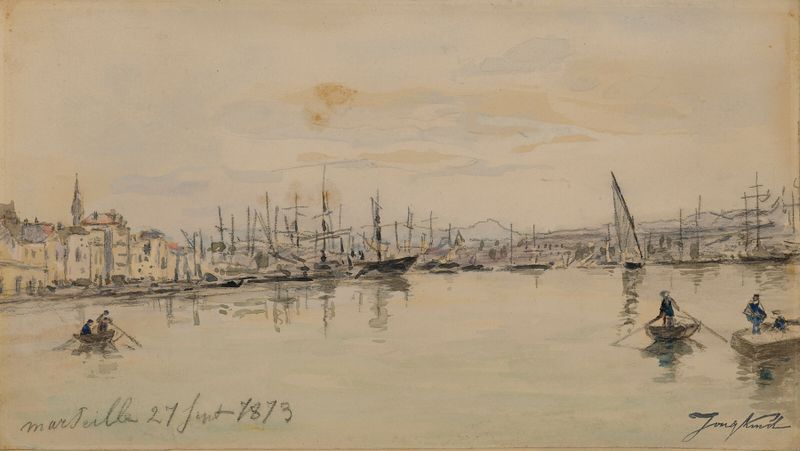
Le Port de Marseille
Johan Barthold Jongkind

Canal Saint-Martin
Johan Barthold Jongkind

Countryside near Brezins, between Grenoble and Vienne
Johan Barthold Jongkind

Notre-Dame vue du quai de la Tournelle
Johan Barthold Jongkind

Environs de Grenoble
Johan Barthold Jongkind

Clair de lune à Overschie (environs de Rotterdam)
Johan Barthold Jongkind

Port de Honfleur
Johan Barthold Jongkind
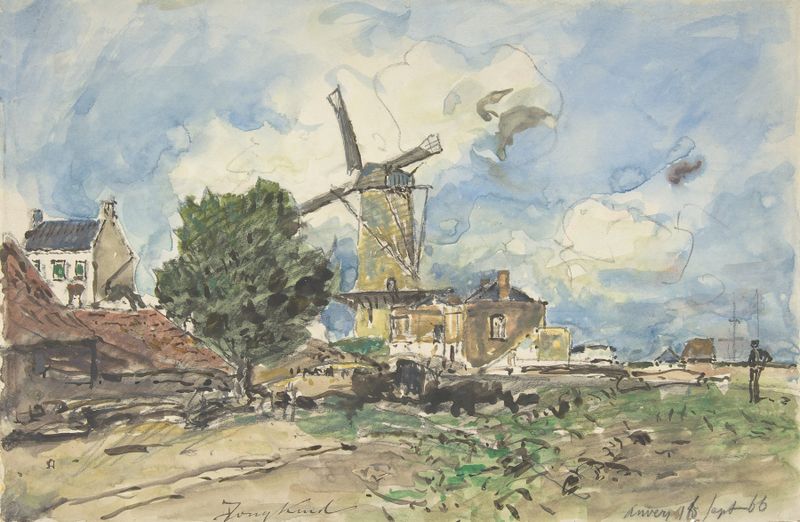
Wind Mill at Antwerp
Johan Barthold Jongkind

Le Havre
Johan Barthold Jongkind

The Church of Overschie
Johan Barthold Jongkind





