
L’arbre vert et le grand chêne — History & Facts
Can beauty exist without sorrow? In L’arbre vert et le grand chêne, Louis Valtat invites us to explore the delicate interplay between joy and melancholy within nature’s embrace. Through vibrant brushstrokes and a masterful palette, he captures a moment suffused with life, yet imbued with an undercurrent of nostalgia. Look to the center of the canvas, where the grand oak tree stands majestically, its leaves swaying gently, almost as if whispering secrets to the wind. Notice how the light filters through the foliage, creating dappled patterns that dance upon the ground.
The vivid greens and earthy browns juxtapose against soft blues, harmonizing the various elements of the painting. The movement evokes a sense of vitality, while the careful layering of paint reveals the artist's deep understanding of texture and atmosphere. Delve deeper into the work, and you'll find that the lush greenery is not merely a backdrop but a complex emotional landscape. The towering oak embodies strength and endurance, while the smaller verdant tree suggests both fragility and potential.
This contrast speaks to the cyclical nature of life—growth intertwined with decay, and joy shadowed by sorrow. The painting captures a fleeting moment, suggesting that beauty is always evolving, shaped by both light and darkness. Created in 1921, Valtat painted this piece during a time of personal reflection and artistic exploration. The post-World War I era was marked by a yearning for renewal and peace, as artists sought to break free from traditional constraints.
Valtat, working primarily in France, was influenced by the Impressionist movement, yet he carved his own path with a focus on color and movement, capturing the essence of nature with a unique vision.
More Artworks by Louis Valtat
Browse all →
Bord de rivière aux arbres
Louis Valtat

Normandie
Louis Valtat

Paysage du Midi
Louis Valtat
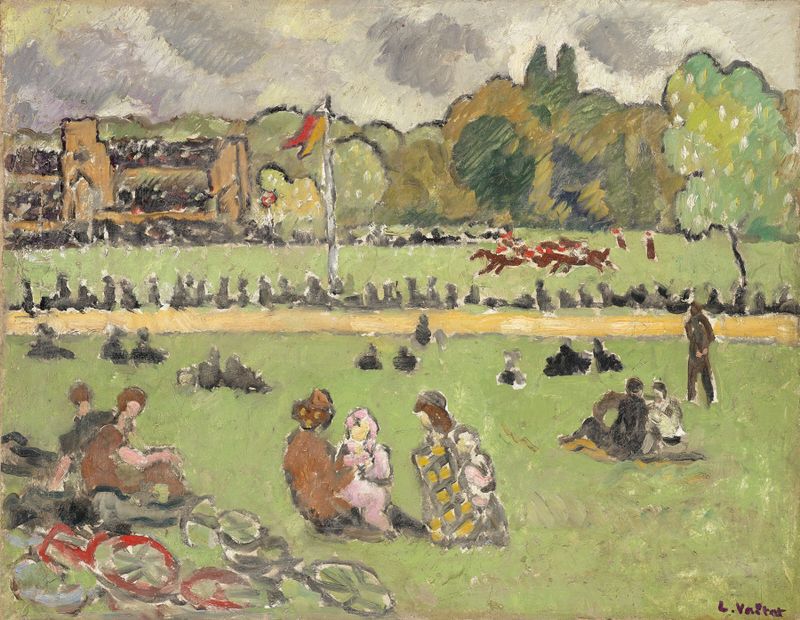
Les Courses
Louis Valtat
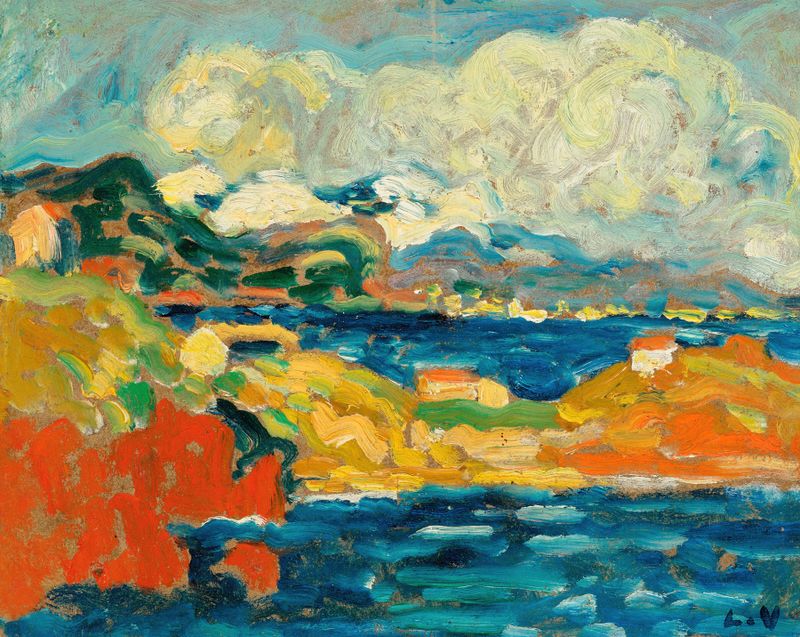
La baie à Anthéor
Louis Valtat

Femme assise au bord de la mer
Louis Valtat
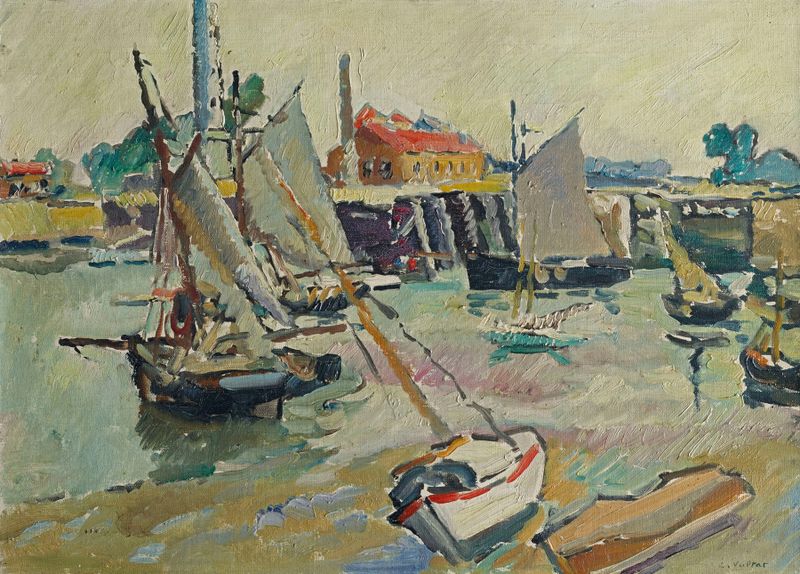
Voiliers au port à marée basse, Ouistreham
Louis Valtat

La maison au bord de la route en Normandie
Louis Valtat

La maison dans le jardin fleuri
Louis Valtat

Le jardin de la maison au toit rouge
Louis Valtat





