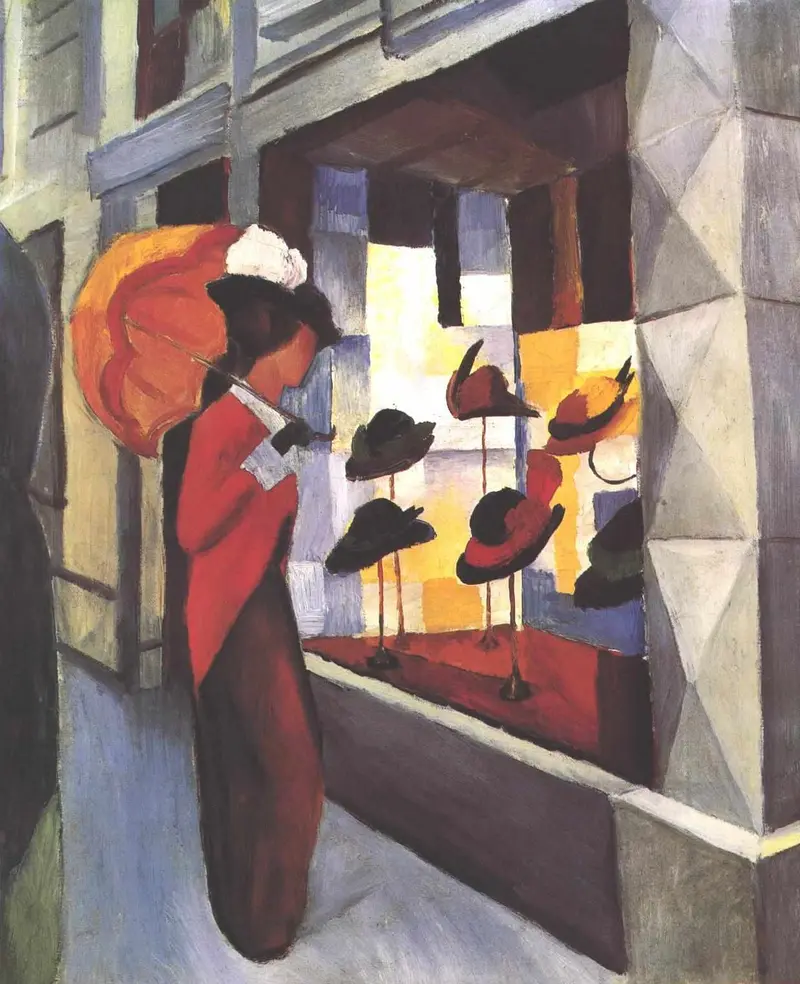
Large Bright Showcase — History & Facts
A figure in a blue coat, back turned and haloed by a wide hat, stands before a riot of fractured color and light. The glass of the showcase is not simply a barrier but a prism, breaking the world behind it into shards of red, orange, white, and green—each brushstroke a suggestion of objects just out of reach. The woman's stillness is a foil to the restless geometry around her; her presence anchors the composition, drawing the eye to the center where the world dissolves into abstraction.
Notice how the blue of her coat acts as a visual pause, a cool note amid the heat of the display, while the hat’s bold arc echoes the curves and angles that pulse through the scene. This is not a simple act of window-shopping, but a moment suspended between desire and modernity, the glass both invitation and separation. Painted in 1912, Large Bright Showcase belongs unmistakably to the world of early twentieth-century Europe, when artists like August Macke were electrified by the innovations of Cubism and the possibilities of urban life. The period saw the rise of the department store and the spectacle of consumer culture, with shop windows becoming stages for the drama of modern existence.
Macke, associated with the Expressionist and Der Blaue Reiter circles, often captured the fleeting encounters and vibrant rhythms of city streets. While little is recorded about the journey of this specific canvas, its fractured forms and luminous palette speak to a moment when art was breaking free of old certainties, mirroring a society in flux. Let your gaze linger on the interplay of shapes and colors—the painting invites you to see, as its subject does, the world anew through glass.
More Artworks by August Macke
Woman with a Parasol in Front of a Hat Shop
August Macke

Street with Church in Kandern
August Macke
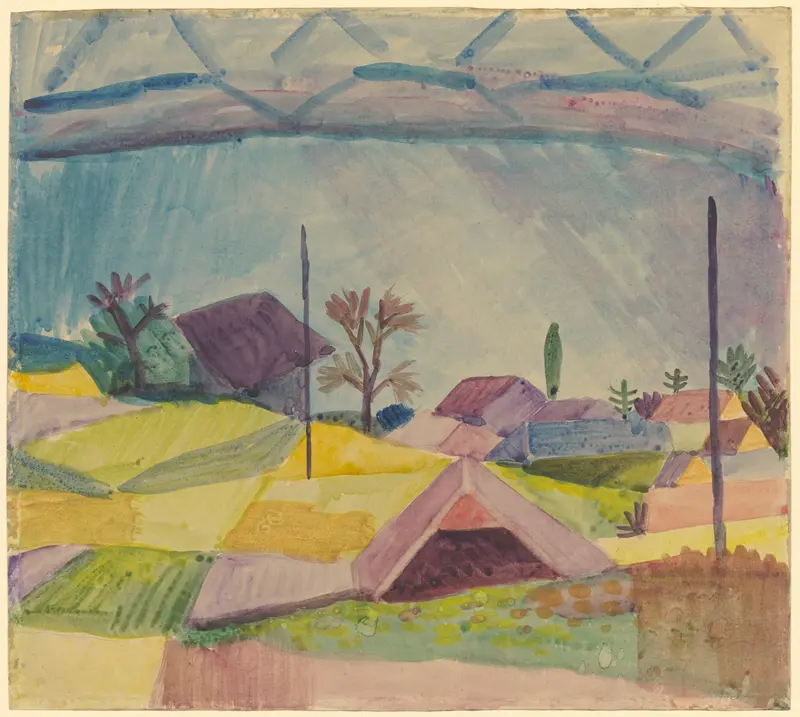
View of Hilterfingen
August Macke

Paar im Nachen
August Macke
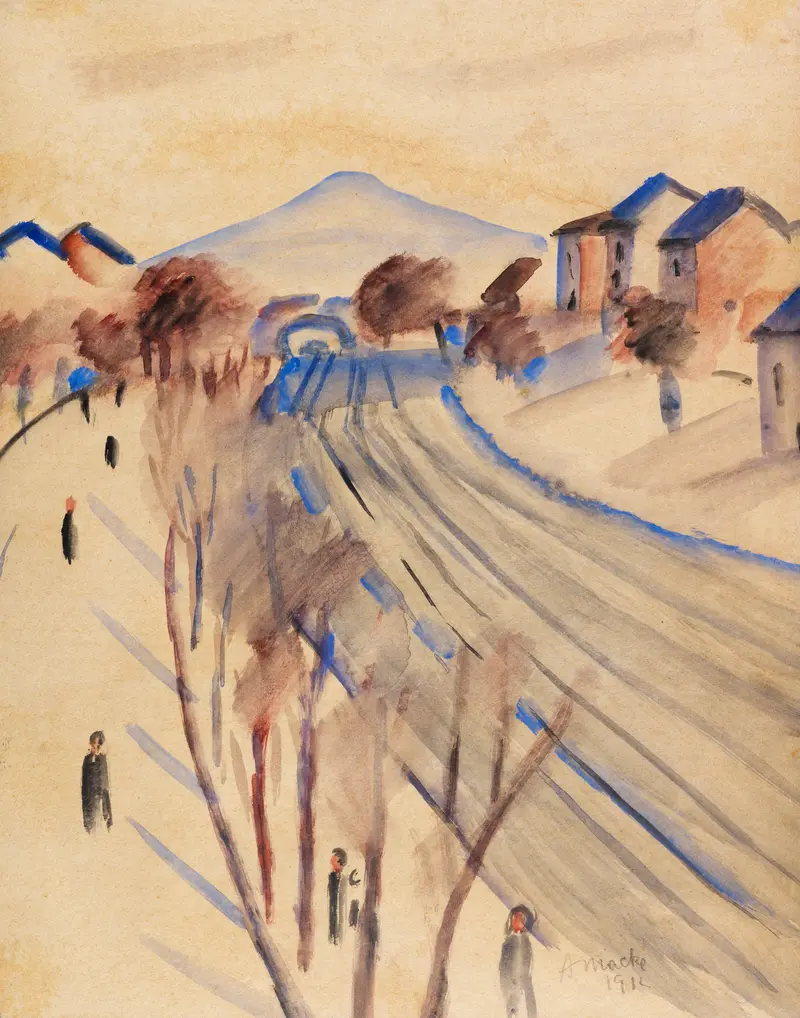
Ölberg mit Bahngleisen II
August Macke
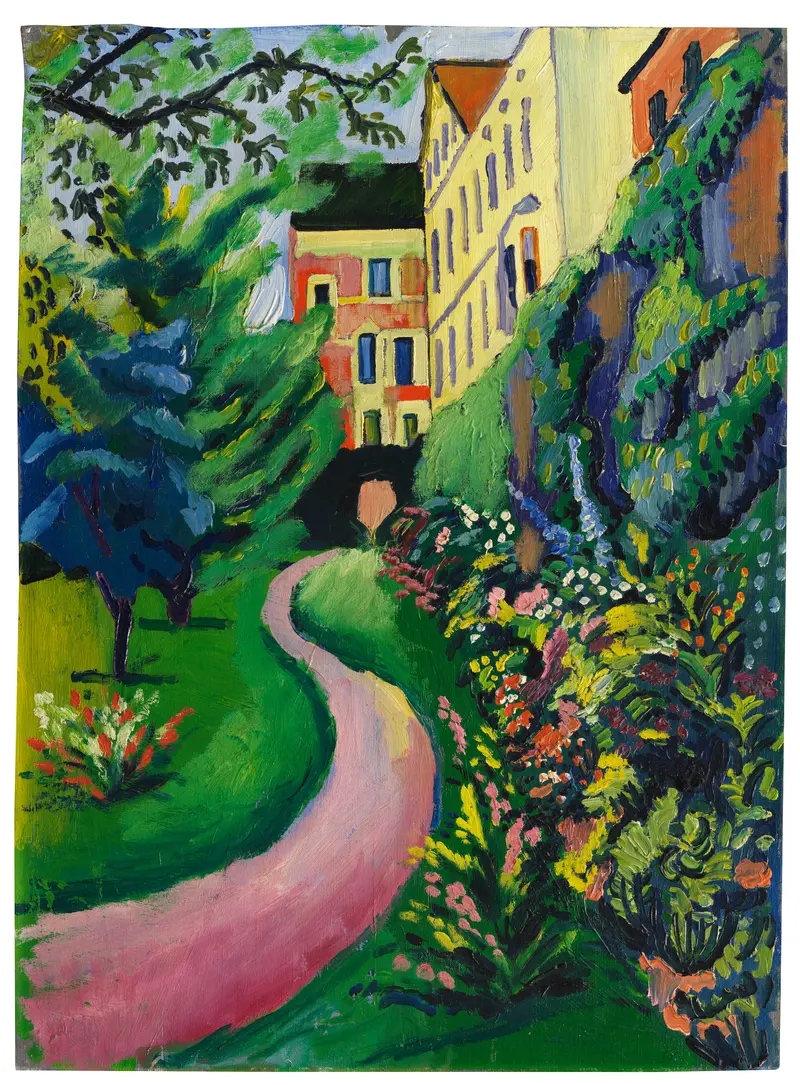
Unser Garten mit blühenden Rabatten
August Macke
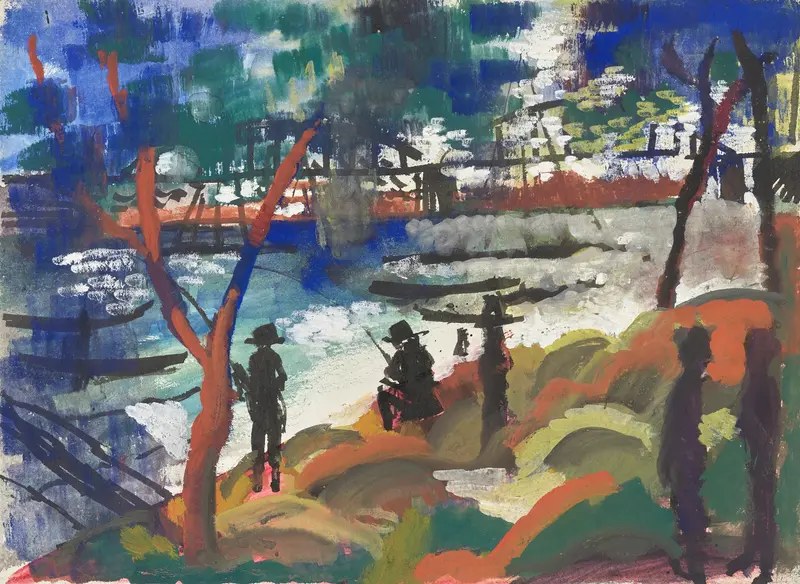
Angler am Fluss
August Macke
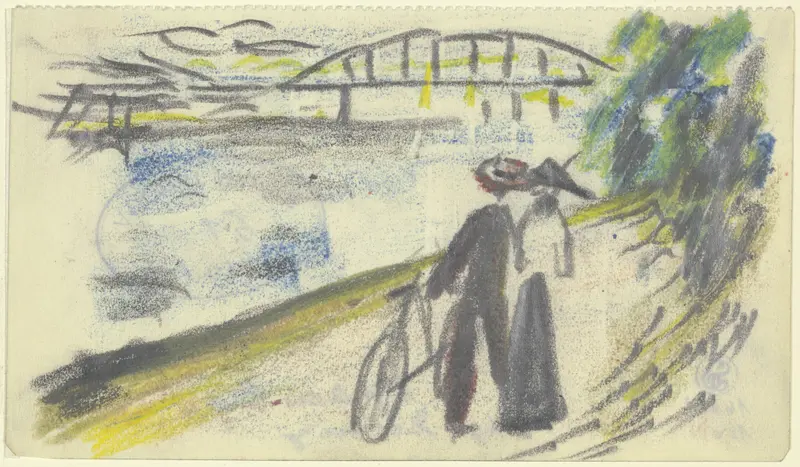
Path at the Rhine
August Macke
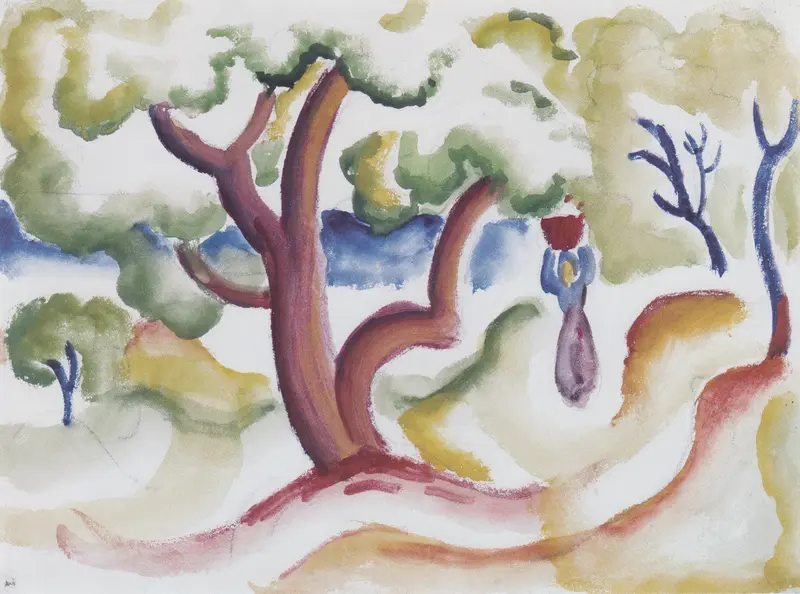
Frau mit Krug unter Bäumen
August Macke
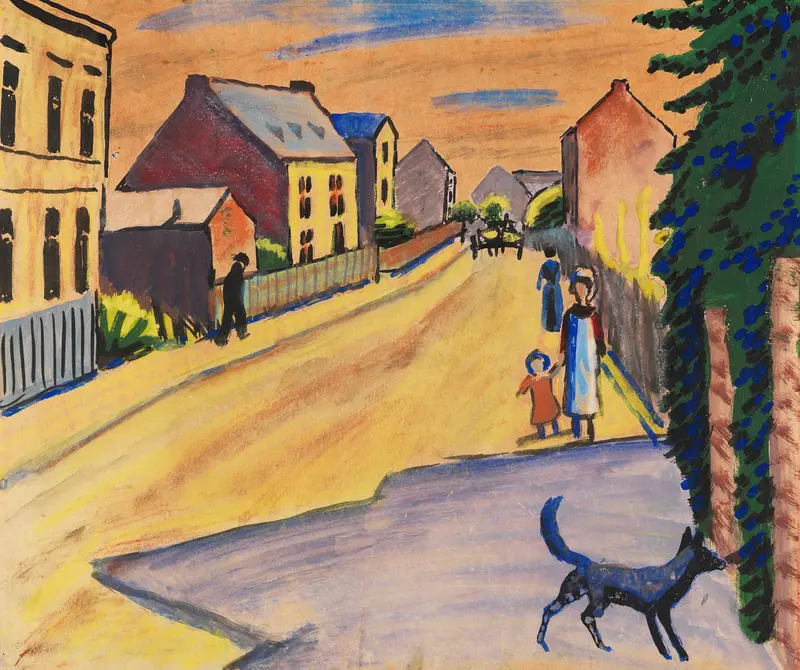
Sonnige Straße mit Hund
August Macke