Las parvas (la pampa de hoy) — History & Facts
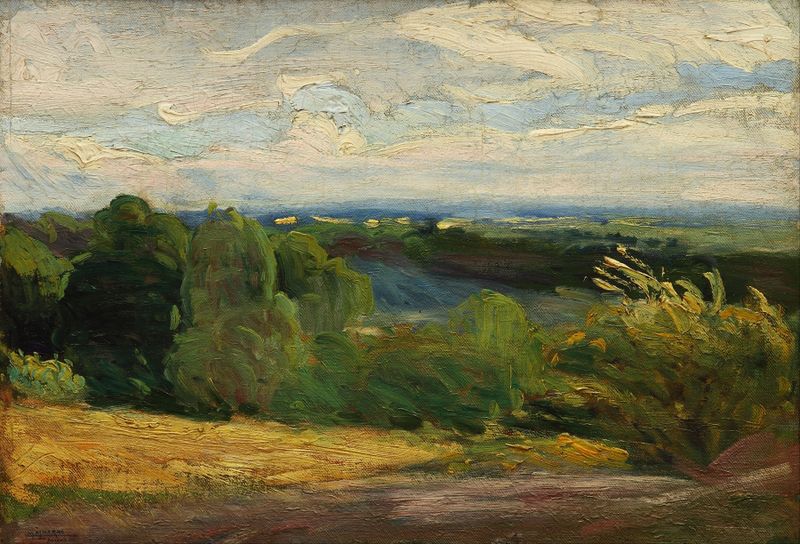
Could beauty survive in a century of chaos? In Las parvas (la pampa de hoy, the vastness of the Argentine landscape whispers its steadfast resilience against the tumult of time. Look to the lush green foreground, where vibrant grasses sway gently under an expansive sky. The eye is drawn to the horizon, where warm, golden tones blend seamlessly with the azure above. The brushstrokes are lively yet deliberate, capturing the essence of wind dancing across the pampa.
Notice how the colors shift from earthy browns to lively greens, symbolizing life emerging amid the stillness. This interplay of light and shadow creates a sense of depth, inviting the viewer to journey into the heart of this serene yet potent landscape. Within this scene, an emotional tension arises between nature's eternal beauty and the changes wrought by human hands. The endless fields, dotted with the occasional figure, evoke both solitude and connection.
Each element—a patch of sunlight here, a shadow there—speaks to the fleeting nature of time, as if the landscape holds memories of those who have walked before. This dichotomy encourages reflection on our role in a world that is both breathtaking and vulnerable. At the time Las parvas was painted, Malharro was emerging as a prominent figure in the Argentine art scene, seeking to define local identity through his work. He painted this piece between 1885 and 1911 amidst a period of artistic experimentation and national consciousness in Argentina.
As the world around him grappled with modernization, Malharro sought to capture the essence of his homeland, celebrating its beauty while acknowledging the inevitable changes it faced.