
Paisaje — History & Facts
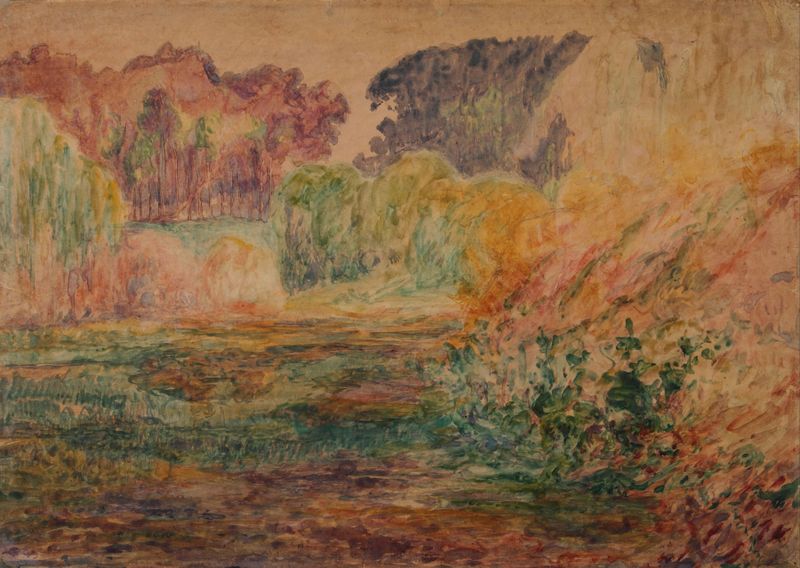
The essence of melancholy whispers through the vibrant yet somber hues of this landscape, inviting contemplation of the deeper emotional currents that flow beneath its surface. Look to the left at the rolling hills, bathed in a golden light that casts long shadows across the verdant fields. Notice how the rich greens are tinged with hints of brown, suggesting the passage of time and the inevitability of decay. The sky, a tumultuous blend of soft blues and grays, looms overhead, reflecting the internal struggles of the natural world.
Each brushstroke carries a sense of urgency and longing, uniting the landscape’s beauty with an underlying desolation. As you explore the painting’s details, consider the interplay between light and shadow. The golden highlights evoke warmth, yet they contrast sharply with the cooler tones, creating a sense of unease. The horizon, often a symbol of hope, appears almost distant and unreachable, suggesting that beauty can coexist with sorrow.
This duality resonates with the viewer, reminding us that even in the most stunning vistas, there exists an undercurrent of bittersweet emotion. Martín Malharro painted Paisaje in 1907, during a time when Argentina was grappling with rapid modernization and social change. This period of upheaval influenced his artistic vision, moving towards a style that blended impressionistic techniques with themes of nostalgia. His work reflected not only the landscapes of his homeland but also the complexities of human emotion, capturing the fleeting moments of beauty entwined with the threads of melancholy.
More Artworks by Martín Malharro
Browse all →
Las parvas (la pampa de hoy)
Martín Malharro
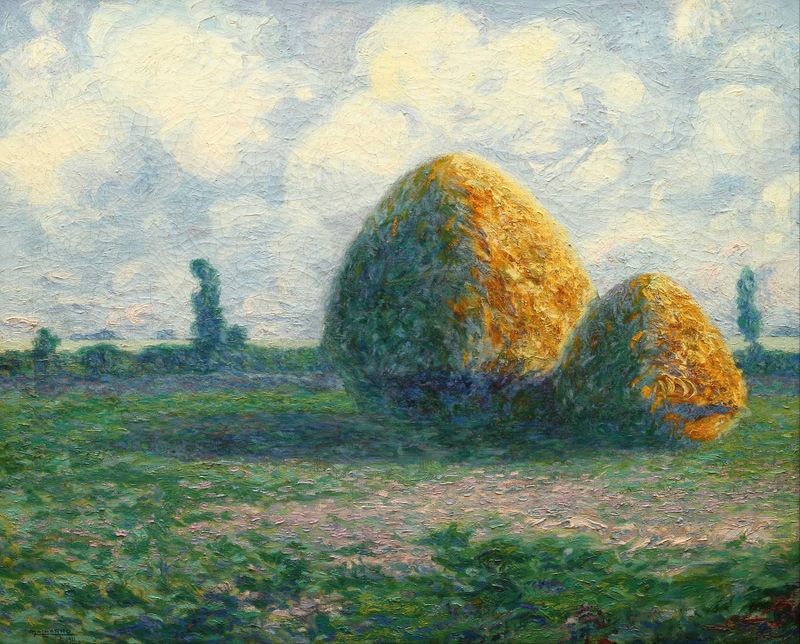
Las parvas (la pampa de hoy)
Martín Malharro
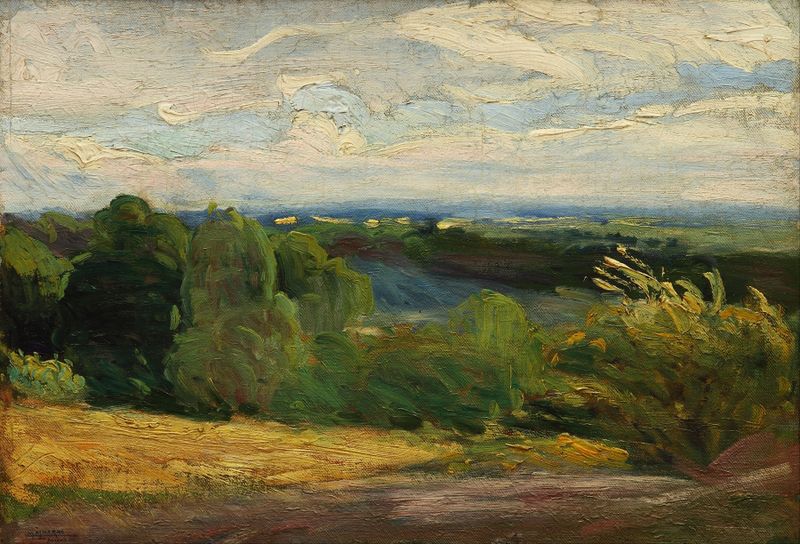
En plena naturaleza
Martín Malharro
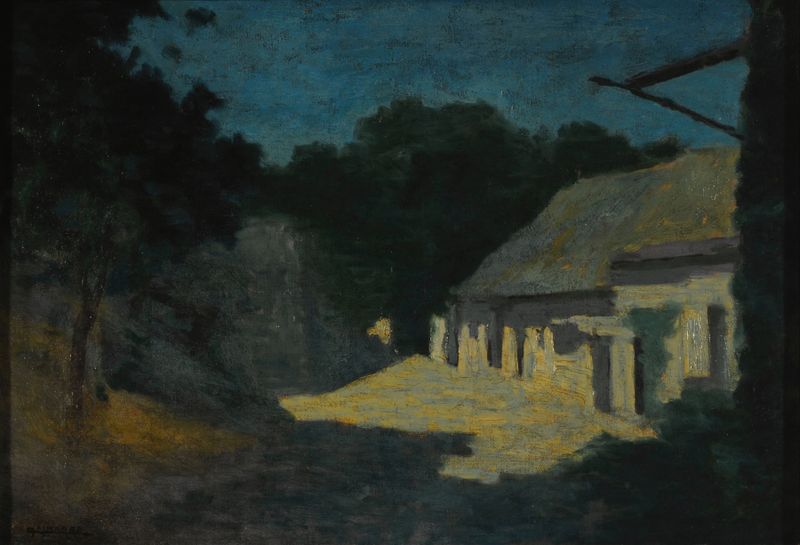
Nocturno
Martín Malharro

Un rincón de Belgrano
Martín Malharro

En plena naturaleza
Martín Malharro

Nocturno
Martín Malharro

El arado
Martín Malharro
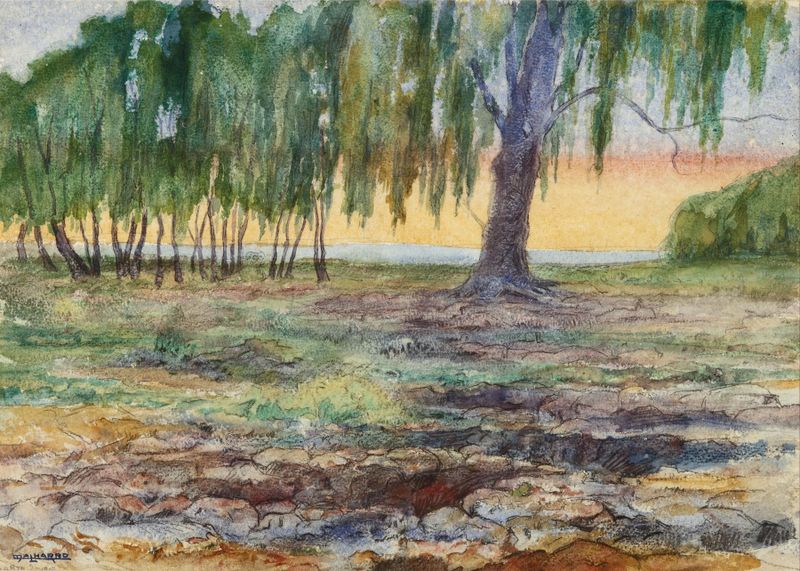
Paisaje
Martín Malharro
Paisaje
Martín Malharro





