Lavacourt, l’hiver — History & Facts
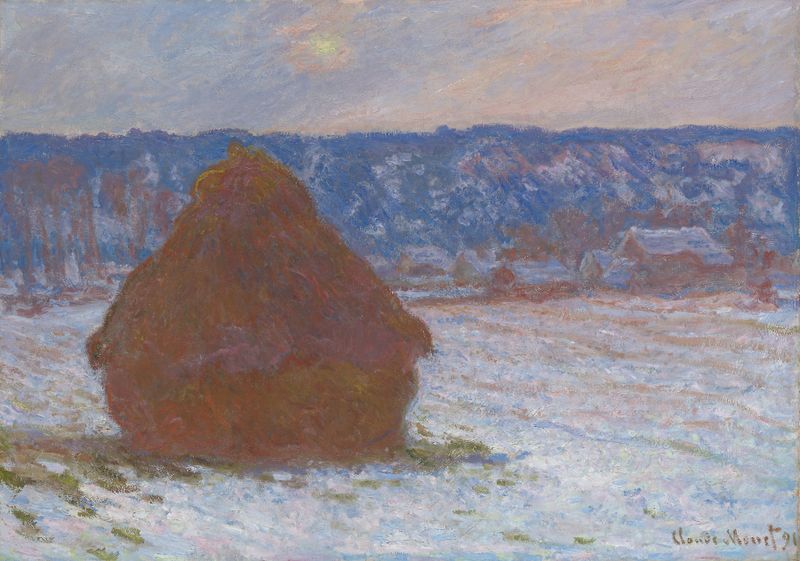
In Lavacourt, l’hiver, Monet beckons us to peer into a moment where stillness and longing intertwine, drawing us into the depths of human desire amidst nature's icy embrace. Look to the left at the delicate palette of blue and white, where the snow-draped landscape stretches out, a serene expanse punctuated by the gentle hues of the sky. Notice how the small, rustic houses nestle against the horizon, their warm ochres fighting against the chill of winter. The brushstrokes, dappled and free, create a sense of movement, as if the cold air itself breathes life into the scene, inviting us to explore its quiet corners. Emotional tensions arise in the juxtaposition of the warmth of the homes against the starkness of the winter backdrop.
The gentle interplay of light and shadow suggests a yearning for connection, a desire for warmth that is both physical and emotional. Each stroke captures not just the winter landscape, but an underlying human sentiment — a craving for solace and warmth amidst life's cold uncertainties. In 1879, Monet painted this piece during a period of intense experimentation with light and color, while living in the village of Lavacourt, France. This was a time when Impressionism was beginning to take root, challenging traditional artistic norms, and Monet's personal life was marked by both struggle and inspiration.
His focus on capturing the essence of fleeting moments reflects a broader shift in the art world, where personal expression became paramount.