
Le Bas Breau — History & Facts
Could beauty survive in a century of chaos? This question lingers in the air as one stands before the serene landscape of Le Bas Breau. Look closely at the gentle undulation of the hills, where soft greens and muted browns blend harmoniously. Notice how the light dances across the surface of the water, casting shimmering reflections that mirror the tranquility of the scene. The brushstrokes are delicate yet confident, evoking a sense of calm amid nature’s subtle chaos.
The composition leads the eye through the serene waterway, inviting exploration of the distant horizon where the sky above hints at a gathering storm. Within this tranquil tableau, contrasts emerge. The peacefulness of the countryside juxtaposes the impending tumult, suggesting the fragility of beauty in a turbulent world. The interplay of light and shadow embodies a deeper narrative — the tension between hope and despair, serenity and disruption.
Each element, from the rippling water to the shadowed trees, speaks of impermanence, urging reflection on what endures even as chaos looms. Auguste Louis Lepère painted Le Bas Breau in 1887 during a period of significant change in France, marked by industrialization and burgeoning artistic movements. He was deeply influenced by the Impressionists, yet sought to capture a serene realism in his landscapes. This work reflects his commitment to exploring the beauty of the natural world, even as society wrestled with rapid transformation and uncertainty.
More Artworks by Auguste Louis Lepère
Browse all →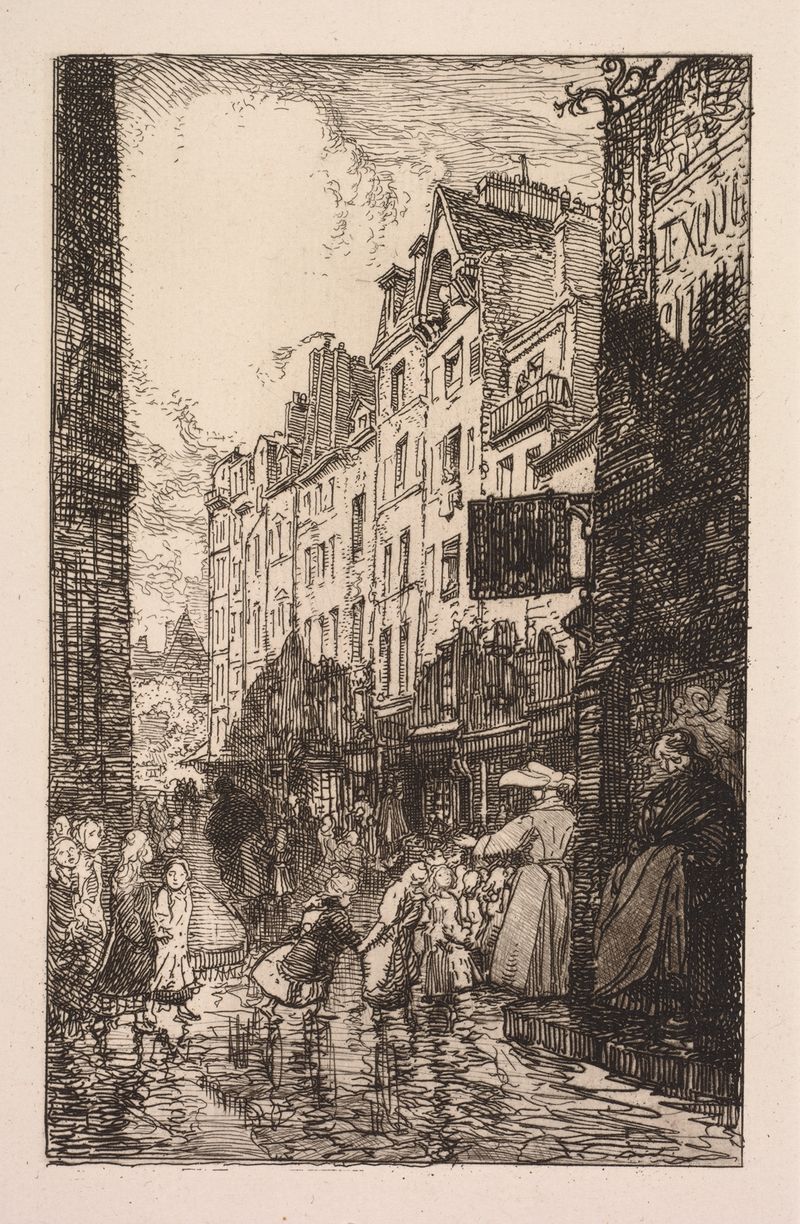
La Rue des Prêtres Saint-Séverin
Auguste Louis Lepère
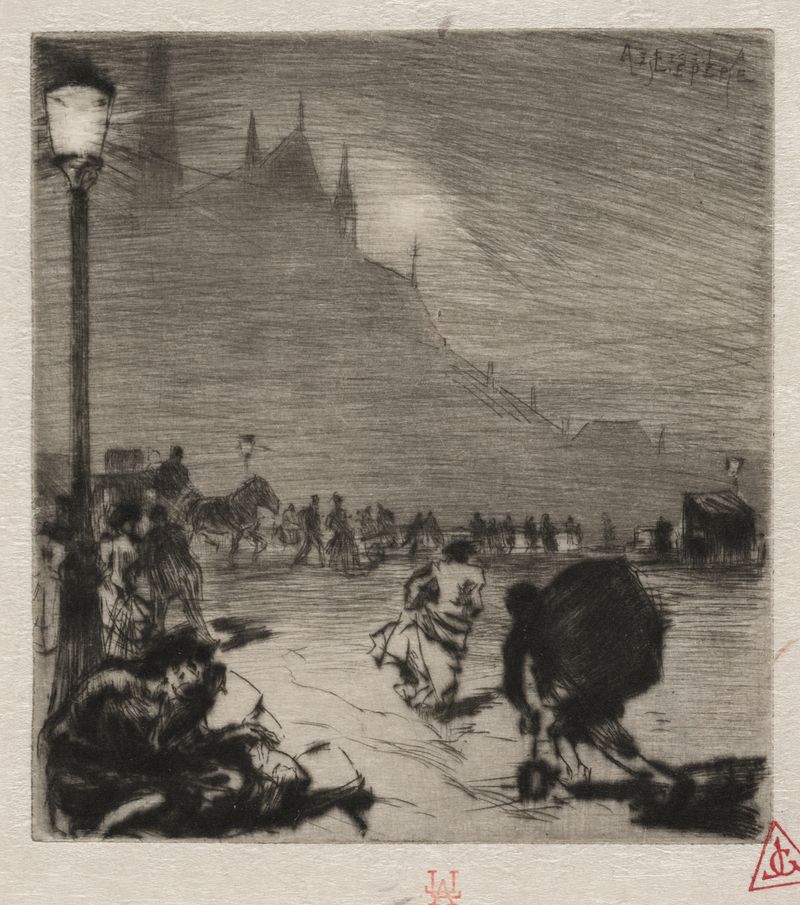
Au Coin du Pont-aux-Doubles
Auguste Louis Lepère
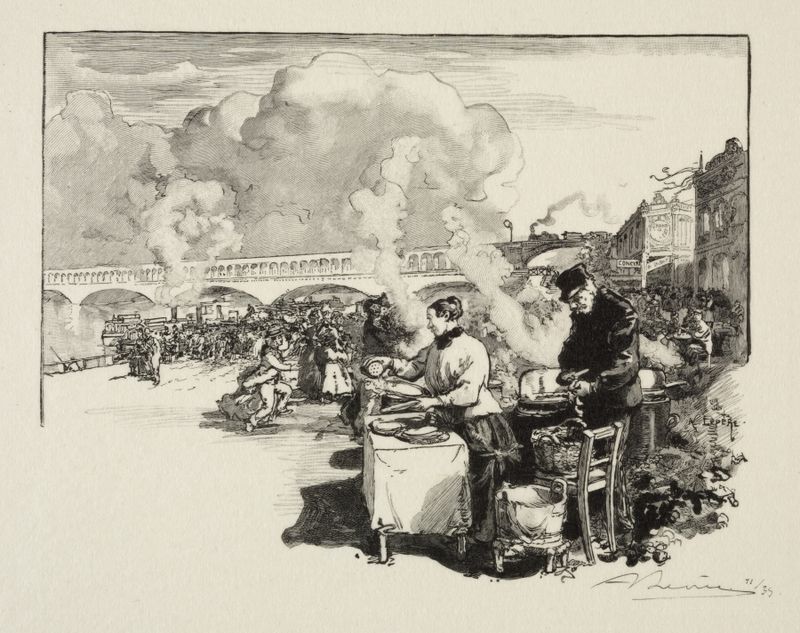
Debarcadère des bateaux-omnibus
Auguste Louis Lepère

La Seine, au quai de la Rapée
Auguste Louis Lepère
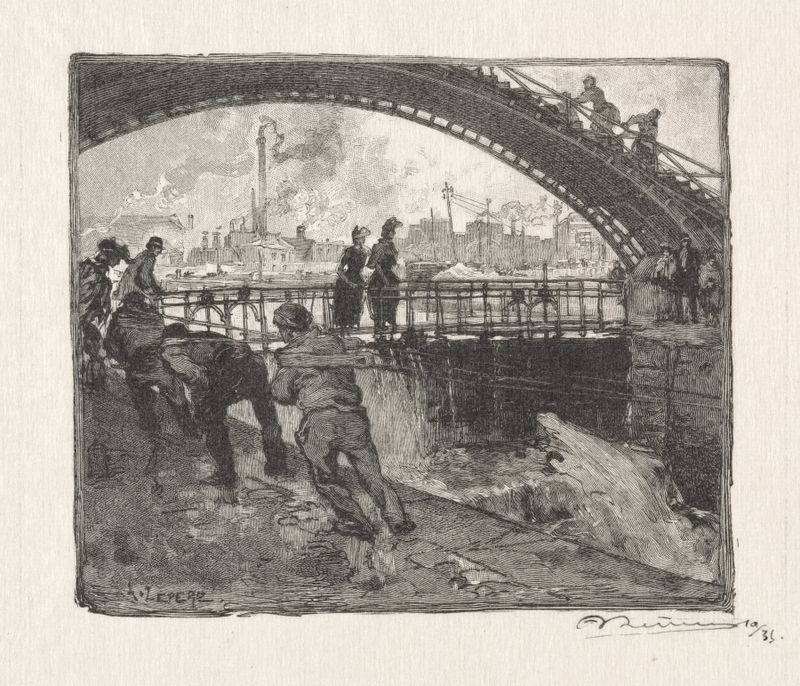
L’Ecluse du Canal St. Martin
Auguste Louis Lepère

Le Boulevard Montmartre, le Soir
Auguste Louis Lepère

Une Chasse au Mont Gérard
Auguste Louis Lepère
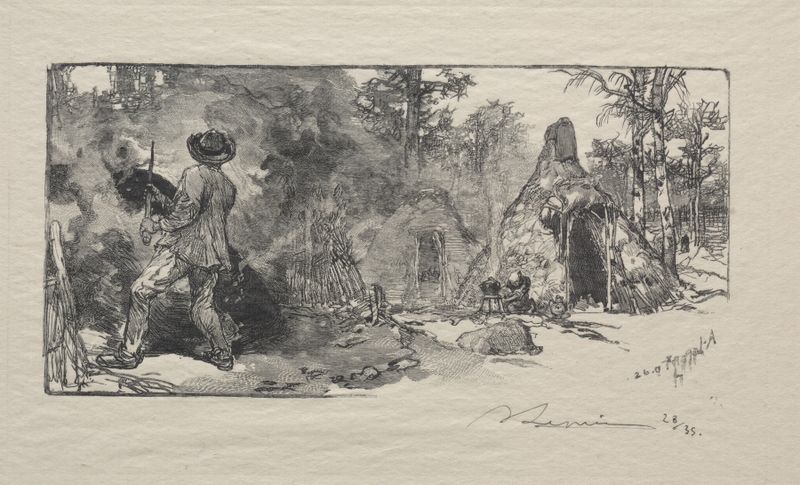
Les Charbonniere
Auguste Louis Lepère
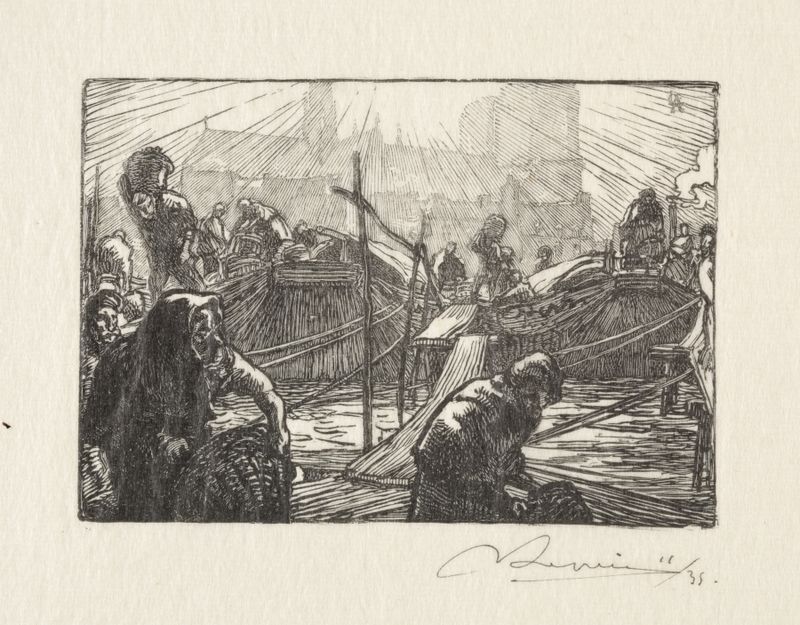
Notre Dame vue du Marché aux pommes
Auguste Louis Lepère

Le Palais des Arts Liberaux, Intèrieur
Auguste Louis Lepère





