Le Bassin des Nympheas — History & Facts
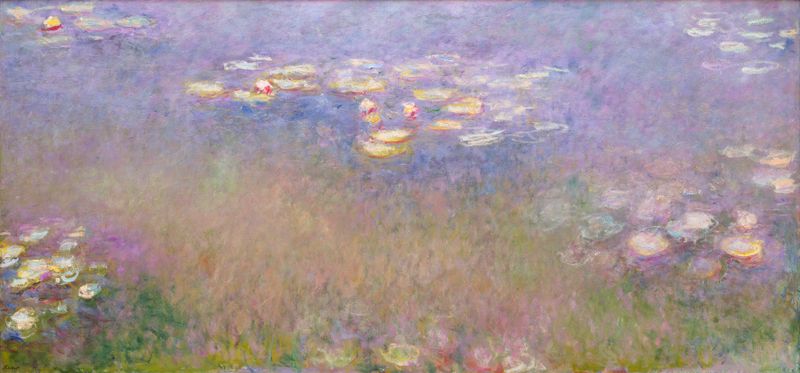
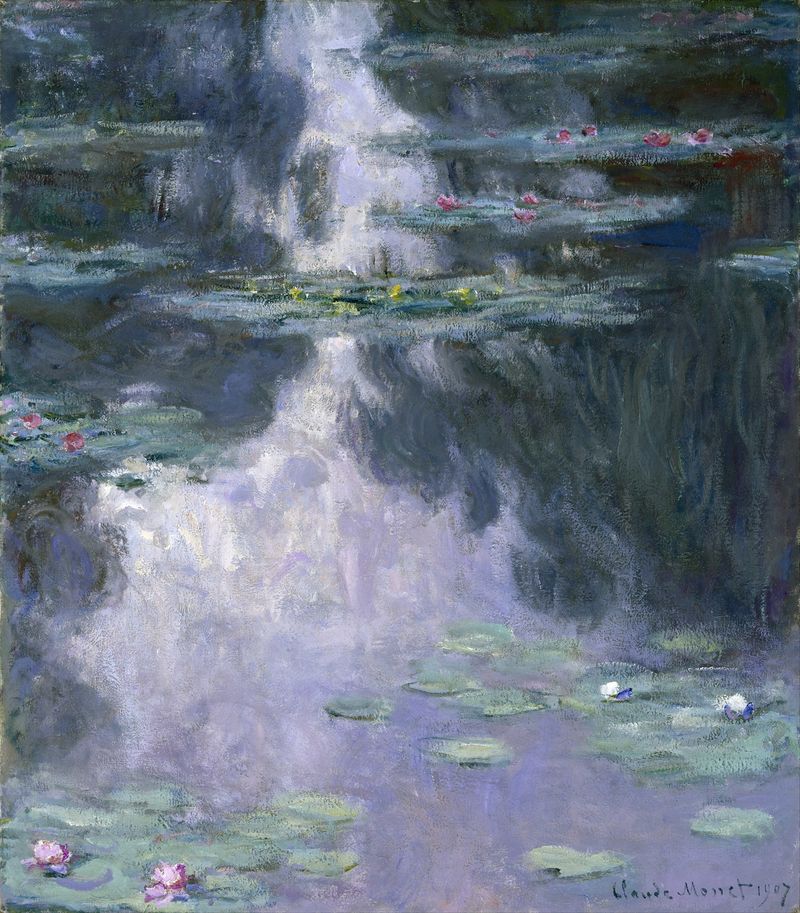
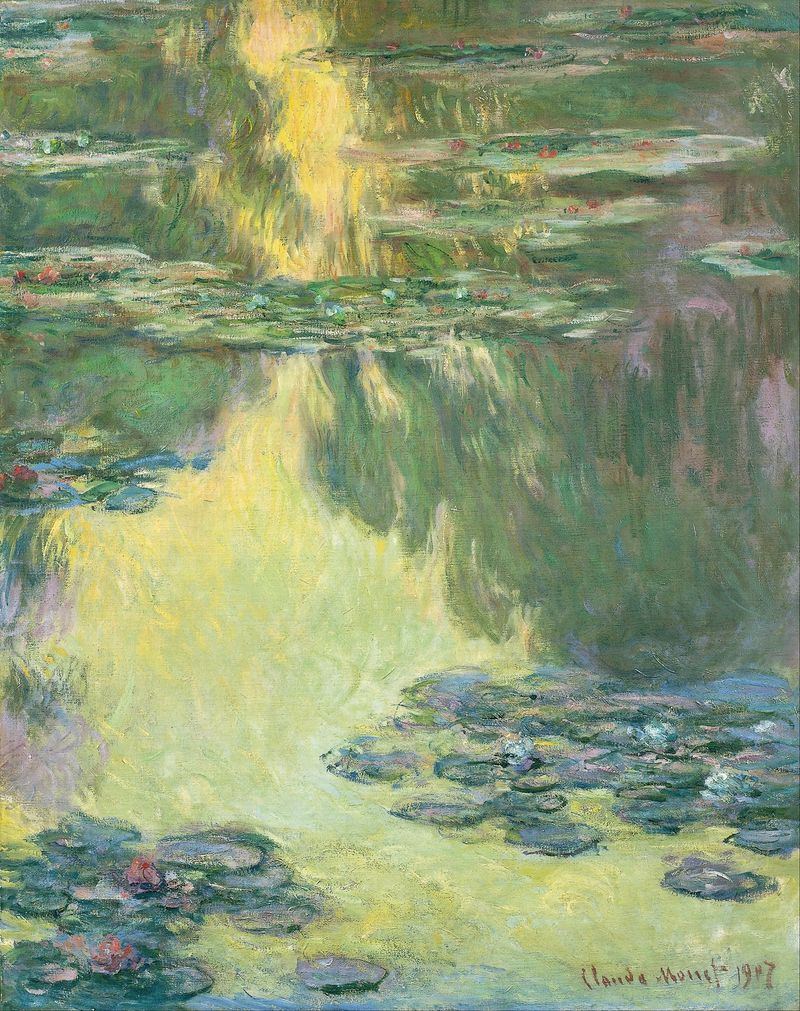
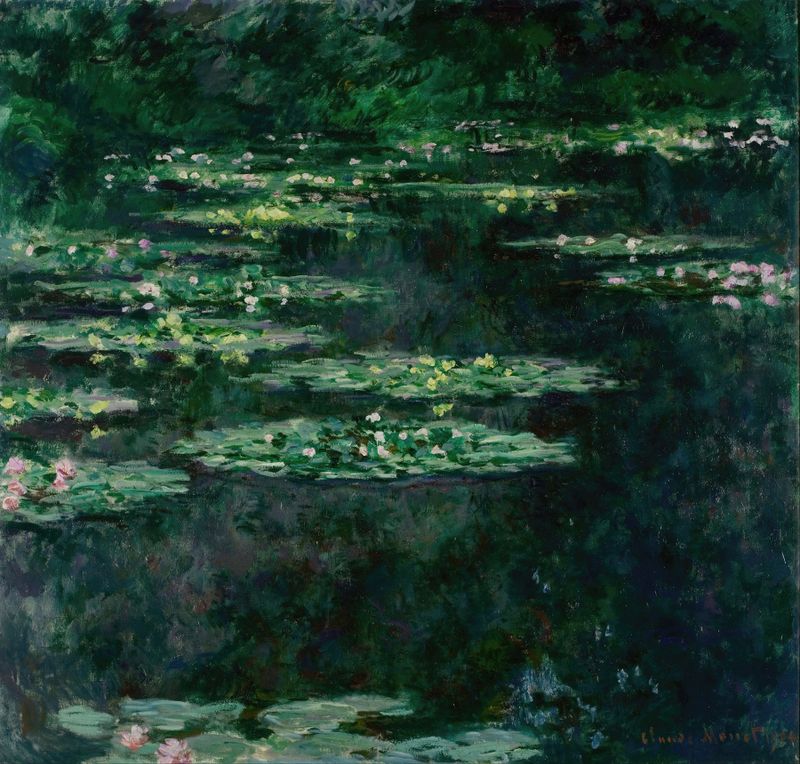
In the rippling reflections of water lilies, beauty transcends the surface, inviting a quiet reverence. Focus your gaze on the shimmering water, where delicate hues of blue and green blend seamlessly, evoking the serenity of a tranquil pond. Notice how the light dances upon the water's surface, illuminating the soft pink and white blossoms that dot the scene. Each stroke is deliberate, guiding the viewer into an immersive experience of color and texture that speaks of nature’s fleeting grace. Beneath this serene surface lies a profound exploration of impermanence.
The juxtaposition of vibrant blooms against the tranquil water reflects the tension between life and stillness, reminding us of the fleeting nature of beauty itself. Hidden within the layers of paint are echoes of Monet's emotional landscape, where joy and melancholy coexist, as the artist sought to capture not just a scene, but a moment of transcendent beauty. In 1904, Monet painted this piece while living at Giverny, surrounded by his beloved gardens. This period marked a time of artistic experimentation and personal reflection for him, as he delved deeper into his impressionistic techniques.
The world was evolving rapidly, yet in his secluded oasis, Monet forged a connection with nature that would resonate through his work, ultimately inviting us to appreciate the ephemeral beauty that surrounds us.