
Le Bucentaure Vu Du Quai Des Esclavons, Venise — History & Facts
Every brushstroke is a heartbeat remembered. In the delicate hues of a Venetian sunset, the past lingers like a whisper in the air, evoking a profound sense of loss. Look to the right at the vibrant reflections rippling on the water's surface, capturing the essence of the grand Bucentaure. The warm oranges and cool blues dance together, creating a harmonious yet haunting palette that mirrors the emotional tension of memory.
Notice how Ziem's technique reveals intricate details in the architecture, the sails, and the gentle waves lapping at the dock; each element is painted with a meticulous precision that invites you to linger in the moment. There’s a contrast between the bustling activity of the scene and the stillness of the setting sun. The lively figures in the foreground, perhaps celebrating or mourning, are set against the backdrop of an inevitable twilight, suggesting a deeper narrative of transition and nostalgia. The juxtaposition of the warm, inviting colors with the encroaching shadows serves as a poignant reminder of the fleeting nature of joy and the permanence of loss. Félix Ziem created this piece during a time when Venice was both a cultural hub and a fading emblem of past glory.
Working in the late 19th century, Ziem found himself immersed in the Romantic movement, where he sought to capture the emotional landscape of his surroundings. This painting reflects his fascination with the interplay of light and water, a motif prevalent in his oeuvre, at a time when the world of art was increasingly exploring the depths of human experience.
More Artworks by Félix Ziem
Browse all →
Venise
Félix Ziem
Coucher De Soleil À Venise
Félix Ziem
Constantinople
Félix Ziem
La place Saint-Marc, inondation de 1863
Félix Ziem
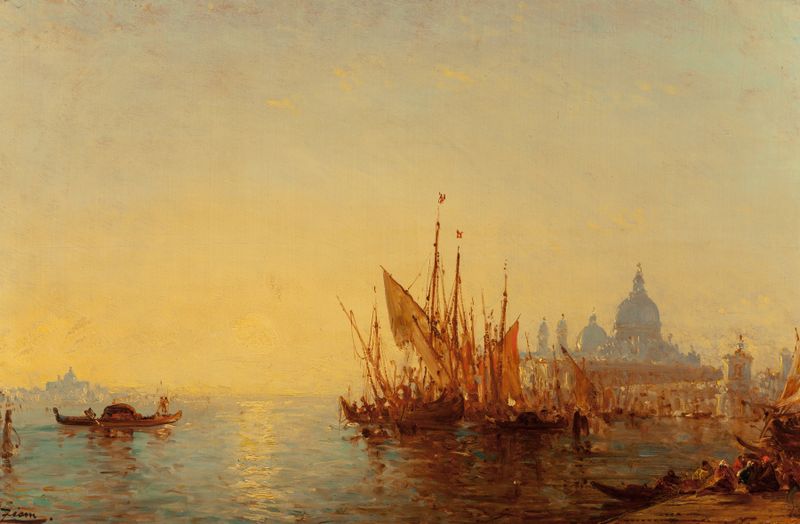
Bacino di San Marco
Félix Ziem
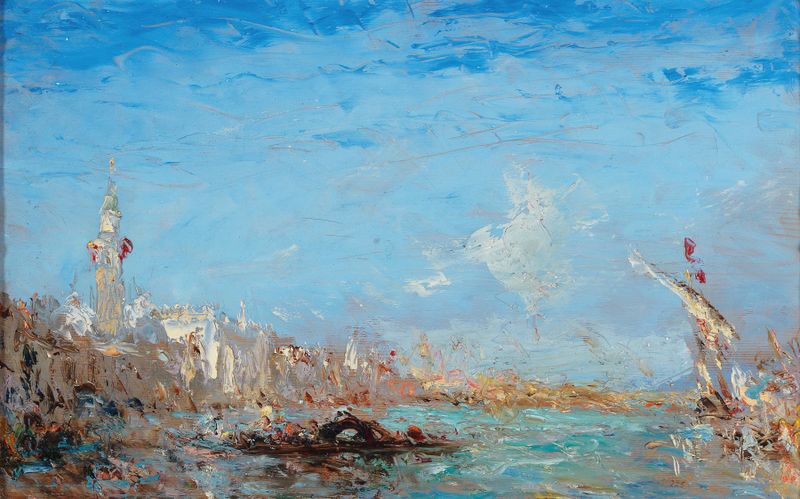
Canal Grande
Félix Ziem
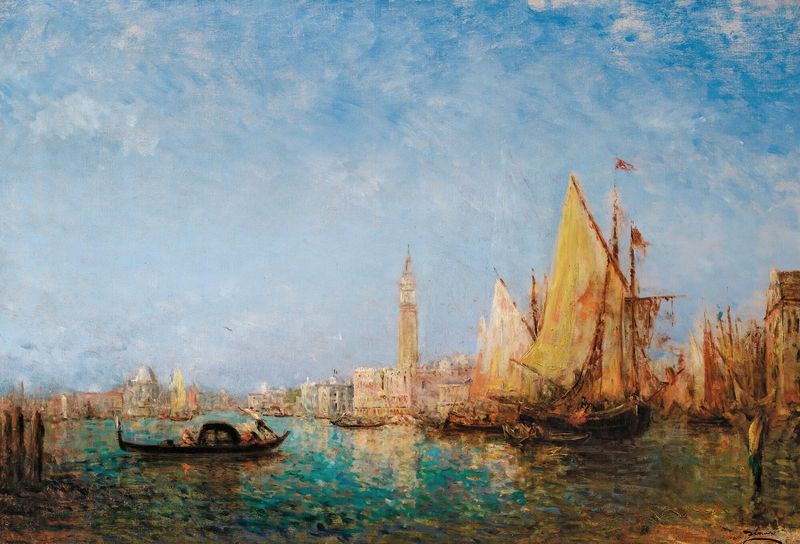
Le Palais Du Doge, Venise
Félix Ziem
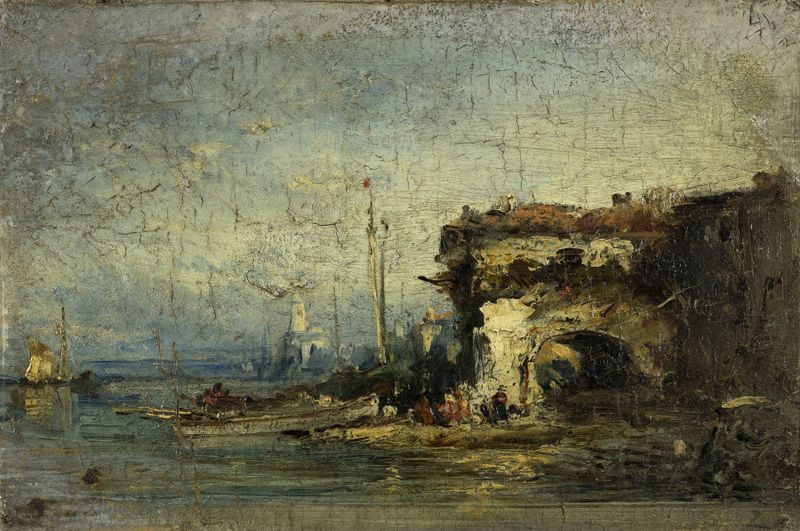
Vue d’Italie; la vieille porte
Félix Ziem
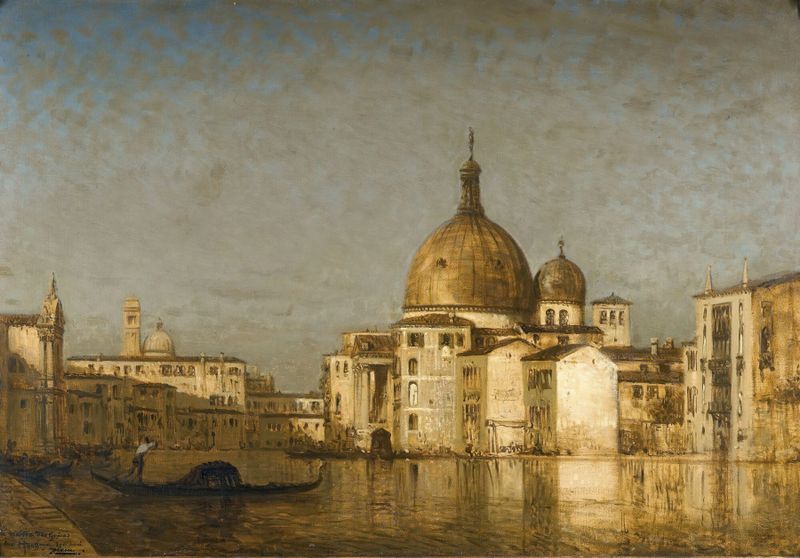
San Simeone Piccolo Au-Delà Du Grand Canal, Venis
Félix Ziem
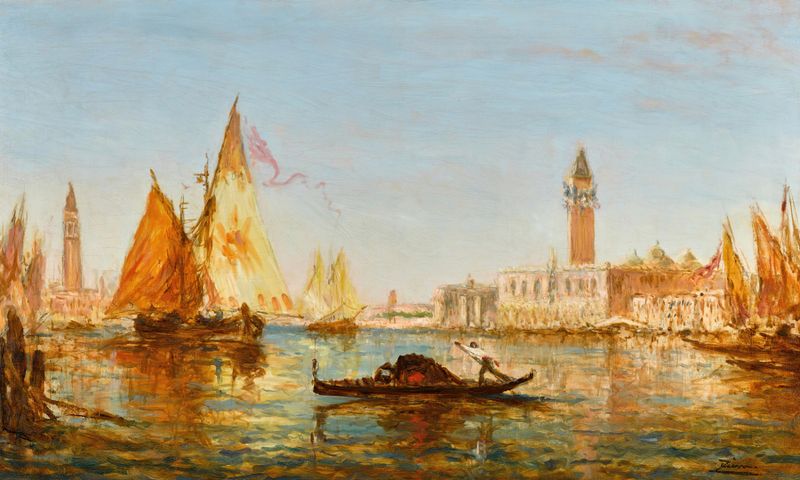
Venise, gondole et voiliers devant le Palais des doges et San Giorgio Maggiore
Félix Ziem





