Le cabinet de physique du roi Louis XVI à Passy — History & Facts
What if beauty was never meant to be finished? In Le cabinet de physique du roi Louis XVI à Passy, the delicate equilibrium of science and art invites contemplation on the impermanence of perfection. Look closely at the intricate details of the room, where the muted palette of greens and browns creates a serene atmosphere. Notice how the light filters through the windows, casting gentle shadows that dance across an array of scientific instruments meticulously arranged on rich wooden surfaces. The composition guides your gaze to the central table, where each object — from glass beakers to ornate compasses — tells a story of exploration and discovery while seamlessly blending into the tranquil backdrop. There is a palpable tension between the rigid order of scientific inquiry and the soft, decorative elements of the space.
The juxtaposition of the scientific artifacts, embodying precision and rationality, against the lingering elegance of the room hints at the complexities of human pursuit — balancing knowledge with beauty. Each detail, from the ornate moldings to the quiet personal touches, reflects the era's aspiration for harmony between intellect and aesthetics. In 1909, Georges-Henri Manesse painted this piece while living in France, a time marked by rapid advancements in both art and science. Set against a backdrop of a society increasingly fascinated by technology and progress, he sought to reconcile these evolving ideas with the refined beauty of classical ideals.
This artistic endeavor mirrored a world grappling with modernity, all while paying homage to a past where science and artistry coexisted in the heart of enlightenment.
More Artworks by Georges-Henri Manesse
Browse all →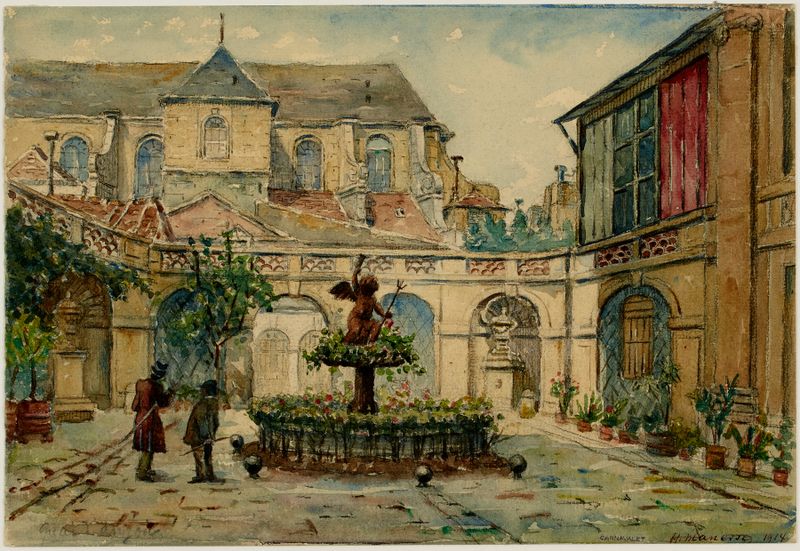
Cour intérieure de l’Hôtel Hesselin, 24 quai de Béthune
Georges-Henri Manesse
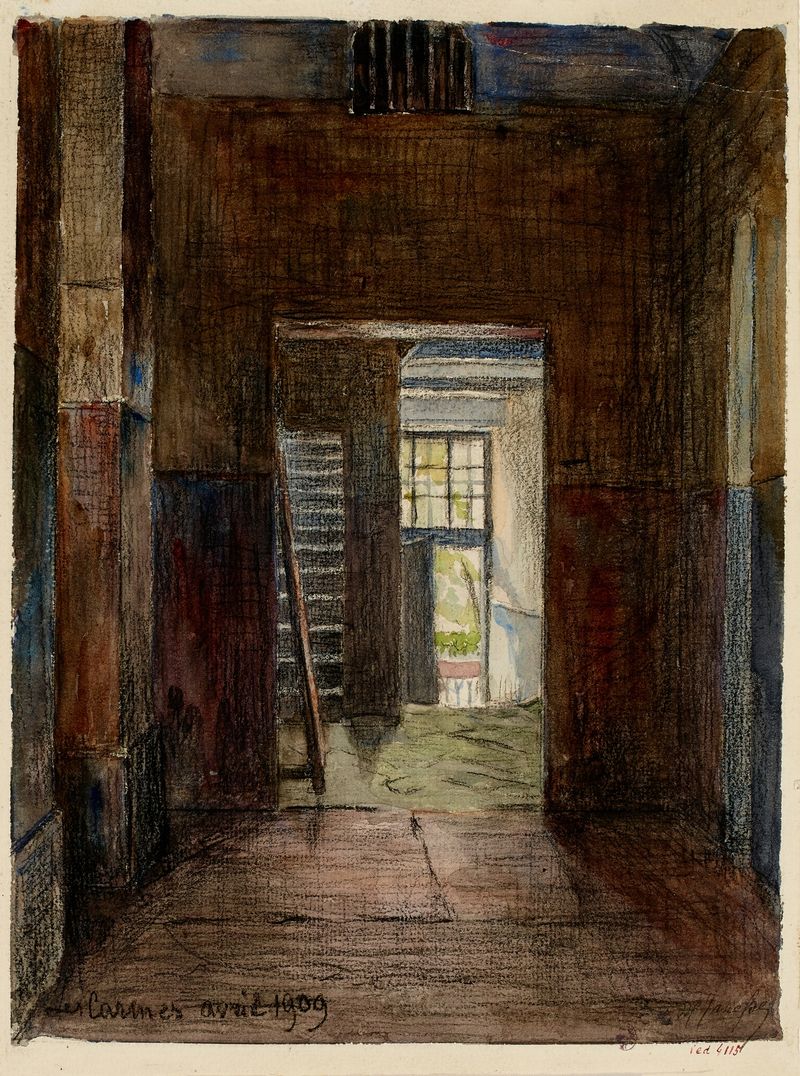
Intérieur du couvent des Carmes, rue de Vaugirard
Georges-Henri Manesse
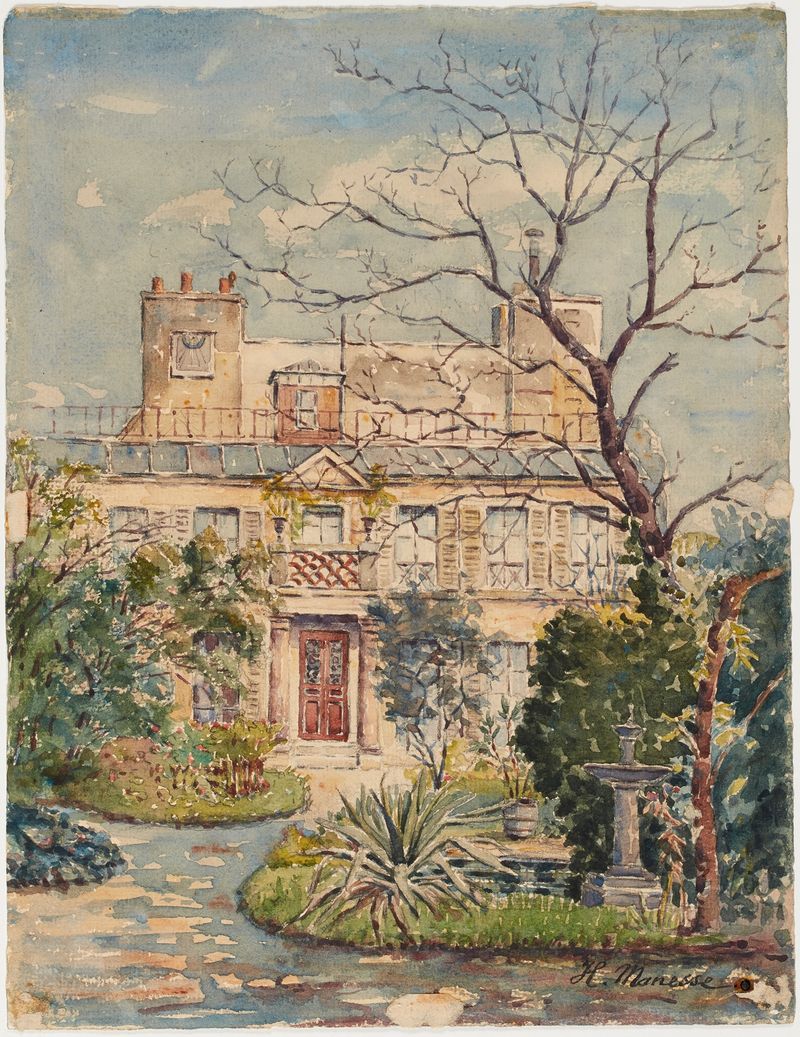
Maison de Victor Hugo, rue du Cherche-Midi
Georges-Henri Manesse
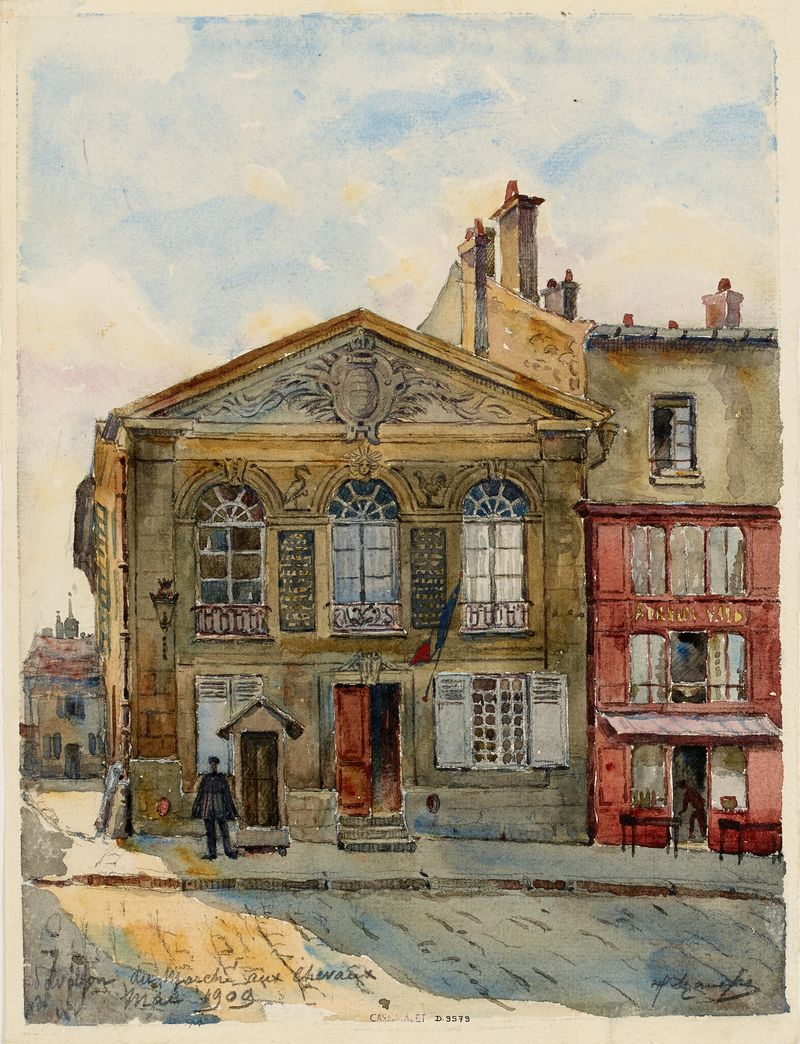
Le pavillon de police du Marché aux chevaux, rue Geoffroy Saint Hilaire
Georges-Henri Manesse

Passerelle des Arts
Georges-Henri Manesse

Vieille maison du XVè siècle, 6 rue Boutebrie
Georges-Henri Manesse
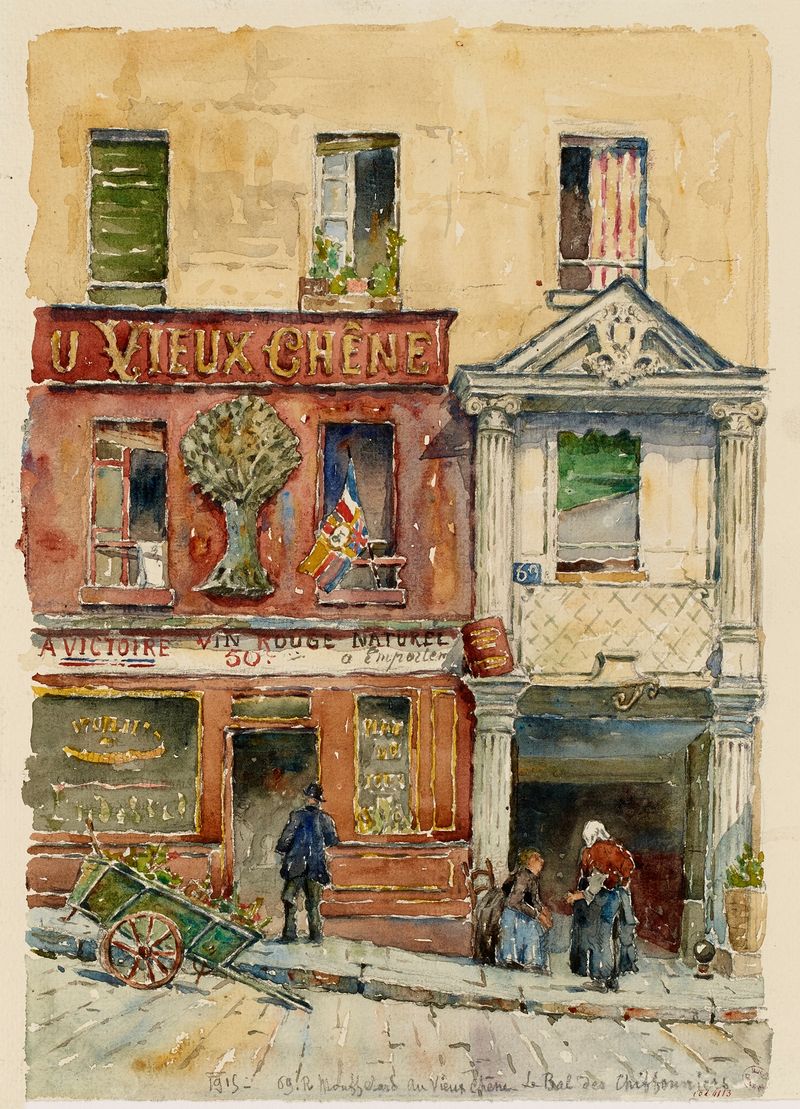
69, rue Mouffetard Boutique de vins à l’enseigne du Vieux chêne
Georges-Henri Manesse
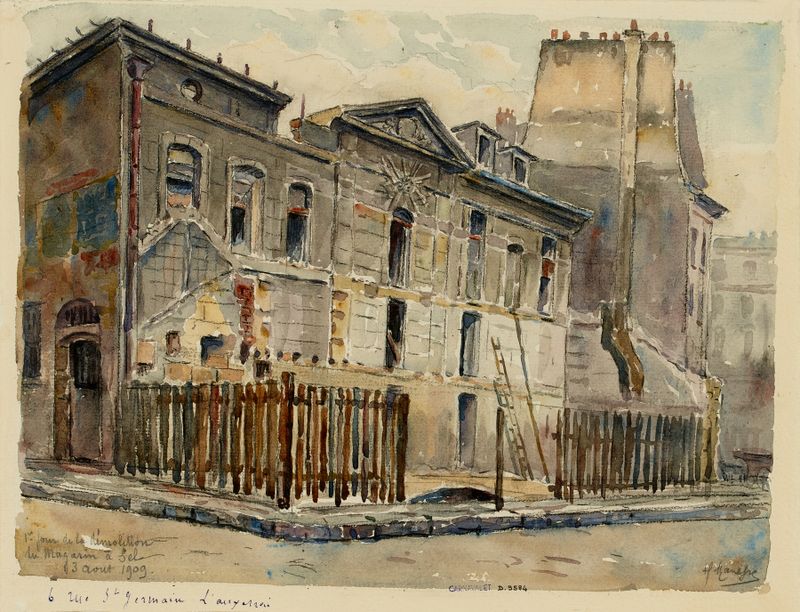
Premier jour de la démolition du magasin à sel, 6 rue Saint Germain de l’Auxerrois
Georges-Henri Manesse
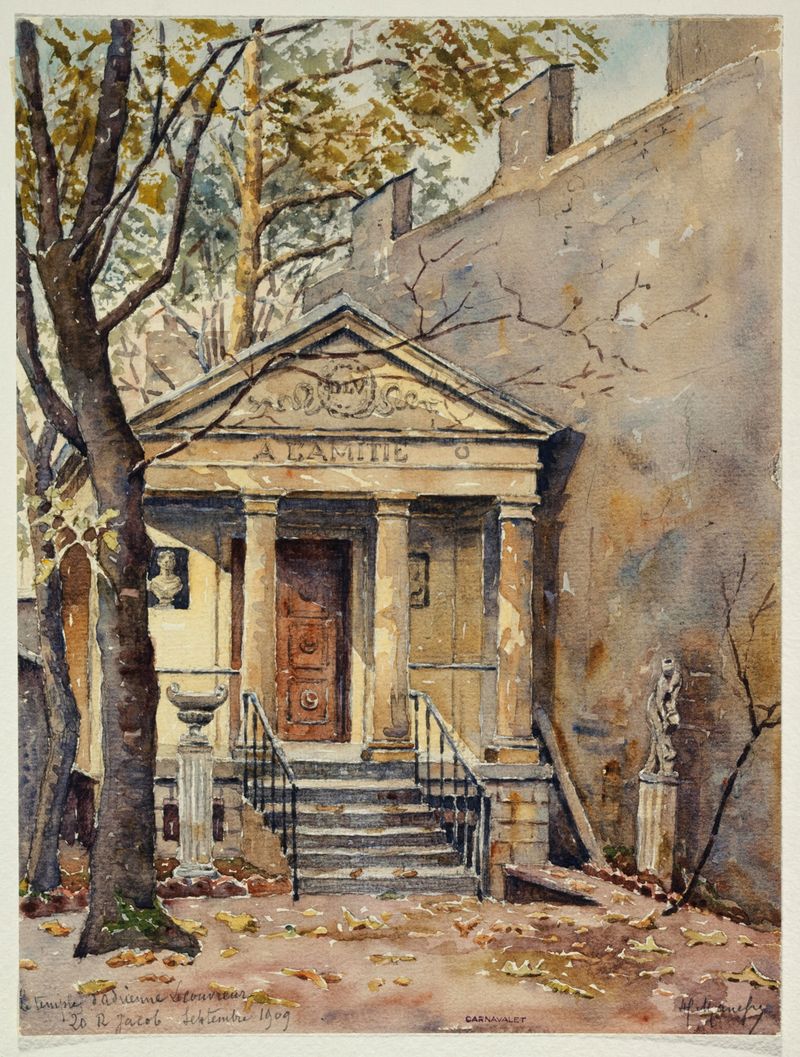
Temple de l’Amitié, 20 rue Jacob où habita Adrienne Lecouvreur
Georges-Henri Manesse

Maison de campagne de Jean-Jacques Rousseau, 20 quai de Passy
Georges-Henri Manesse