
Le Chateau De Virieu-Sur-Bourbre, Isere — History & Facts
Each stroke is a testament to the legacy of both artist and landscape, weaving a narrative that transcends time. Look to the left where patches of verdant green rise, framing the tranquil waterway that cradles the serene chateau. The artist’s use of soft yet vibrant hues gives life to the scene, inviting you to explore the interplay of light and shadow on the water's surface. Notice how the cool blues contrast with the warm earth tones, creating a gentle harmony that pulls the viewer into the heart of the composition. Hidden within this pastoral tranquility are the whispers of change—each brushstroke captures not just a place, but a moment in the shifting tides of history.
The chateau, steadfast and resolute, stands as a metaphor for endurance amidst the fleeting nature of time. The textured brushwork reflects the complexities of existence, with delicate ripples in the water hinting at unseen currents beneath the surface, inviting contemplation on the passage of legacy. In 1877, the artist was deeply immersed in explorations of light and color, influenced by the Impressionist movement that was stirring in France. Working from his studio in Paris, Jongkind was grappling with his own artistic identity while seeking to capture the essence of the French countryside.
This period marked a significant evolution in his style, blending realism with a burgeoning impressionistic approach that would leave an indelible mark on future generations of artists.
More Artworks by Johan Barthold Jongkind
Browse all →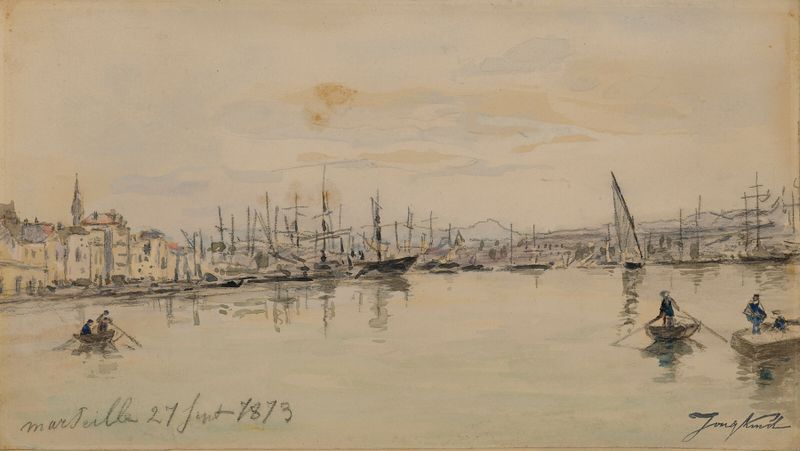
Le Port de Marseille
Johan Barthold Jongkind

Canal Saint-Martin
Johan Barthold Jongkind

Countryside near Brezins, between Grenoble and Vienne
Johan Barthold Jongkind

Notre-Dame vue du quai de la Tournelle
Johan Barthold Jongkind

Environs de Grenoble
Johan Barthold Jongkind

Clair de lune à Overschie (environs de Rotterdam)
Johan Barthold Jongkind

Port de Honfleur
Johan Barthold Jongkind
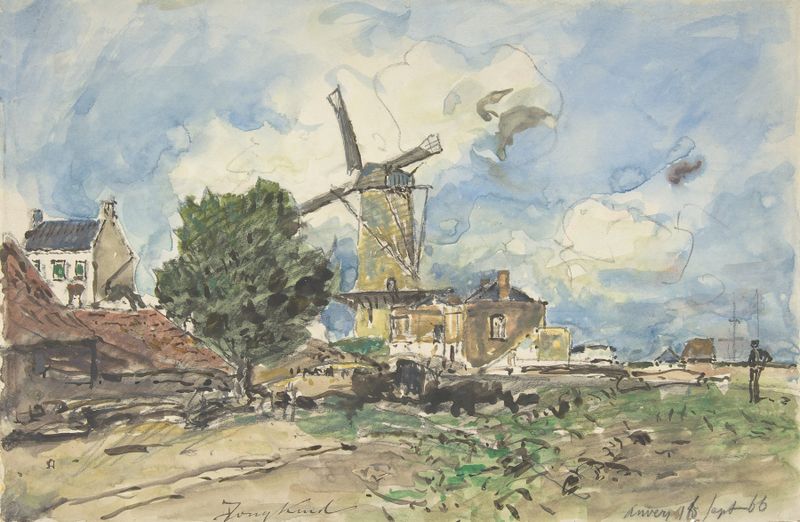
Wind Mill at Antwerp
Johan Barthold Jongkind

Le Havre
Johan Barthold Jongkind

The Church of Overschie
Johan Barthold Jongkind





