
Le Cimetière des Innocents en 1750 — History & Facts
Did the painter know this moment would outlive them? In the quiet stillness of a forgotten cemetery, echoes of lives once lived linger, a testament to the passage of time and the yearning for remembrance. Look to the foreground, where soft earth tones blend with muted greens, inviting the eye to explore the somber beauty of gravestones that stand like sentinels against the backdrop of life. The delicate play of light filters through the trees, casting dappled shadows that dance across the cobbled pathways, leading one deeper into the embrace of history. Notice how the artist’s gentle brushstrokes convey a sense of fragility, merging the sanctity of the resting place with the vibrancy of the surrounding flora. Beneath the surface, the painting reveals a poignant juxtaposition: the permanence of stone against the transience of human existence.
Each epitaph tells a story of lost innocence, while the encroaching foliage hints at nature's eternal cycle of life and decay. There is a palpable tension between the stillness of the graveyard and the vibrant life that persists outside its boundaries, invoking a profound sense of yearning for connection to the past. During the years between 1915 and 1945, Fédor Hoffbauer created this work amidst significant turmoil in Europe. As the world grappled with the devastation of two World Wars, Hoffbauer sought solace in themes of memory and mortality.
His focus on the cemetery as a subject reflects a broader existential inquiry prevalent in the arts of the time, as artists grappled with loss, identity, and the search for meaning in a rapidly changing world.
More Artworks by Fédor Hoffbauer
Browse all →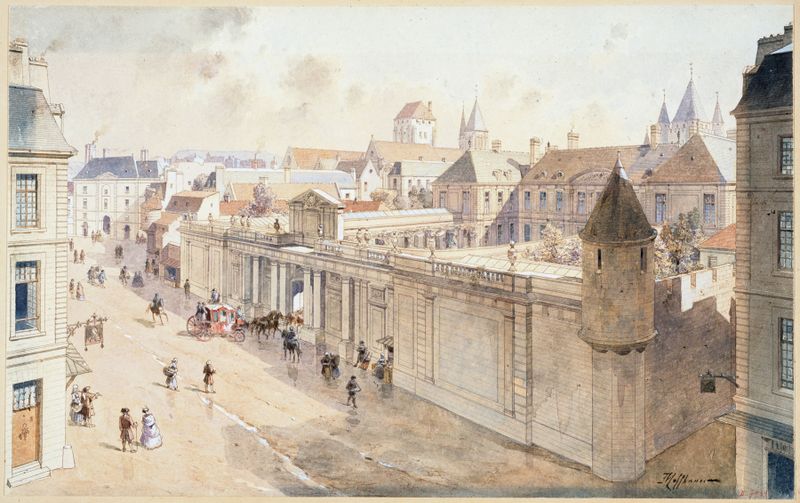
Le palais du Grand Prieur au Temple, en 1770
Fédor Hoffbauer
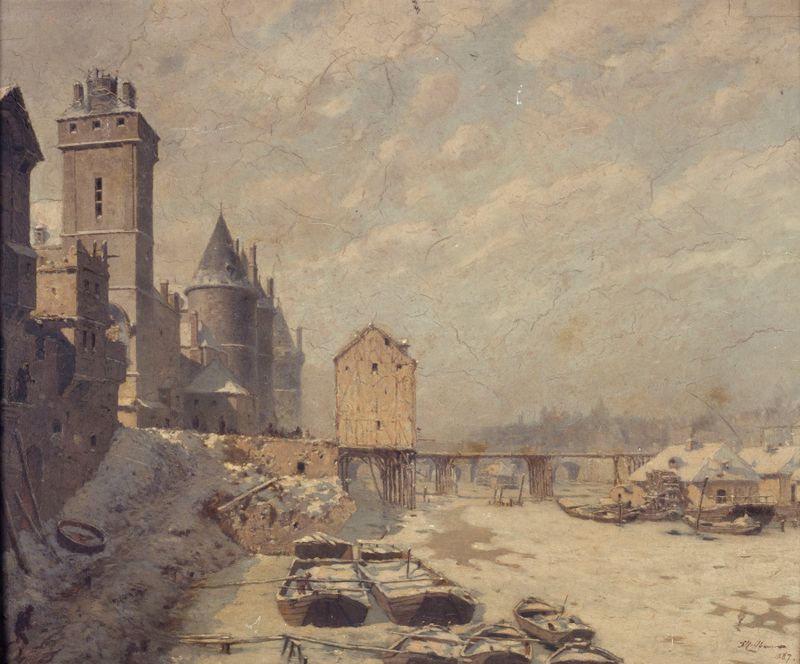
La tour de l’Horloge, la Conciergerie et le pont au Change, en 1621
Fédor Hoffbauer

Banquet des officiers de la marine Russe, dans la salle des fêtes à l’Hôtel de Ville. Fêtes Franco-Russes à Paris
Fédor Hoffbauer

Le Grand Châtelet et le pont de Bois, 1621-1645
Fédor Hoffbauer
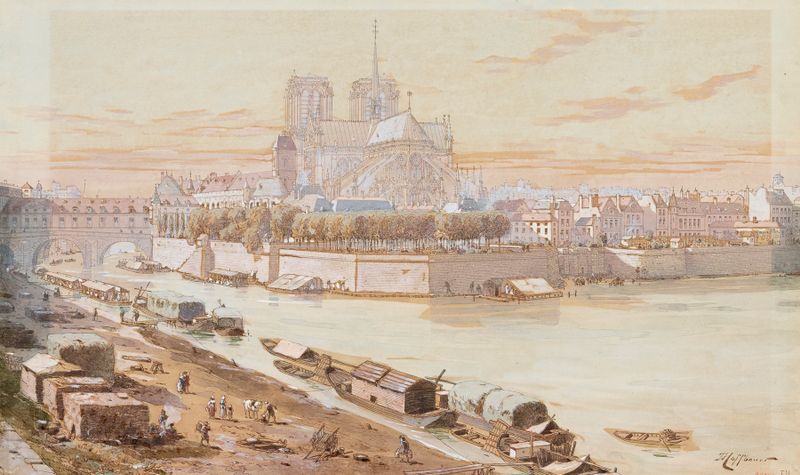
Notre-Dame et l’Evêché en 1750
Fédor Hoffbauer

Vue panoramique de Paris en 1588, depuis les toits du Louvre, avec le Pont-Neuf en construction
Fédor Hoffbauer
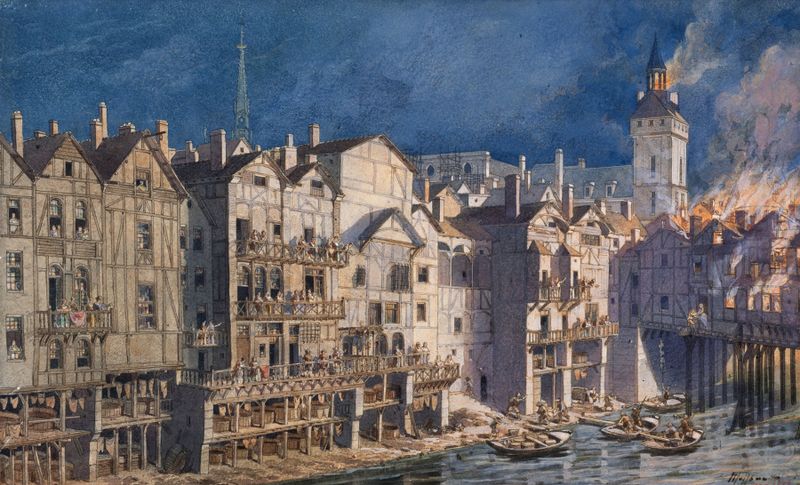
La Cité entre le pont Notre Dame et le pont au Change en 1621
Fédor Hoffbauer

L’Hôtel de Ville et le pont d’Arcole en 1842
Fédor Hoffbauer
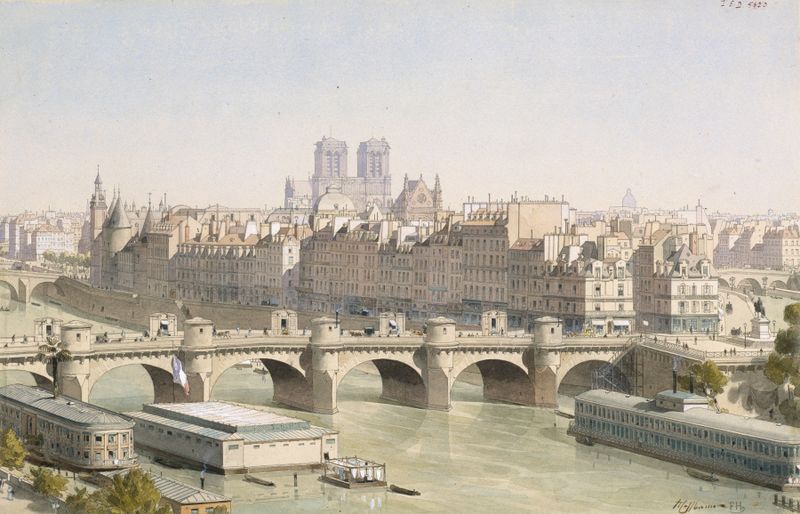
Vue de l’île de la Cité et le pont-Neuf avec ses boutique, vers 1840
Fédor Hoffbauer

Représentation dans la salle des Prévôts à l’Hôtel de Ville, 4ème arrondissement Fêtes Franco-Russes à Paris le 20 oct
Fédor Hoffbauer





