
Banquet des officiers de la marine Russe, dans la salle des fêtes à l’Hôtel de Ville. Fêtes Franco-Russes à Paris — History & Facts
The grand hall of the Hôtel de Ville is alive with the murmur of conversation and clinking glasses, the air thick with the fragrance of rich cuisine. Dressed in elegant uniforms and evening gowns, the attendees revel in a moment of camaraderie, their laughter echoing against the high, arched ceilings. A golden chandelier casts a warm glow, illuminating the animated gestures and flushed faces, capturing an essence of joy amidst the shadows of a world at war. Look to the center of the composition where a long banquet table stretches, laden with exquisite dishes, the interplay of vibrant colors pulling your eye.
Notice the carefully arranged place settings, each detail meticulously painted, from the glint of polished silverware to the shimmering crystal glasses. The artist’s brushwork conveys movement, as figures lean in and share intimate conversations, their expressions a mix of camaraderie and fleeting joy, a contrast to the tumult of the era outside these festive walls. Beneath the surface of this opulent gathering lies a complex emotional tapestry. The juxtaposition of the joyful celebration against the backdrop of the ongoing conflict speaks to resilience and the enduring spirit of fellowship.
The attentive posture of a waiter in the foreground highlights the social hierarchies present, while subtle glances exchanged between guests suggest unspoken concerns and hopes amidst the revelry, a silent acknowledgment of the uncertain future ahead. Fédor Hoffbauer painted this scene during the mid-1930s in Paris, a time of escalating tensions in Europe leading to World War II. His work reflects the cultural exchanges between France and Russia, amid an atmosphere of artistic flourishing in the capital. Hoffbauer, deeply influenced by the historical connections and political alliances of the time, sought to capture not just the festivities but also the underlying faith in unity during an era fraught with discord.
More Artworks by Fédor Hoffbauer
Browse all →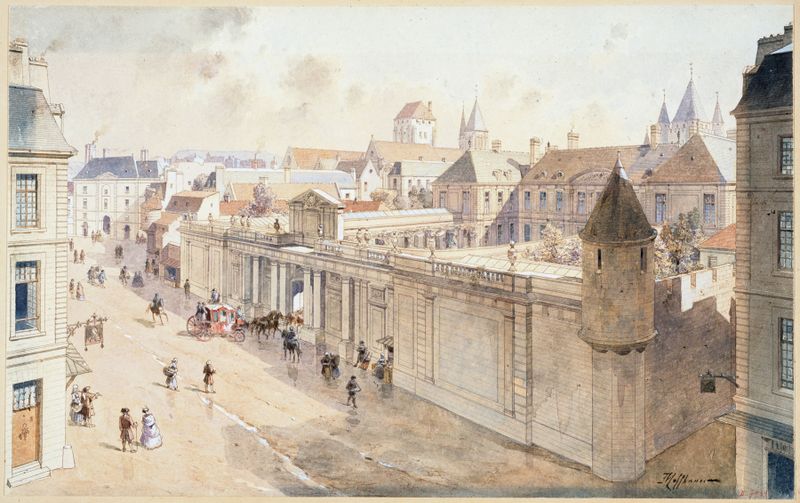
Le palais du Grand Prieur au Temple, en 1770
Fédor Hoffbauer
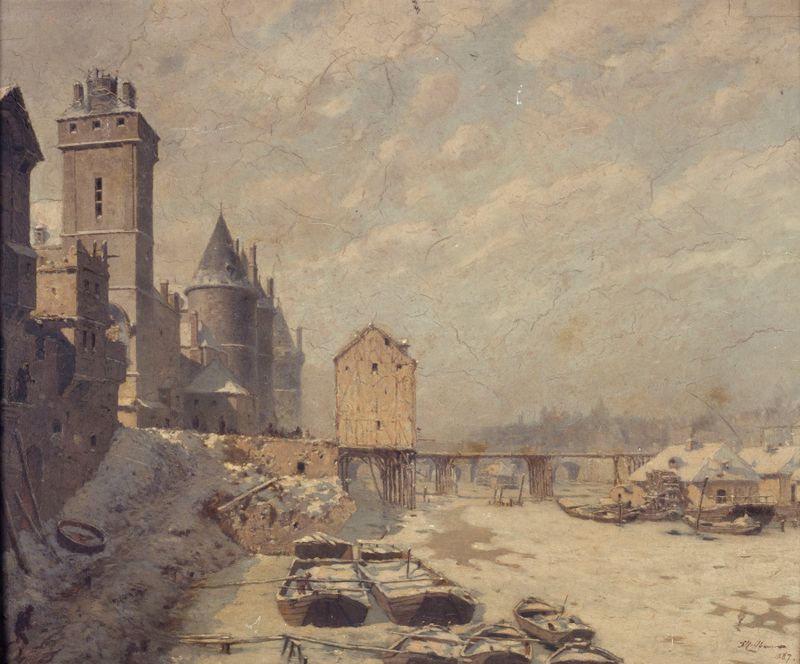
La tour de l’Horloge, la Conciergerie et le pont au Change, en 1621
Fédor Hoffbauer

Le Grand Châtelet et le pont de Bois, 1621-1645
Fédor Hoffbauer
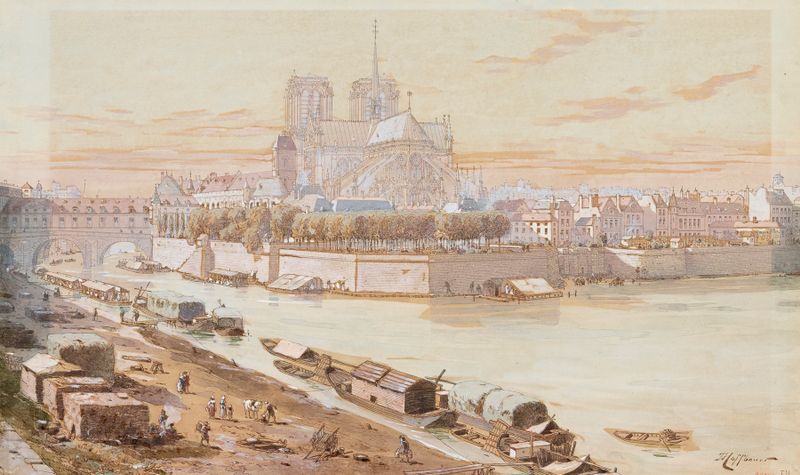
Notre-Dame et l’Evêché en 1750
Fédor Hoffbauer

Vue panoramique de Paris en 1588, depuis les toits du Louvre, avec le Pont-Neuf en construction
Fédor Hoffbauer
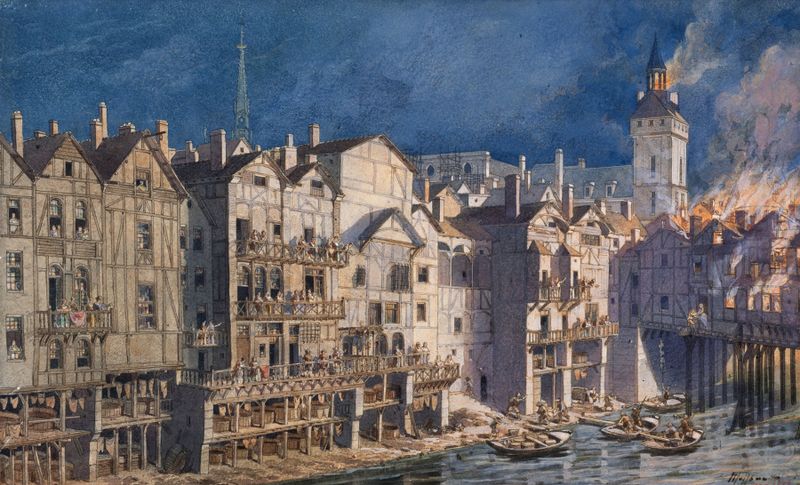
La Cité entre le pont Notre Dame et le pont au Change en 1621
Fédor Hoffbauer

L’Hôtel de Ville et le pont d’Arcole en 1842
Fédor Hoffbauer

Le Cimetière des Innocents en 1750
Fédor Hoffbauer
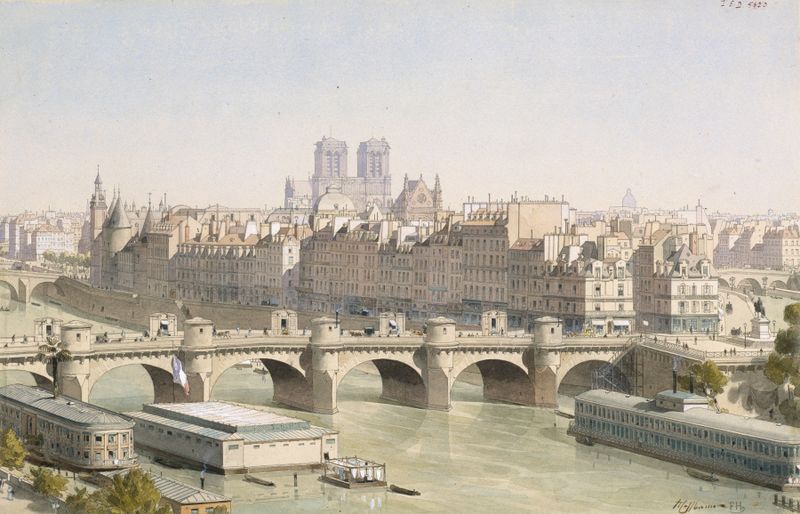
Vue de l’île de la Cité et le pont-Neuf avec ses boutique, vers 1840
Fédor Hoffbauer

Représentation dans la salle des Prévôts à l’Hôtel de Ville, 4ème arrondissement Fêtes Franco-Russes à Paris le 20 oct
Fédor Hoffbauer





