
L’Hôtel de Ville et le pont d’Arcole en 1842 — History & Facts
Could a single brushstroke hold eternity? In L’Hôtel de Ville et le pont d’Arcole en 1842, the artist brings a sweeping panorama to life, inviting viewers to linger in a moment that feels both historic and timeless. Focus on the central figure of the Hôtel de Ville, its grand architecture rising majestically against a backdrop of soft blues and delicate greys. Notice how the artist has captured the interplay of light and shadow, where sunlight dances upon the intricate carvings, revealing ornate details that might otherwise go unnoticed. To the left, the bridge arches gracefully, its reflection shimmering in the calm water below, creating a sense of harmony between the manmade and the natural. Within this scene lies a tension between the solidity of the buildings and the ephemeral quality of daily life that unfolds around them.
The soft brushstrokes blend together the past and present, inviting contemplation on the transitory moments of existence. Each character, whether a pedestrian or a distant boatman, contributes to the narrative, hinting at stories that transcend time. This juxtaposition speaks to the fleeting nature of human experience and our desire to capture it in art. Hoffbauer painted this work during a tumultuous period, from 1915 to 1945, in a world grappling with war and change.
Living in France, he was deeply influenced by the cultural resurgence following the devastation of World War I, as artists sought to reclaim the beauty of their surroundings. This painting reflects not only a dedication to the unique architecture of Paris but also a broader yearning for connection to history and the solace it can provide amid chaos.
More Artworks by Fédor Hoffbauer
Browse all →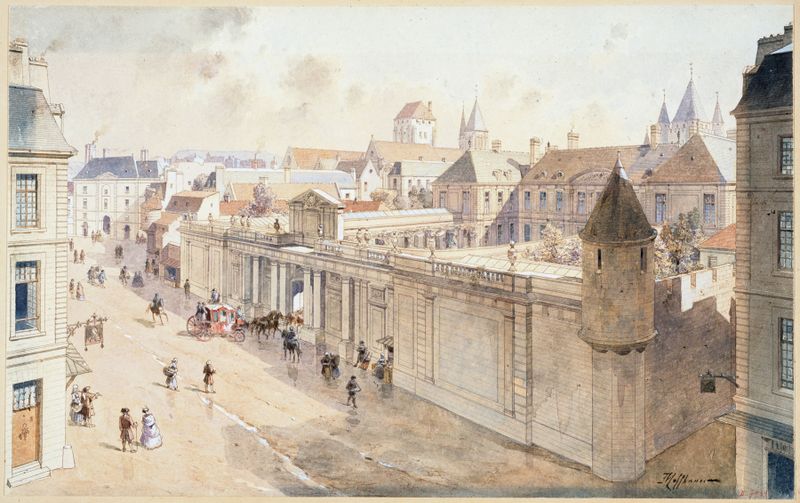
Le palais du Grand Prieur au Temple, en 1770
Fédor Hoffbauer
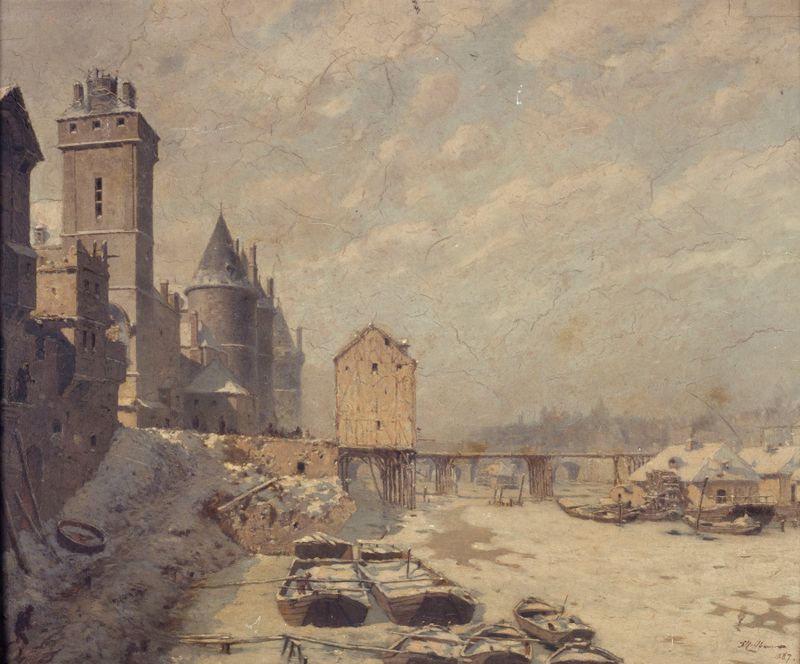
La tour de l’Horloge, la Conciergerie et le pont au Change, en 1621
Fédor Hoffbauer

Banquet des officiers de la marine Russe, dans la salle des fêtes à l’Hôtel de Ville. Fêtes Franco-Russes à Paris
Fédor Hoffbauer

Le Grand Châtelet et le pont de Bois, 1621-1645
Fédor Hoffbauer
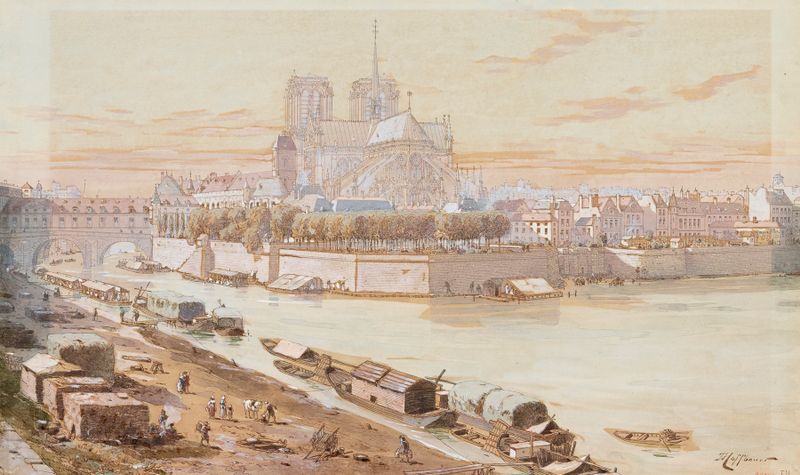
Notre-Dame et l’Evêché en 1750
Fédor Hoffbauer

Vue panoramique de Paris en 1588, depuis les toits du Louvre, avec le Pont-Neuf en construction
Fédor Hoffbauer
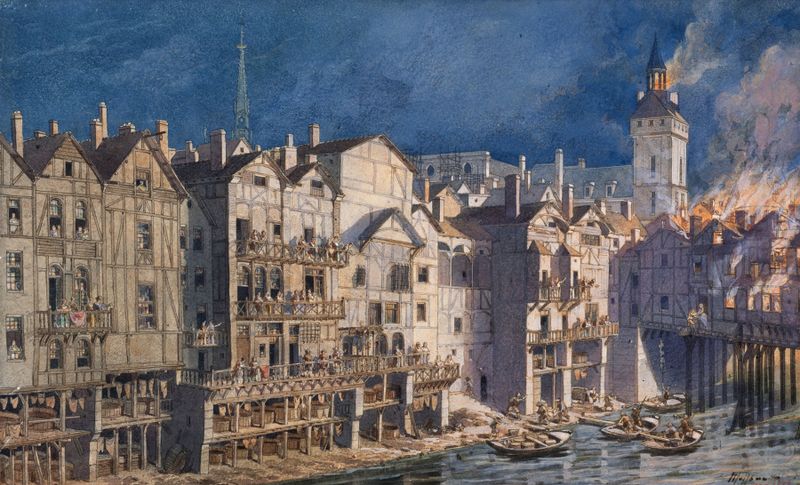
La Cité entre le pont Notre Dame et le pont au Change en 1621
Fédor Hoffbauer

Le Cimetière des Innocents en 1750
Fédor Hoffbauer
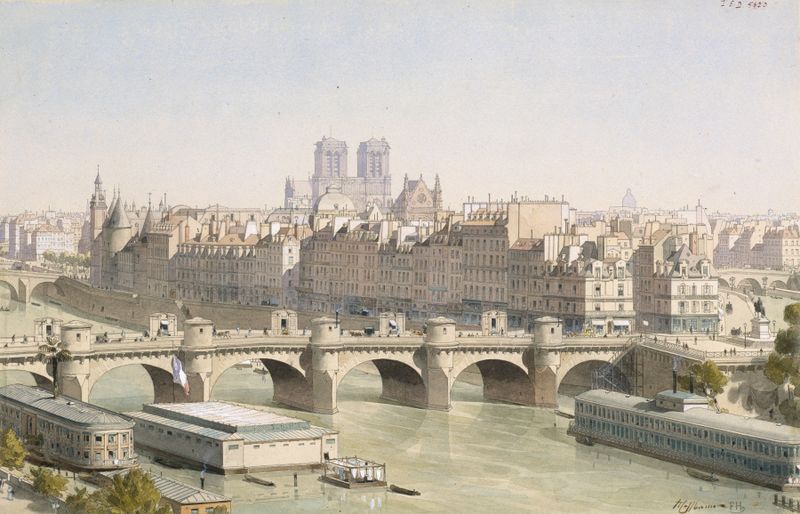
Vue de l’île de la Cité et le pont-Neuf avec ses boutique, vers 1840
Fédor Hoffbauer

Représentation dans la salle des Prévôts à l’Hôtel de Ville, 4ème arrondissement Fêtes Franco-Russes à Paris le 20 oct
Fédor Hoffbauer
More Architecture Art
Browse all →
The statue of Liberty
Frédéric Auguste Bartholdi

View of Houses in Delft, Known as ‘The Little Street’
Johannes Vermeer

View of Houses in Delft, Known as ‘The Little Street’
Johannes Vermeer

The Cathedral in Rouen. The portal, Grey Weather
Claude Monet

The yellow house
Vincent van Gogh

The Church in Auvers-sur-Oise, View from the Chevet
Vincent van Gogh