
Le Débardeur; Quai de la Gare — History & Facts
In every brushstroke, longing emerges, encapsulating the silent narratives of those overlooked. Look to the left at the figure of the dock worker, his posture suggesting both weariness and resilience. The subtle interplay of light and shadow enhances the contours of his face, revealing a life lived in labor. Notice how the muted palette of ochres and blues conveys not only the physical setting but also an emotional depth, as if the very air is thick with the weight of unspoken dreams. Beneath the surface, the composition speaks of contrasts: the bustling harbor, teeming with life, juxtaposed against the isolation of the individual.
Each element—the gentle ripples of the water and the solidity of the ships—echoes the worker’s longing for connection amid the clamor. The distant figures in the background appear almost ghostly, reinforcing the experience of solitude even in a crowded space. In 1894, while painting this piece, the artist found himself in the heart of Paris, navigating a world rapidly evolving through industrialization and modernization. Surrounded by fellow Impressionists, Auguste Louis Lepère focused on capturing everyday life with authenticity and a touch of poignancy.
This period marked a significant shift in the art world, as artists began to embrace the beauty and complexity of ordinary moments, laying the groundwork for future explorations of human experience in art.
More Artworks by Auguste Louis Lepère
Browse all →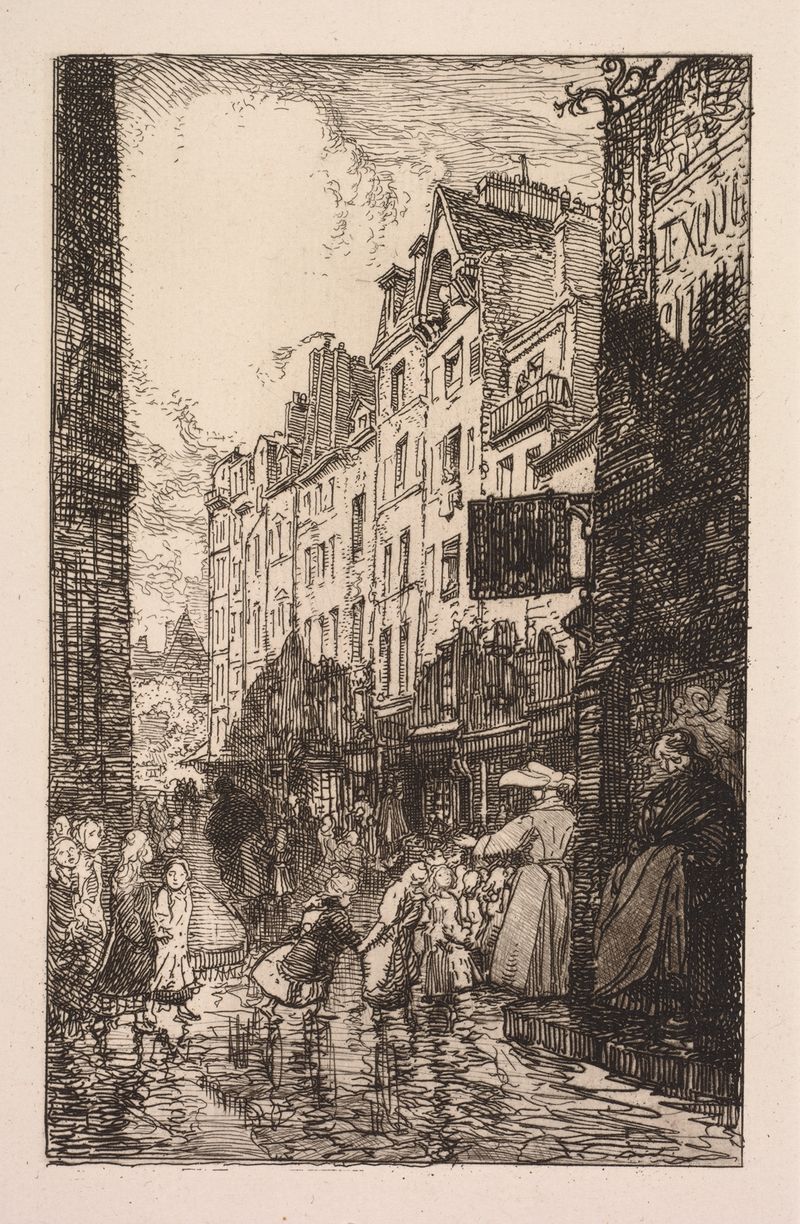
La Rue des Prêtres Saint-Séverin
Auguste Louis Lepère
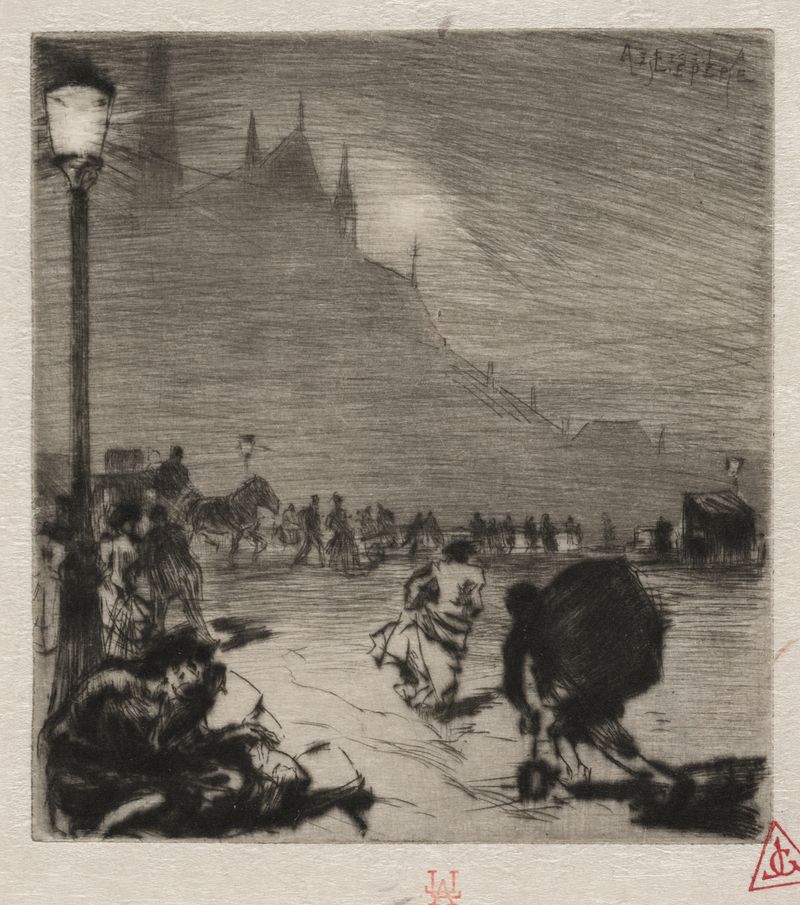
Au Coin du Pont-aux-Doubles
Auguste Louis Lepère
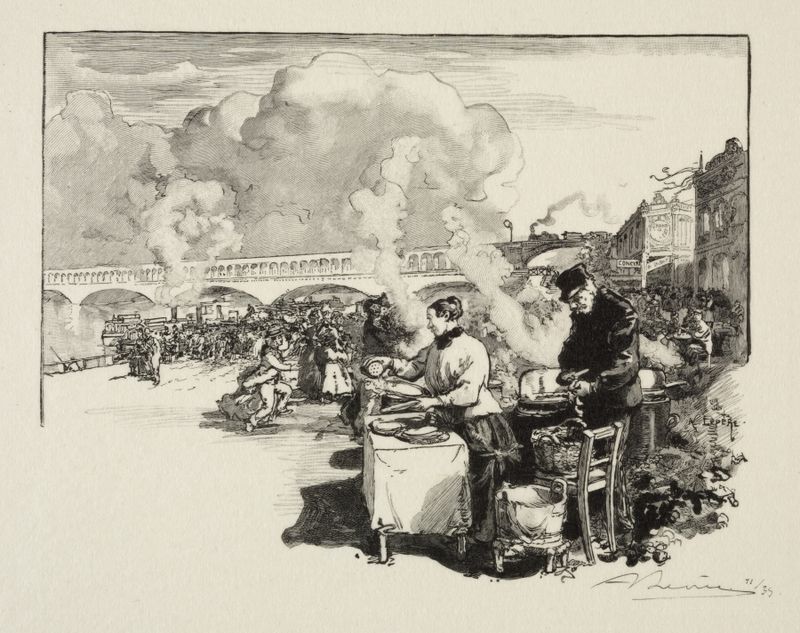
Debarcadère des bateaux-omnibus
Auguste Louis Lepère

La Seine, au quai de la Rapée
Auguste Louis Lepère
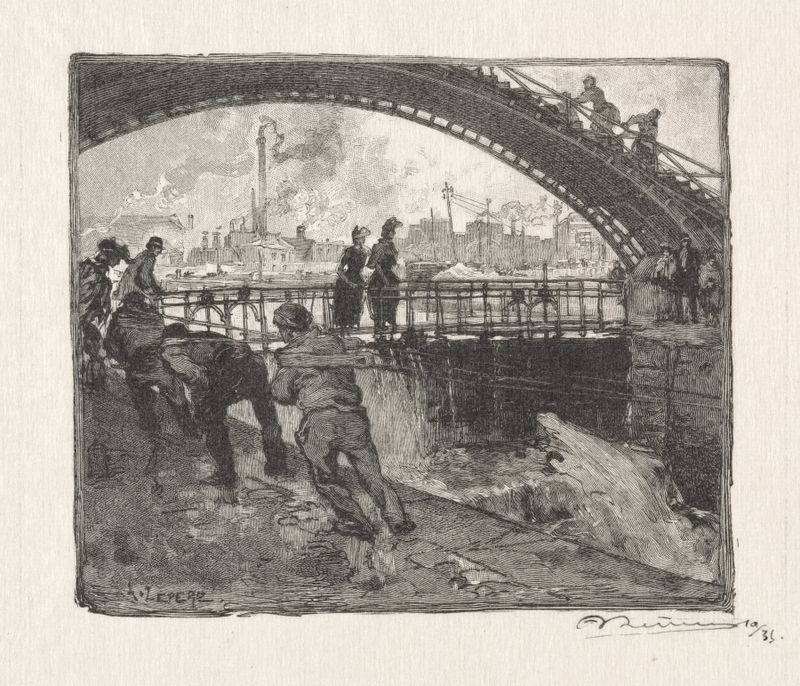
L’Ecluse du Canal St. Martin
Auguste Louis Lepère

Le Boulevard Montmartre, le Soir
Auguste Louis Lepère

Une Chasse au Mont Gérard
Auguste Louis Lepère
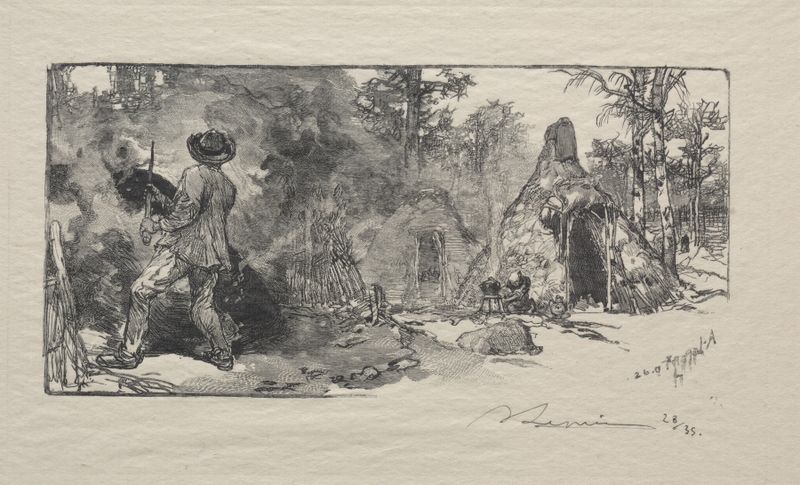
Les Charbonniere
Auguste Louis Lepère
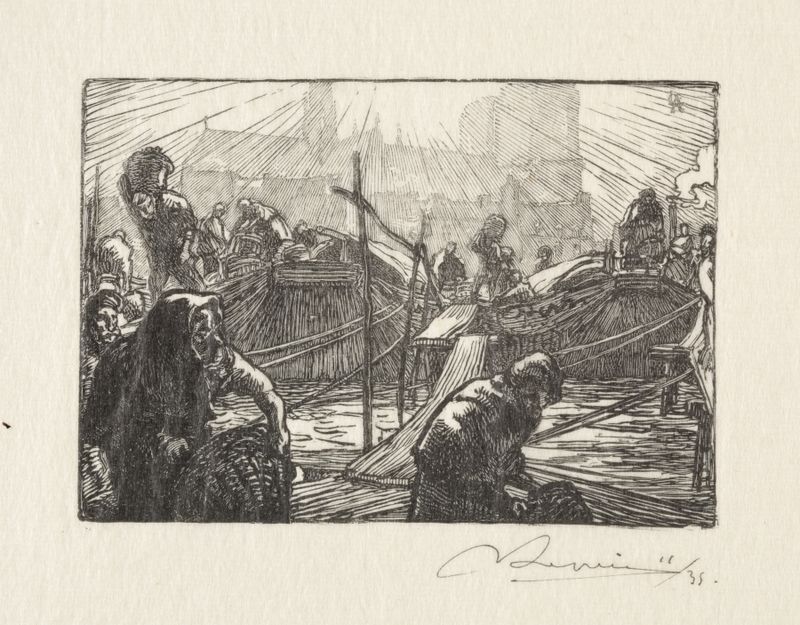
Notre Dame vue du Marché aux pommes
Auguste Louis Lepère

Le Palais des Arts Liberaux, Intèrieur
Auguste Louis Lepère





