Le Givre — History & Facts
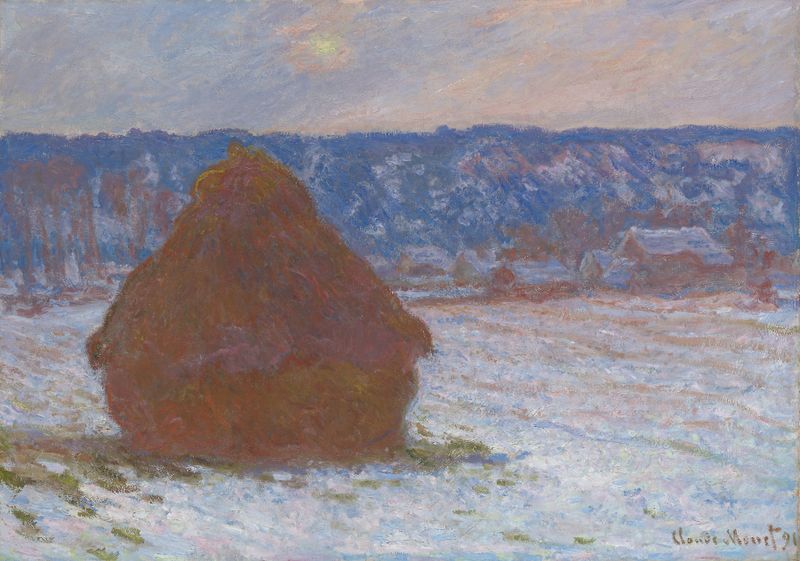
Did the painter know this moment would outlive them? In Le Givre, the whisper of winter captures a fleeting beauty, where frost delicately cloaks the landscape in silence. Look to the horizon, where the pale, icy blue sky meets the soft, shimmering white of the snow. The painting's brushstrokes create an ethereal atmosphere, a blend of cool hues that evoke both tranquility and chill. Notice how the light glimmers off the frost, transforming the ordinary into something extraordinary.
The composition draws your gaze towards the darkened silhouettes of trees, their shadows casting long, dark lines across the pristine surface, emphasizing the contrast between warmth and cold. Beneath the serene surface, there lies a tension between solitude and serenity. The shadowy trees suggest a lurking presence, while the untouched snow offers a sense of peace that is almost haunting. This interplay of light and dark invites introspection; it evokes questions of solitude in nature and the passage of time, hinting at moments lost amidst the encroaching cold.
The frost, a temporary adornment, serves as a reminder of life's fleeting beauty — a moment suspended in time. In 1880, Monet painted this work while immersed in the Impressionist movement, a time when artists sought to capture the ephemeral qualities of light and atmosphere. Living in Giverny, he was deeply inspired by his surrounding landscapes, experimenting with color and technique to portray the nuanced effects of nature. This period marked a significant evolution in his style, reflecting both personal and artistic growth amidst a rapidly changing world.