Le Givre À Giverny — History & Facts
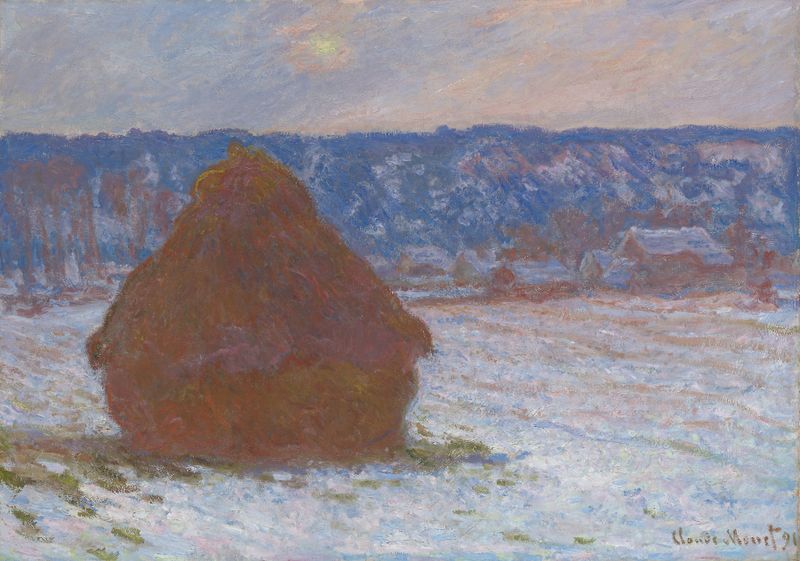
Where does light end, and longing begin? In the frost-kissed landscape of Le Givre À Giverny, the boundary between beauty and melancholy blurs into an enchanting haze. Look closely at the delicate interplay of colors that dance across the canvas. The soft blues and whites of the frost seem to shimmer, inviting your gaze to explore the quiet pathways winding through the glistening fields. Notice how Monet employs dappled brushstrokes to capture the fleeting essence of light, each stroke a whisper that resonates with a serene stillness.
The trees, draped in shimmering frost, stand as sentinels over the muted landscape, inviting reflection on transient beauty. Yet, beneath this tranquil surface lies a poignant tension. The coldness of winter is palpable, evoking a sense of isolation that contrasts sharply with the ethereal glow of sunlight filtered through the frost. The solitary tree in the foreground, stark yet beautiful, implies a stillness that hints at both solitude and resilience.
This painting serves as a meditation on nature’s ephemeral beauty, prompting contemplation about the cycles of life and the inevitable passage of time. Painted in 1885, this work emerged during a significant period for the artist, who was deeply immersed in the Impressionist movement. Working in Giverny, Monet sought to capture the essence of light and nature, exploring the intersection of color and atmosphere. At this time, he was establishing his garden—an endeavor that would later influence many of his masterpieces, reflecting his unwavering dedication to the natural world.