
Le Grain — History & Facts
Could a single brushstroke hold eternity? In Le Grain, the essence of truth is distilled through the delicate interplay of color and light, inviting viewers to ponder the fleeting nature of existence. Look to the lower right of the canvas, where a shimmering expanse of water reflects the swirling clouds above. Notice how the artist's deft brushwork creates a sense of movement; the fluid strokes guide your gaze across the landscape, revealing vibrant greens and deep blues that pulse with life. The composition, while seemingly simple, is a masterclass in balance, as the horizon line draws you in, anchoring your perspective amidst the ethereal skies. Beneath the surface, emotional tensions emerge—the tranquility of nature contrasts with the visceral energy of the brushstrokes, evoking a silent dialogue between chaos and serenity.
The grain fields, depicted in rich hues, symbolize both the bounty of the earth and the inevitable passage of time. Each stroke seems to whisper of stories untold, a reminder that beauty lies not just in what is visible, but in the truths that linger just out of sight. In the mid-1860s, Jongkind painted Le Grain while residing in France, a period marked by his growing reputation as a key figure in the Impressionist movement. His approach to capturing light and atmosphere was pioneering, reflecting the shift in artistic sensibilities of the time.
As the world around him began to embrace modernity, Jongkind's work remained grounded in a profound connection to nature, balancing innovation with reverence for the eternal.
More Artworks by Johan Barthold Jongkind
Browse all →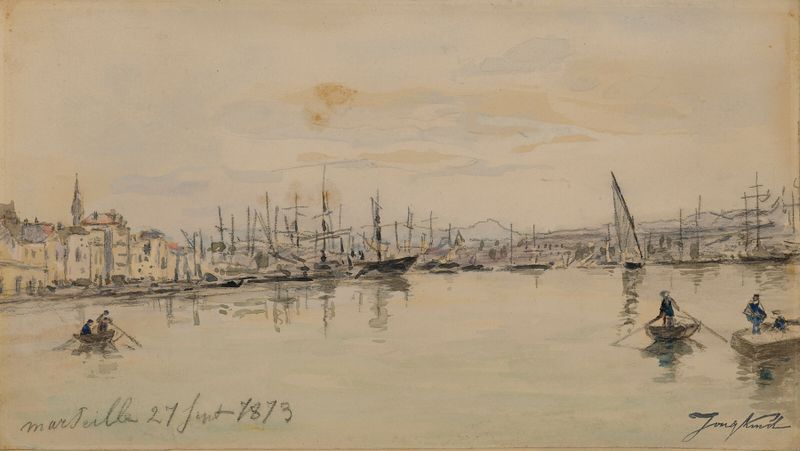
Le Port de Marseille
Johan Barthold Jongkind

Canal Saint-Martin
Johan Barthold Jongkind

Countryside near Brezins, between Grenoble and Vienne
Johan Barthold Jongkind

Notre-Dame vue du quai de la Tournelle
Johan Barthold Jongkind

Environs de Grenoble
Johan Barthold Jongkind

Clair de lune à Overschie (environs de Rotterdam)
Johan Barthold Jongkind

Port de Honfleur
Johan Barthold Jongkind
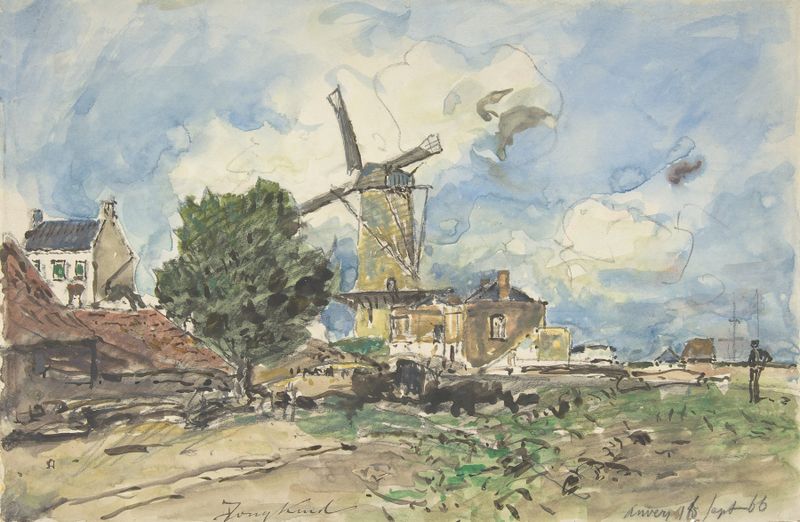
Wind Mill at Antwerp
Johan Barthold Jongkind

Le Havre
Johan Barthold Jongkind

The Church of Overschie
Johan Barthold Jongkind





