
Le moulin de Gatimel — History & Facts
The sweep of yellow-green hills in Le moulin de Gatimel draws the viewer in with a sense of boundless space and quiet radiance. Your eye is led by the rhythm of clustered bushes, their golden tones almost pulsing against the cool blue shadows, toward the distant windmill perched atop the farthest rise. The houses, scattered like small jewels, punctuate the landscape with their red roofs, offering a human scale to the vastness.
The light, diffused and gentle, seems to dissolve the edges of every form, suggesting a warm afternoon where the air itself shimmers. This is not a scene of drama, but of slow, sunlit unfolding—every brushstroke a note in a calm, rural symphony. Painted in 1932 by Achille Laugé, this work belongs to a world where French artists were still exploring the effects of light and color long after the first Impressionists had shocked Paris. By this time, the innovations of Pointillism and Divisionism had filtered into regional landscapes, and painters like Laugé, working in the south, found new ways to capture the languor of the countryside.
The painting now resides in the Musée Petiet de Limoux, a reminder of how even lesser-known artists contributed to the ongoing dialogue between nature and paint. History has kept few traces of the daily life behind these hills, but the image invites you to linger, to let your gaze wander as the painter once did, searching for the subtle shifts of sun and shadow.
More Artworks by Achille Laugé

Ruelle au balcon fleuri
Achille Laugé
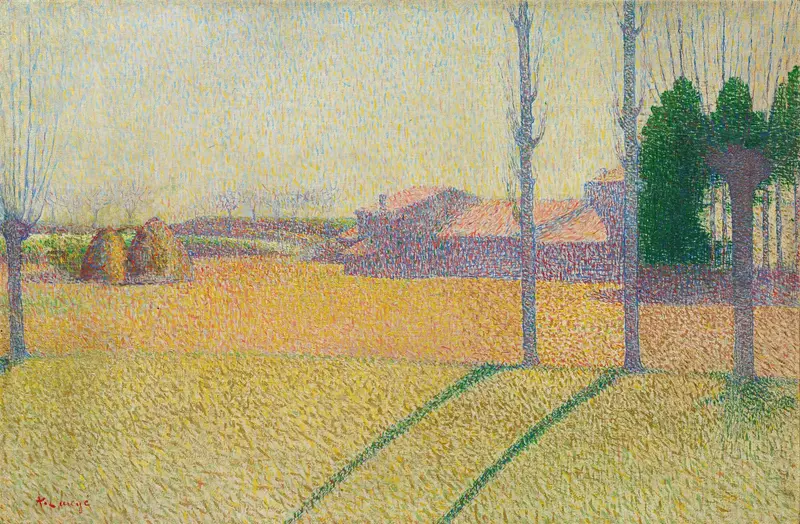
L’hort À Cailhau
Achille Laugé
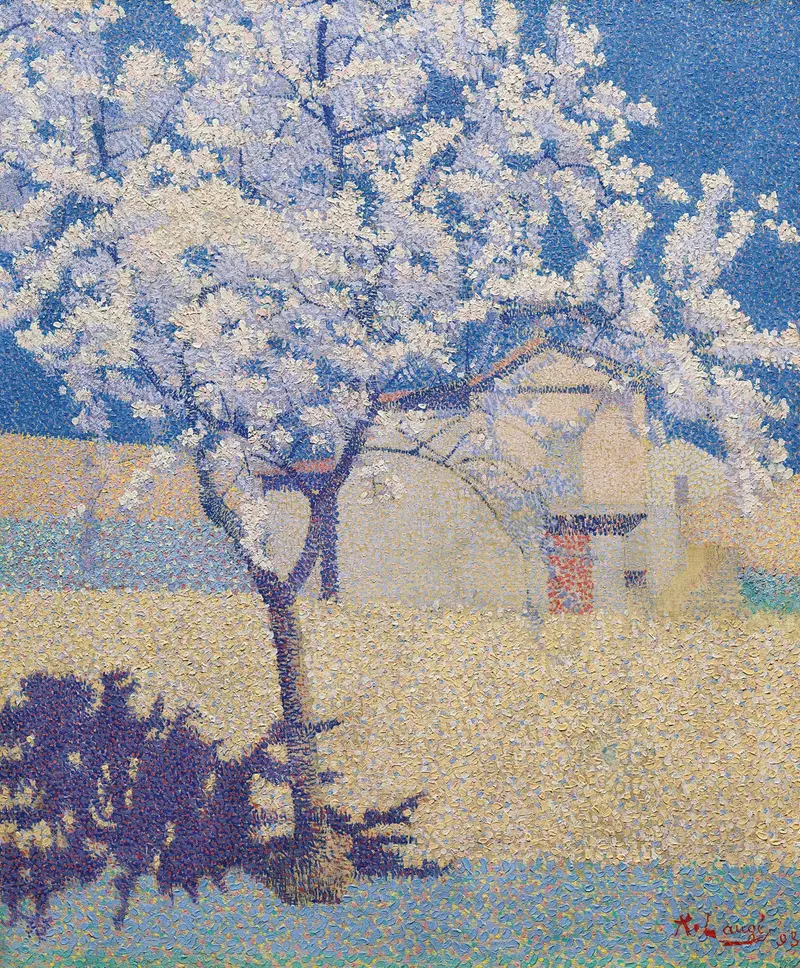
L’Arbre En Fleur
Achille Laugé
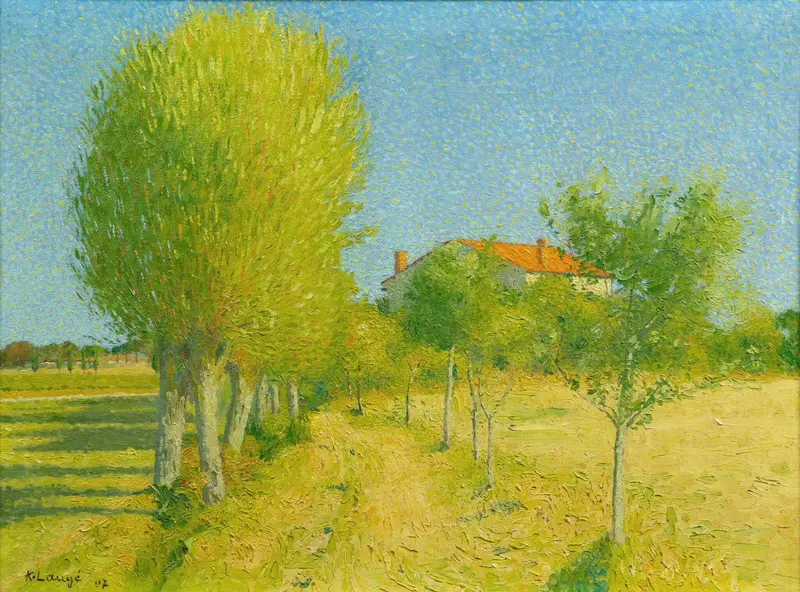
L’allée de saules derrière l’Alouette à Cailhau
Achille Laugé
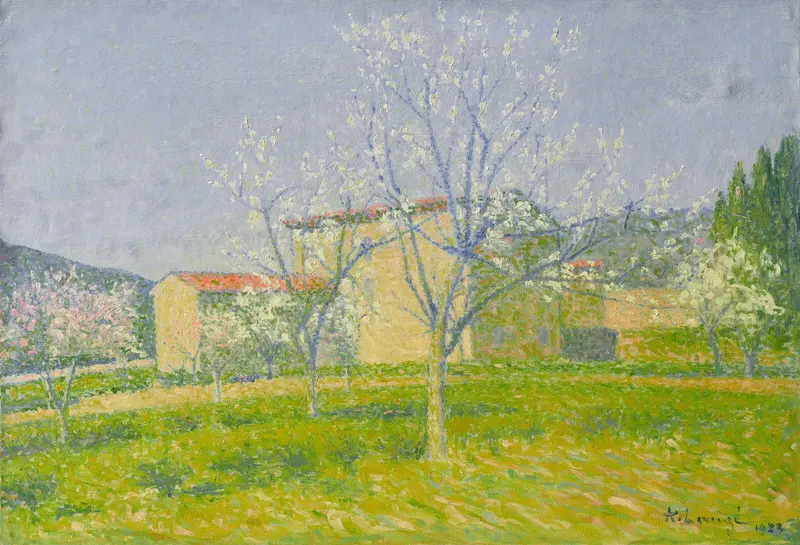
Verger en fleurs à Alet-les-Bains (Aude)
Achille Laugé
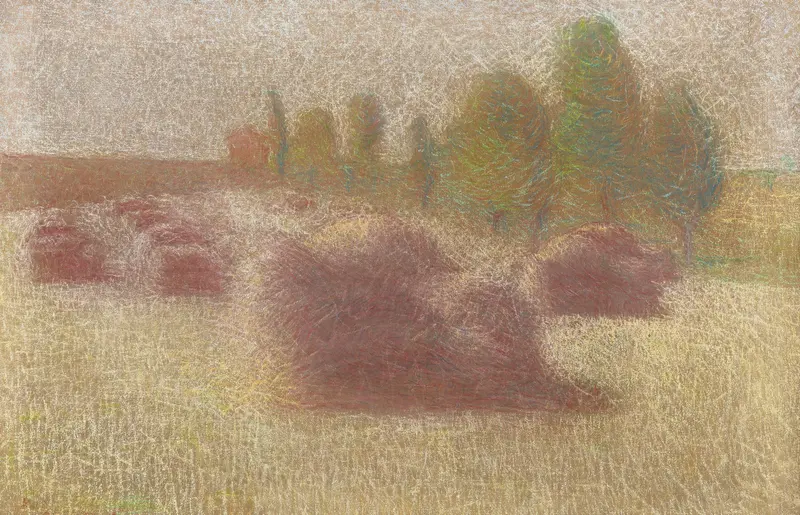
Les Gerbes
Achille Laugé
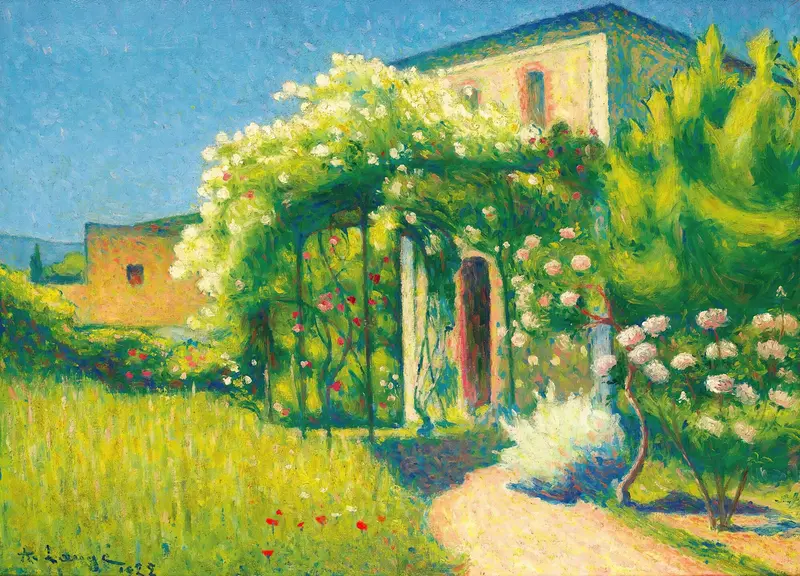
L’Atelier À Alet-Les-Bains
Achille Laugé
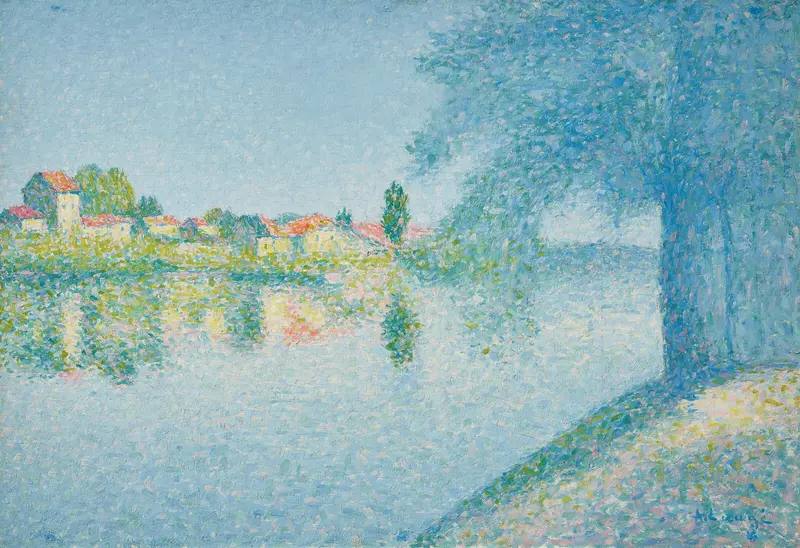
Vue des quais de la Garonne
Achille Laugé
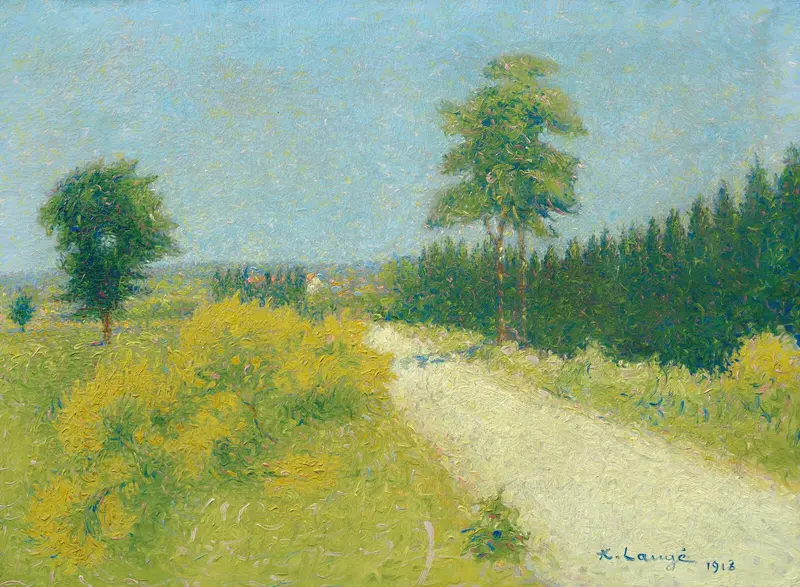
La route de Belvèze vers le relais
Achille Laugé
La route (The Road)
Achille Laugé
More Landscape Art

The Starry Night
Vincent van Gogh

View of Delft
Johannes Vermeer

Water Lilies
Claude Monet

The Grand Canal, Venice, looking north-west from the Ca' Corner to the Ca' Contarini degli Scrigni, with the campanile of Santa Maria della Carità
Canaletto

Windsor Castle
Canaletto

The Grand Canal looking North-East from the Palazzo Dolfin-Manin to the Rialto Bridge
Canaletto