
Le Passeur — History & Facts
This thought lingers in the air as one gazes upon a tranquil tableau that intertwines the essence of nature with the fragility of human existence. To appreciate the piece fully, focus first on the flowing river near the center, glistening under a soft, golden light. Notice how the artist employs delicate brush strokes to create a shimmering effect that brings the water to life, inviting the viewer to feel its coolness. Look to the left, where a solitary figure stands poised on the riverbank, framed by a backdrop of lush, verdant trees.
The painter’s choice of muted greens and warm blues offers a harmonious palette, evoking a sense of calm that contrasts with the underlying tension present in the solitary figure's gaze. As you delve deeper, consider the emotional weight of this moment captured on canvas. The figure appears contemplative, almost wistful, suggesting a poignant connection between humanity and nature. The shimmering quality of the water may symbolize the passage of time, while the dense greenery hints at the complexities of life that surround it.
The juxtaposition of beauty and solitude within the framework of the painting evokes both awe and introspection, inviting the viewer to reflect on their own journey through still waters and turbulent emotions. Although the exact date remains uncertain, it is likely that this work emerged during Lebourg’s prolific years in the late 19th century in France, a period marked by artistic exploration and the emergence of Impressionism. The artist was known for his ability to blend soft brushwork with vibrant colors, capturing ephemeral moments in nature. At this time, he was deeply engaged in the transformation of landscape painting, introducing a subtle interplay between light and shadow that resonates powerfully in this piece.
More Artworks by Albert Lebourg
Browse all →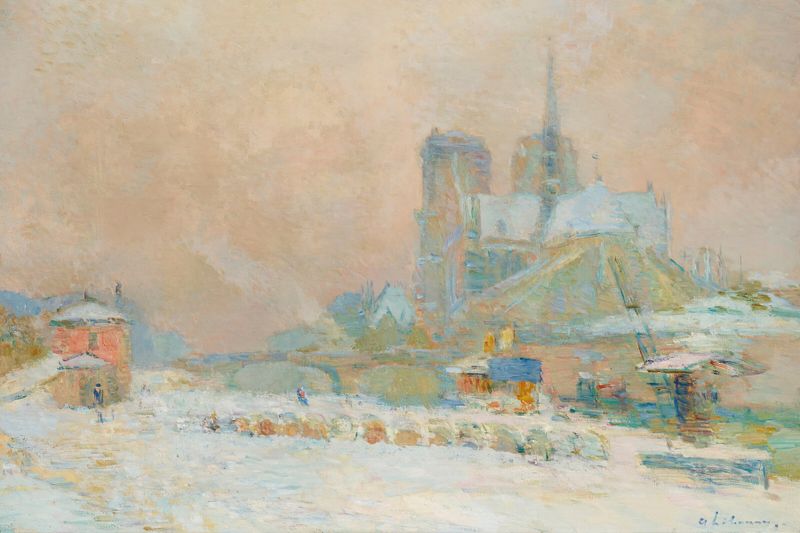
Notre Dame de Paris, vue du Quai de la Tournelle, effet de neige
Albert Lebourg
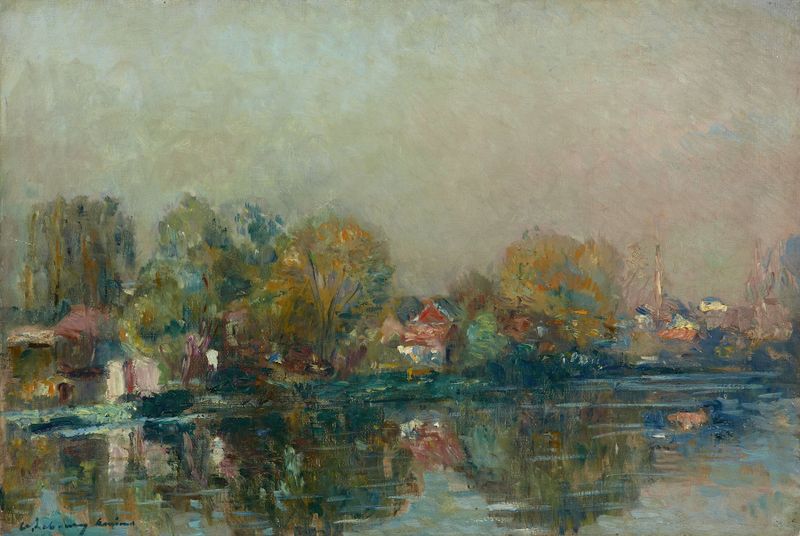
Amiens, bords de rivière
Albert Lebourg
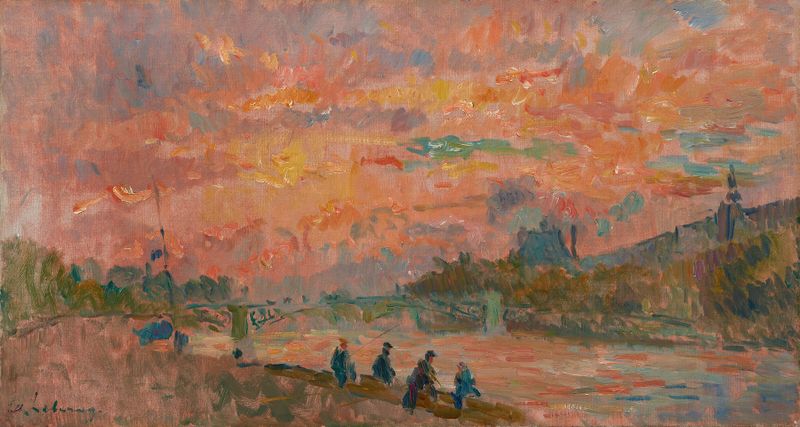
Coucher de soleil sur la Seine, à Paris
Albert Lebourg
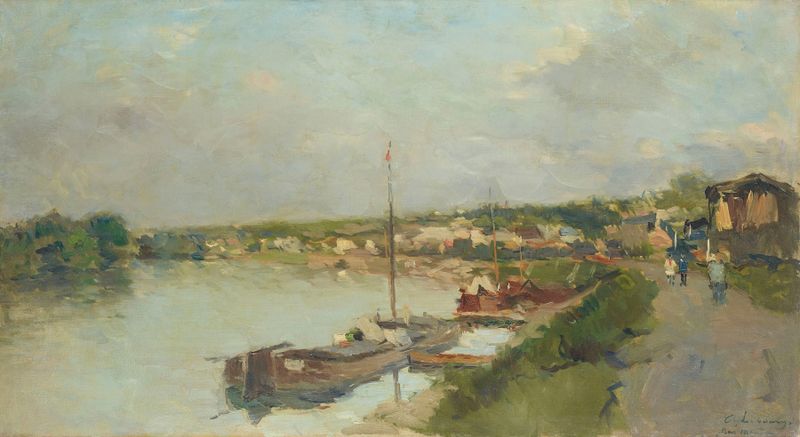
La Seine au Bas-Meudon
Albert Lebourg
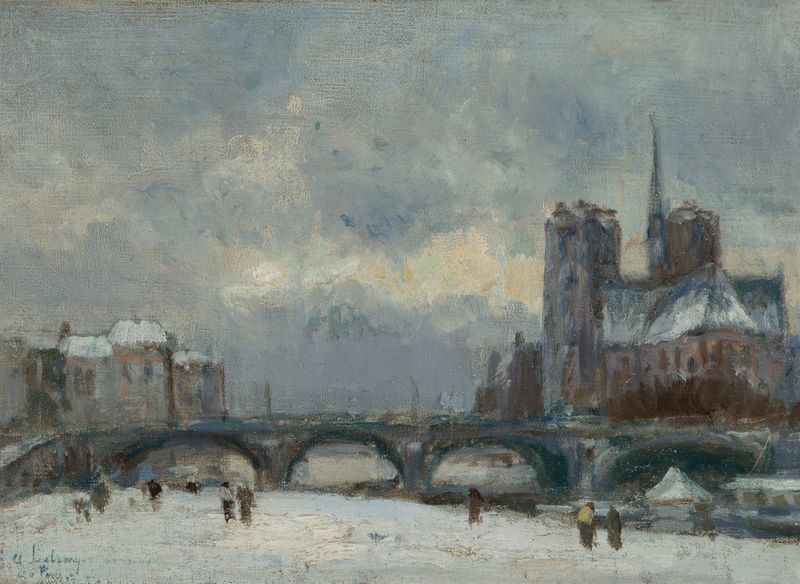
Paris, Notre-Dame, neige
Albert Lebourg
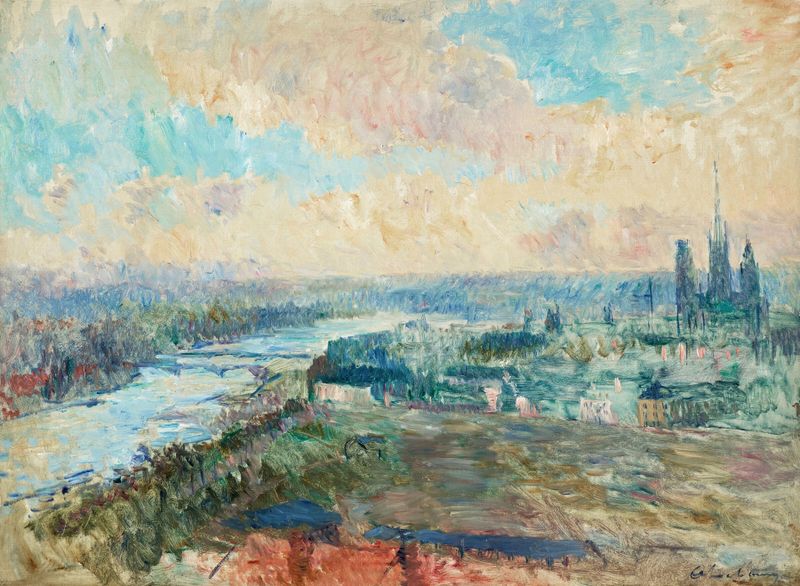
La Seine à Rouen
Albert Lebourg
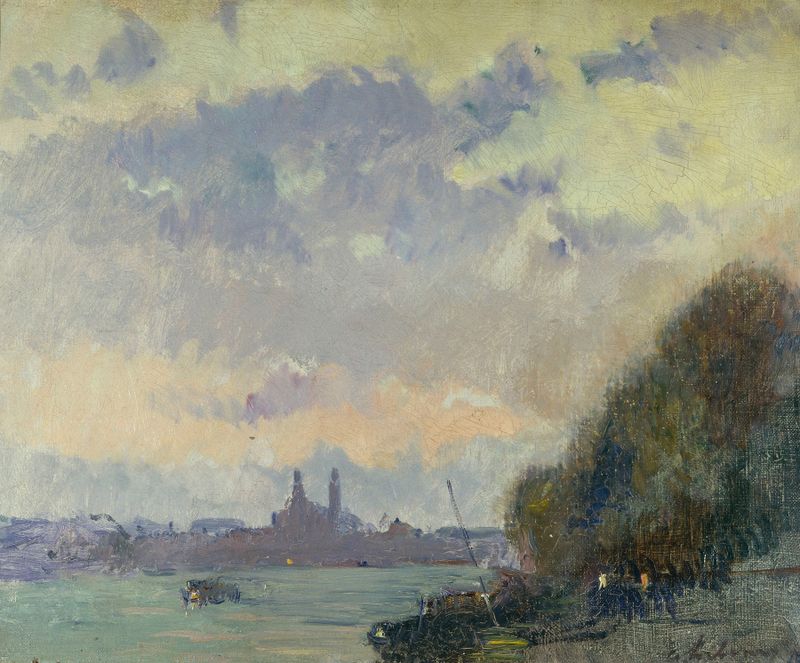
La Seine et l’ancien Trocadéro
Albert Lebourg
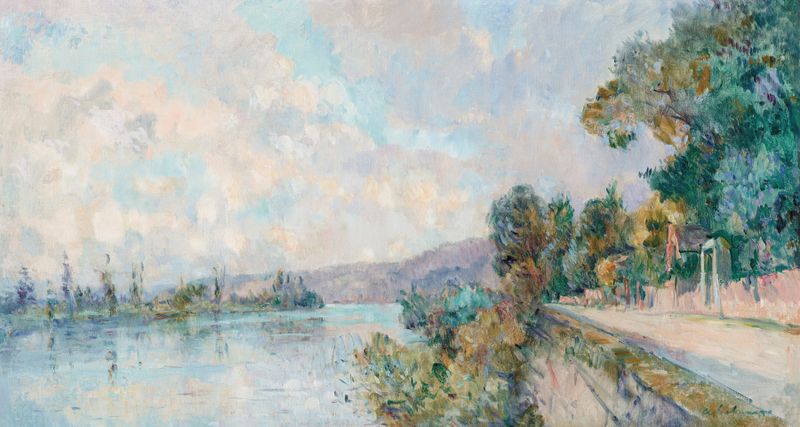
La Seine et les coteaux de Dieppedalle, vue prise de Croisset, près Rouen
Albert Lebourg
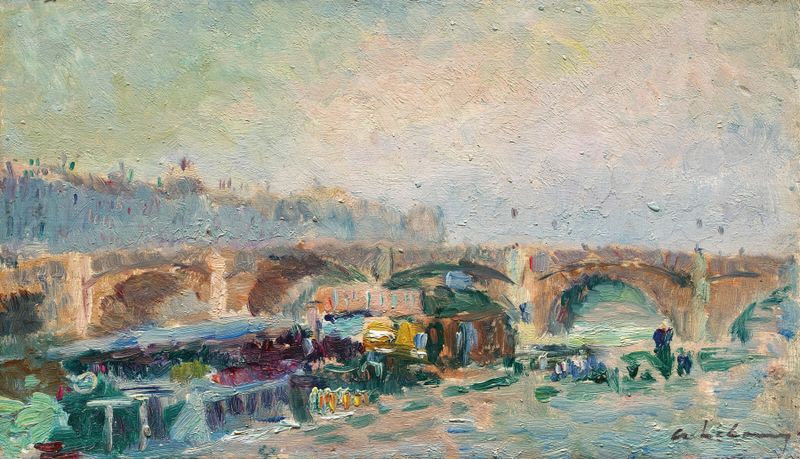
Le Pont de la Tournelle et le quai de Béthune
Albert Lebourg
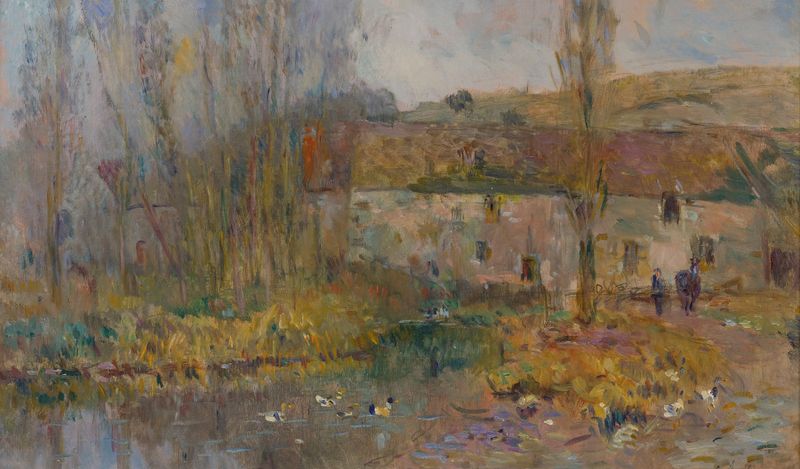
Moulin En Normandie
Albert Lebourg





