
Le Pavillon de l’Allemagne à l’Exposition Universelle de 1900. — History & Facts
When did color learn to lie? In a world where hues clash and compete for attention, the chaotic vibrancy of a moment captured can tell truths that evade reality. Focus on the central pavilion, its towering structure rising majestically against a tumultuous sky, painted with bold strokes of deep blues and fiery oranges. The artist's brushwork leads the eye to intricate architectural details, where the light dances off surfaces, creating a play of shadows that adds depth and drama. Notice how the surrounding crowd is rendered in a flurry of colors, each figure blending into the next, suggesting a sense of collective excitement and urgency. Yet within the brilliance lies tension; the dissonance of vibrant colors hints at an undercurrent of discord amidst the celebration.
The architectural grandeur, while visually striking, stands as a symbol of imperial ambitions and the chaos of a world on the brink of change. Small details, like the contrasting expressions on people’s faces or the chaotic arrangement of flags, reflect a deeper narrative of hope and anxiety, capturing the spirit of a society in flux. Edouard Zawiski painted this scene during the Exposition Universelle in Paris, a monumental event showcasing advancements of the time. It was an era marked by rapid industrialization and national pride, yet beneath the surface, tensions were brewing that would soon lead to significant upheaval in Europe.
This work, created in the heat of the moment, encapsulates the intoxicating allure and the chaotic reality of the turn of the century.
More Artworks by Edouard Zawiski
Browse all →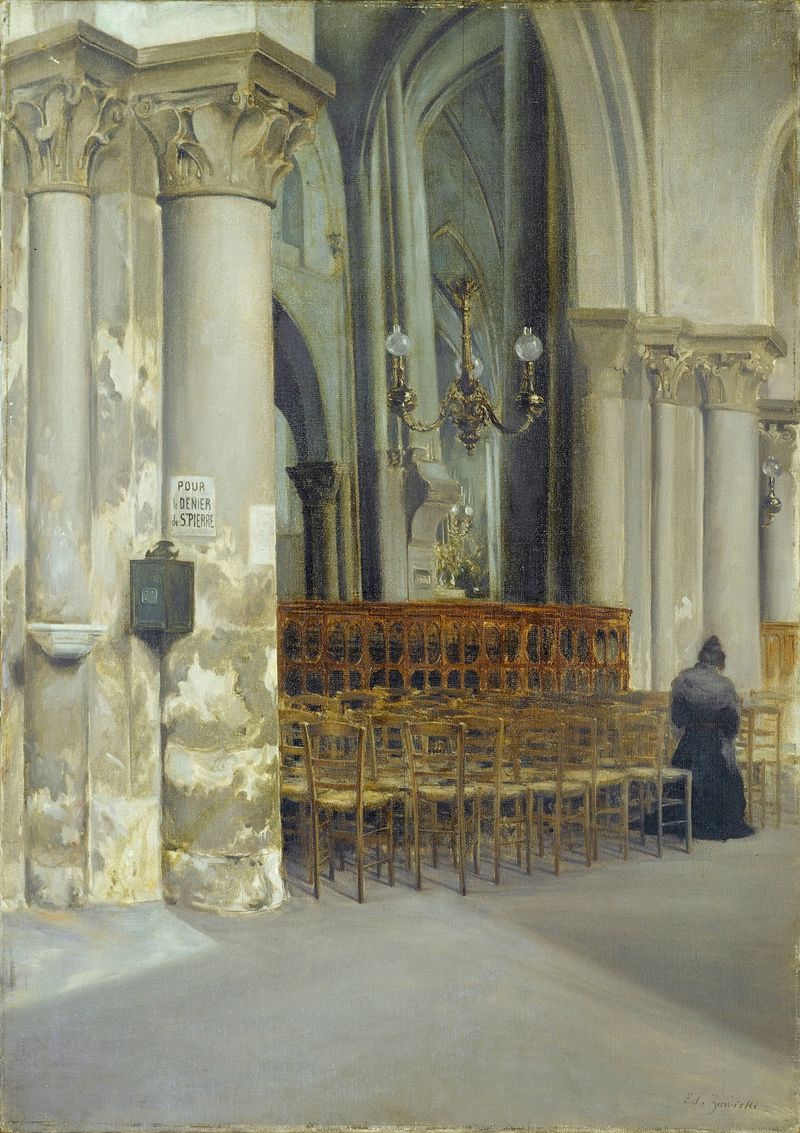
Intérieur de l’église Saint-Pierre-de-Montmartre.
Edouard Zawiski
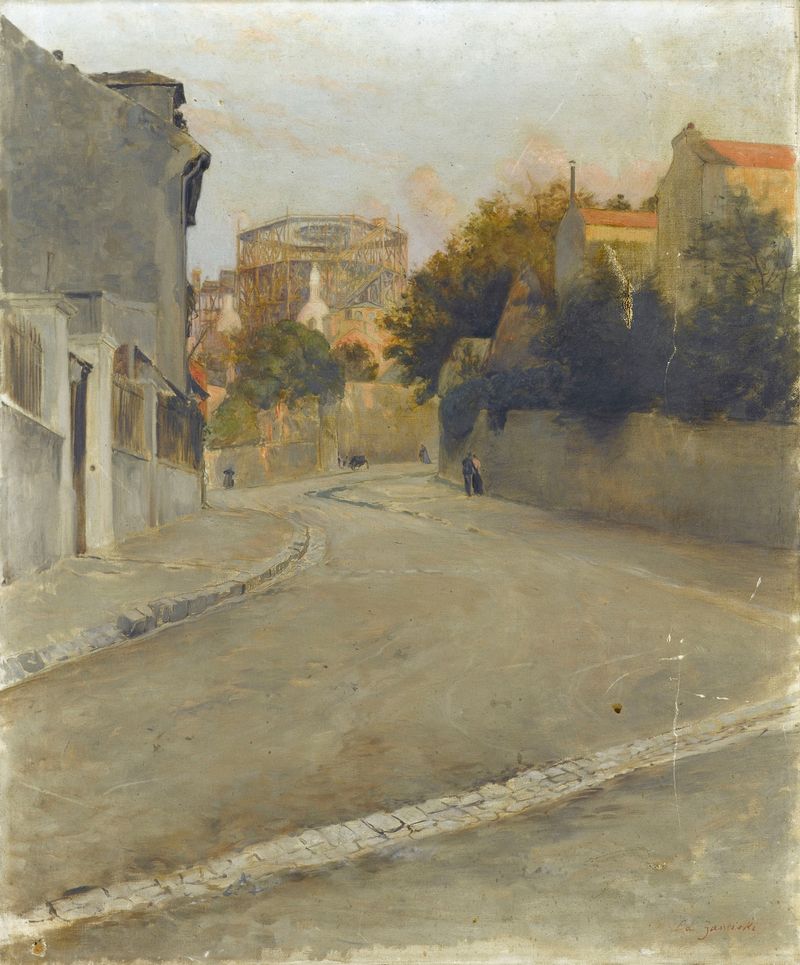
Le Sacré-Cœur en construction, vu de l’abreuvoir de Montmartre, vers 1895
Edouard Zawiski
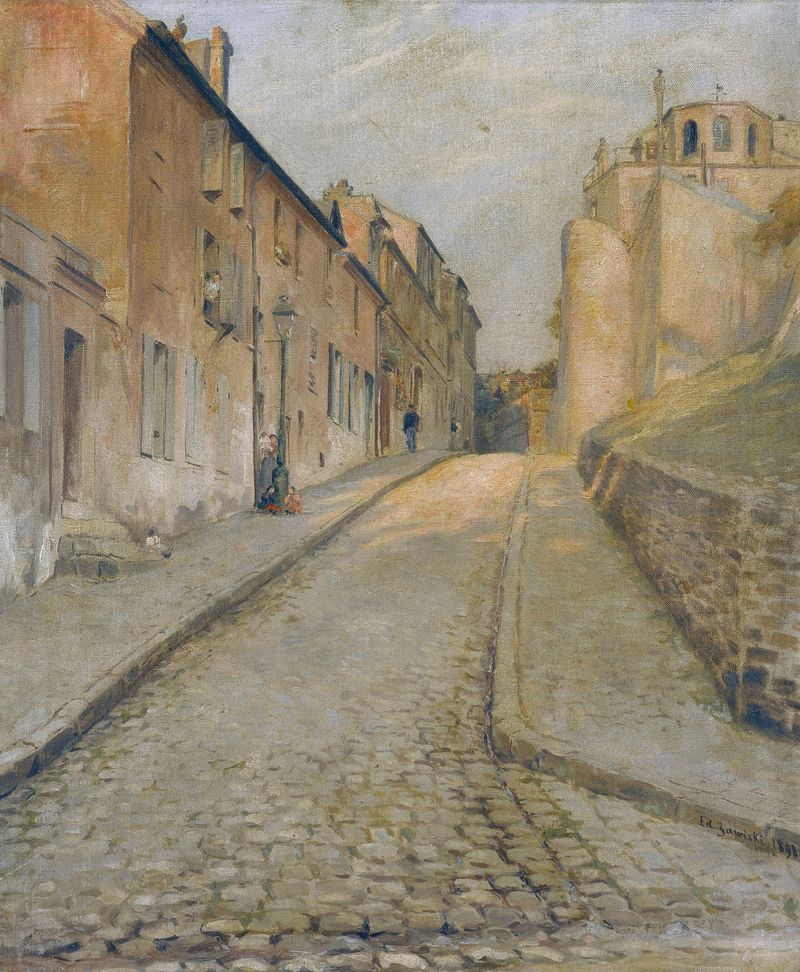
La rue Cortot à Montmartre, vue de la rue des Saules
Edouard Zawiski
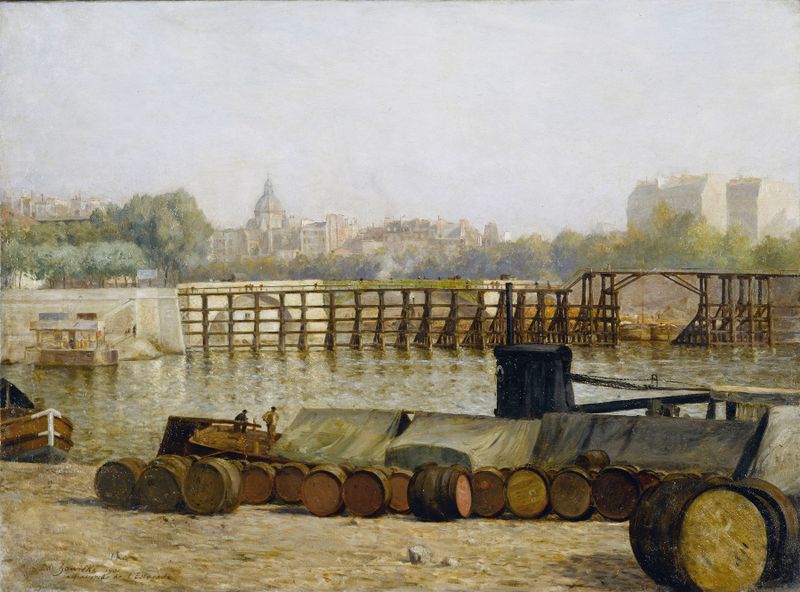
Vue de l’estacade de l’île Saint-Louis ; effet du matin.
Edouard Zawiski
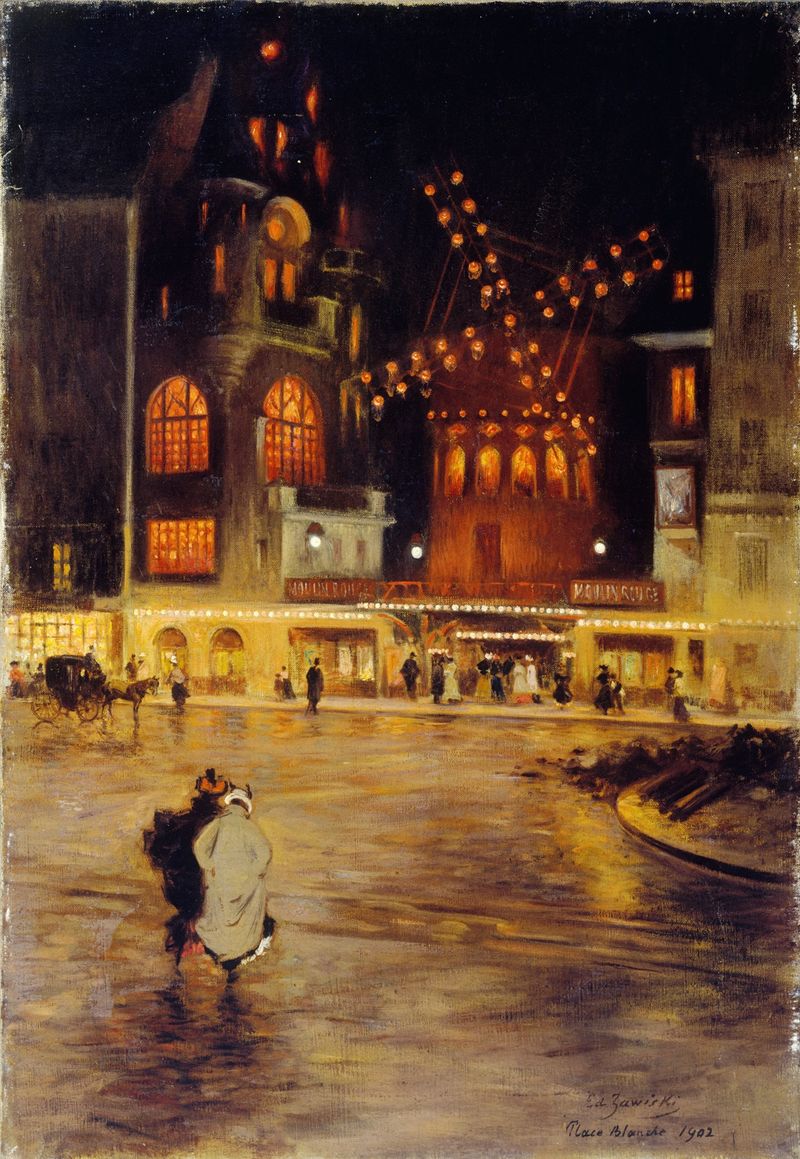
La Place Blanche et le Moulin Rouge
Edouard Zawiski
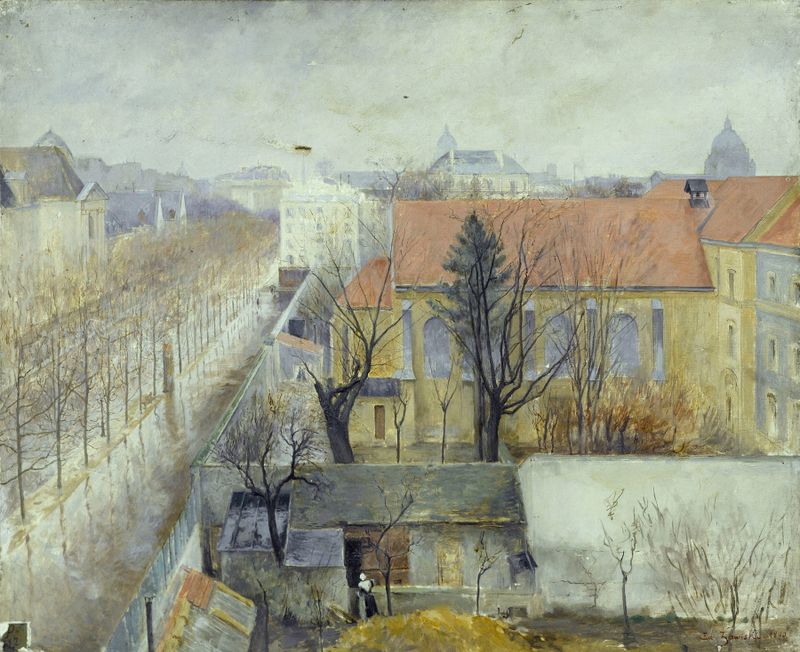
La Maison de refuge du Bon Pasteur, vue de la place Denfert-Rochereau.
Edouard Zawiski
More Architecture Art
Browse all →
The statue of Liberty
Frédéric Auguste Bartholdi

View of Houses in Delft, Known as ‘The Little Street’
Johannes Vermeer

View of Houses in Delft, Known as ‘The Little Street’
Johannes Vermeer

The Cathedral in Rouen. The portal, Grey Weather
Claude Monet

The yellow house
Vincent van Gogh

The Church in Auvers-sur-Oise, View from the Chevet
Vincent van Gogh