Le pont japonais — History & Facts
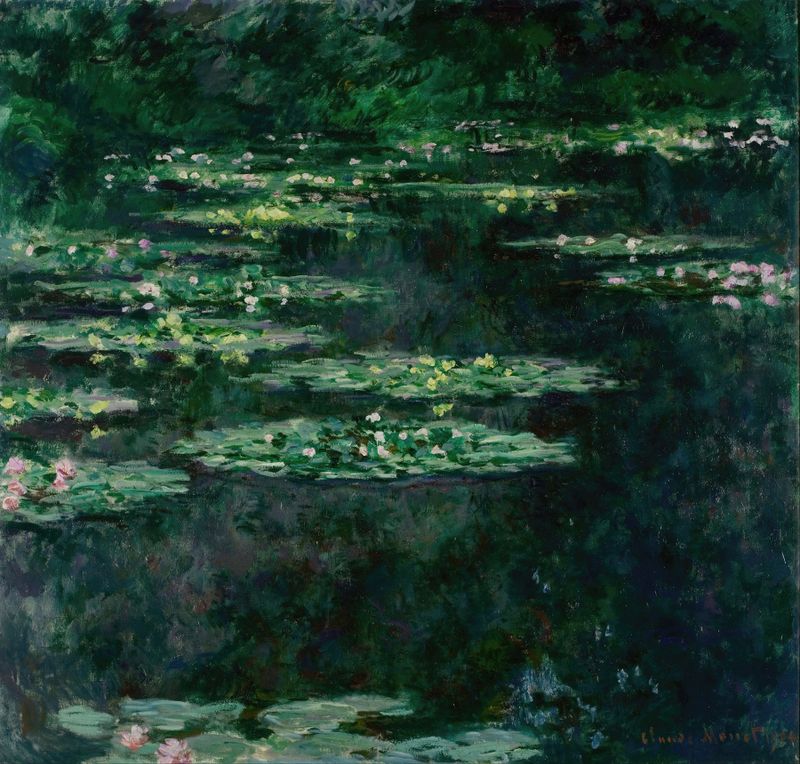
What if beauty was never meant to be finished? The allure of decay in nature's embrace speaks to the fragility of existence and the relentless passage of time. Focus on the vibrant hues of green and the soft blues that define the landscape, drawing your gaze to the iconic bridge. Look closely at the textured brushstrokes that create movement in the foliage and water, suggesting a gentle breeze swaying the blossoms above. Notice how the light dances across the surface, with reflections rippling like memories fading into the depths. Hidden within the serene composition lies a profound tension between the ethereal beauty of the scene and the inevitable decay surrounding it.
The bridge, both a symbol of connection and a testament to time's erosion, beckons viewers to contemplate their own transience. Flowers bloom vividly, yet their delicate forms hint at life's short-lived nature, underscoring the fleeting moments of joy amid the decay. Created between 1918 and 1924, this piece represents a significant period for the artist, as he grappled with the effects of age and loss. Monet was in Giverny, where he sought solace in the familiar landscapes of his garden.
The world was shifting, marked by the aftermath of World War I, yet Monet's work remained a sanctuary of beauty, reflecting his resilience and enduring commitment to capturing the essence of nature, even as it faded.