
Le relais — History & Facts
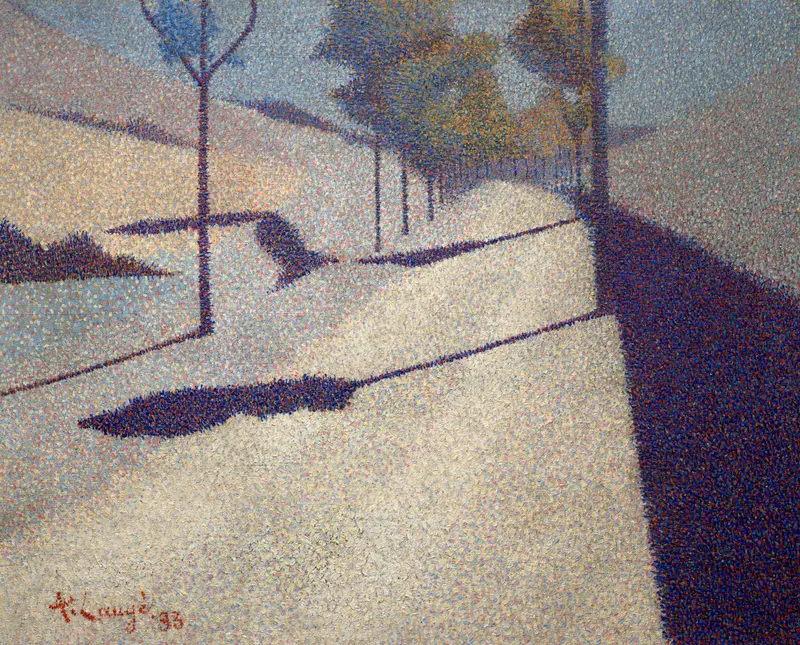
The first thing that catches the eye in Le relais is the way sunlight seems to flood the entire scene, casting crisp shadows and bathing the countryside in a golden haze. The road, almost bleached by the southern light, leads you straight into the heart of the painting, where a cluster of buildings nestles quietly among tall, sentinel-like cypress trees. The artist’s brushwork, made up of countless small, dappled strokes, gives the fields and sky a shimmering, almost vibrating presence, as if the air itself is alive with heat and the hum of insects.
The palette is restrained yet radiant, dominated by ochres, greens, and the endless blue of a cloudless sky, inviting the viewer to linger and wander through this tranquil landscape. Painted in 1909, Le relais belongs to a moment when artists across France were captivated by the changing light and color of the countryside, often working outdoors to capture fleeting effects. Achille Laugé, known for his pointillist technique, was part of a generation that sought to modernize landscape painting by breaking down color into its purest elements. While little is recorded about the specific history of this work, its presence in a private collection and its documentation in 2018 speak to the quiet endurance of such scenes, cherished for their ability to conjure the warmth and stillness of a rural afternoon.
Standing before this painting, one is drawn into the world it offers—at once ordinary and quietly luminous.
More Artworks by Achille Laugé

Ruelle au balcon fleuri
Achille Laugé
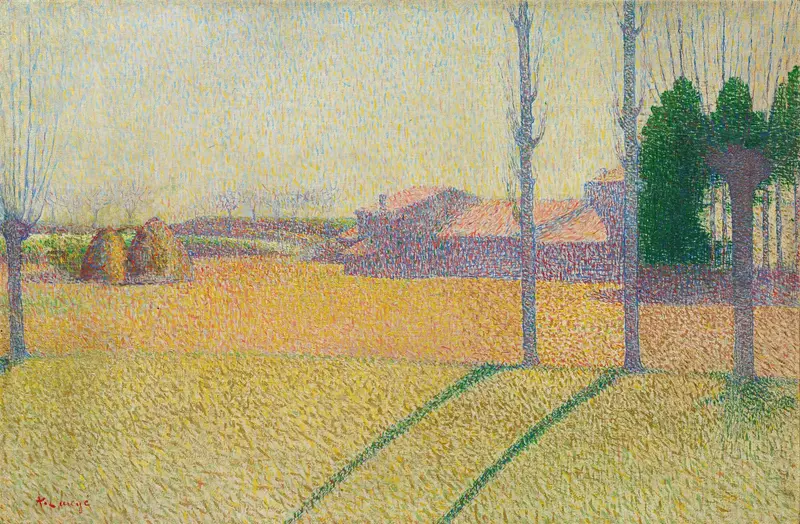
L’hort À Cailhau
Achille Laugé
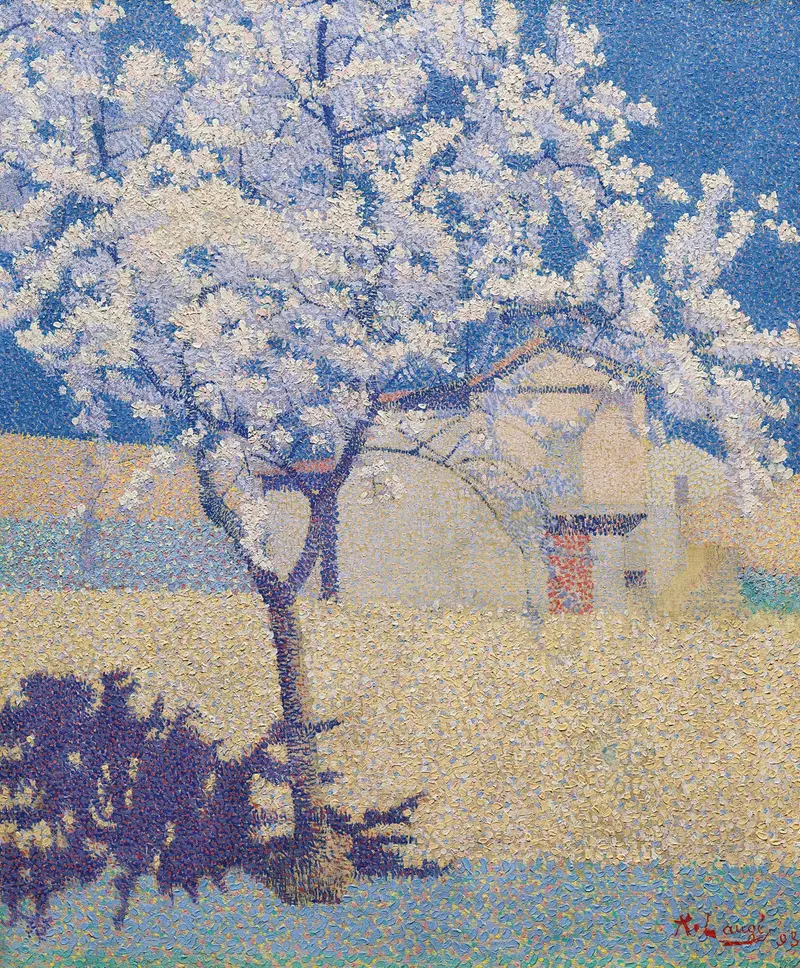
L’Arbre En Fleur
Achille Laugé
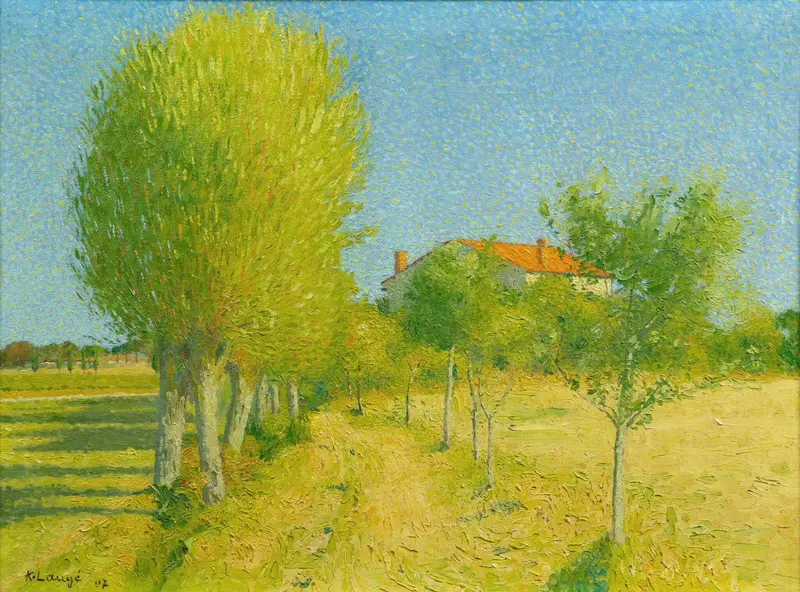
L’allée de saules derrière l’Alouette à Cailhau
Achille Laugé
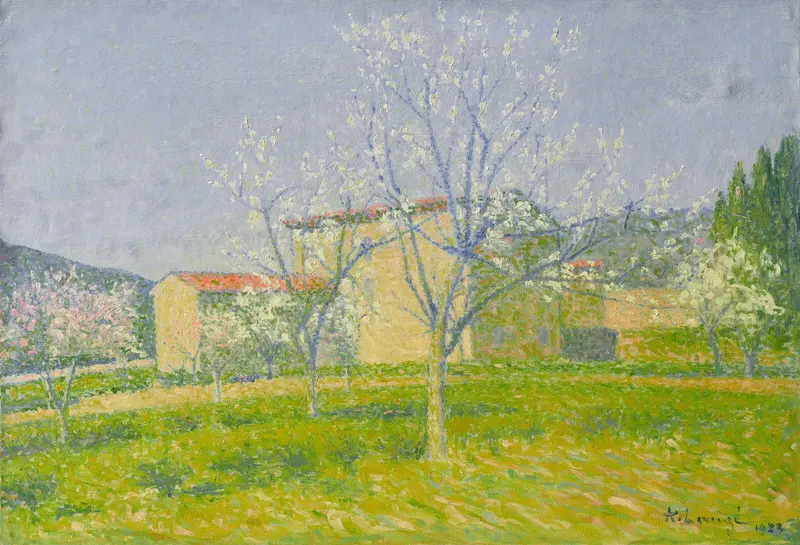
Verger en fleurs à Alet-les-Bains (Aude)
Achille Laugé
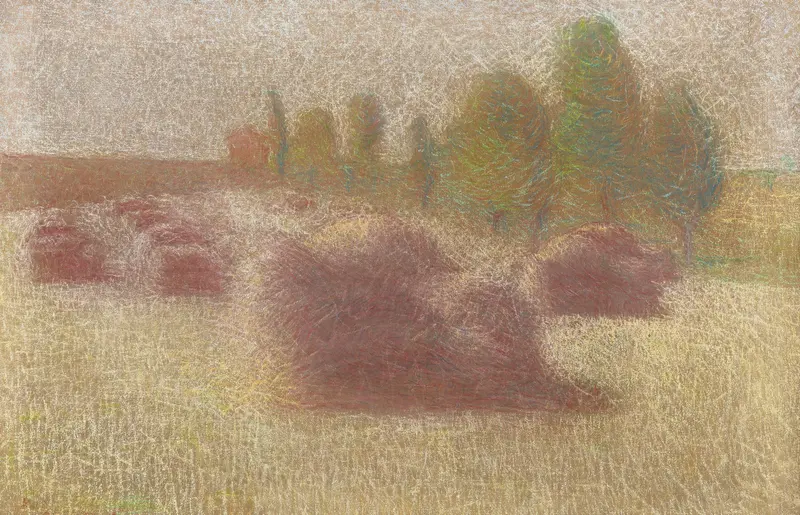
Les Gerbes
Achille Laugé
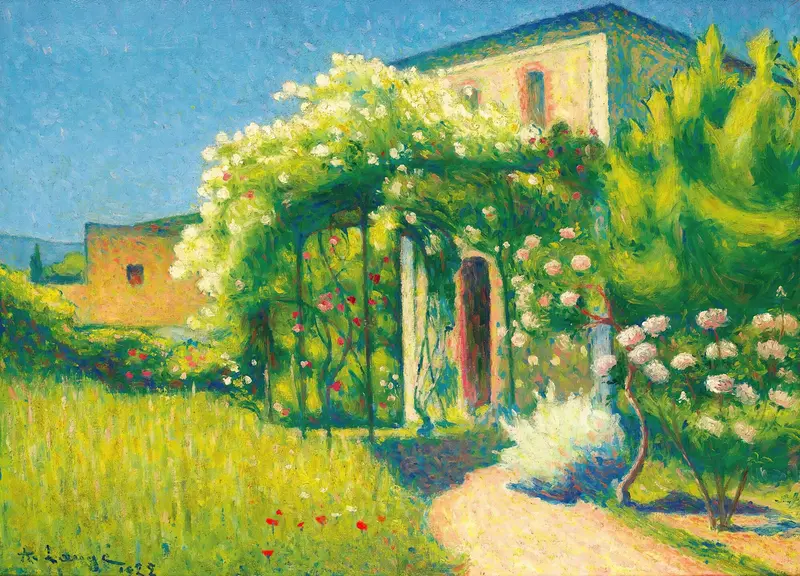
L’Atelier À Alet-Les-Bains
Achille Laugé
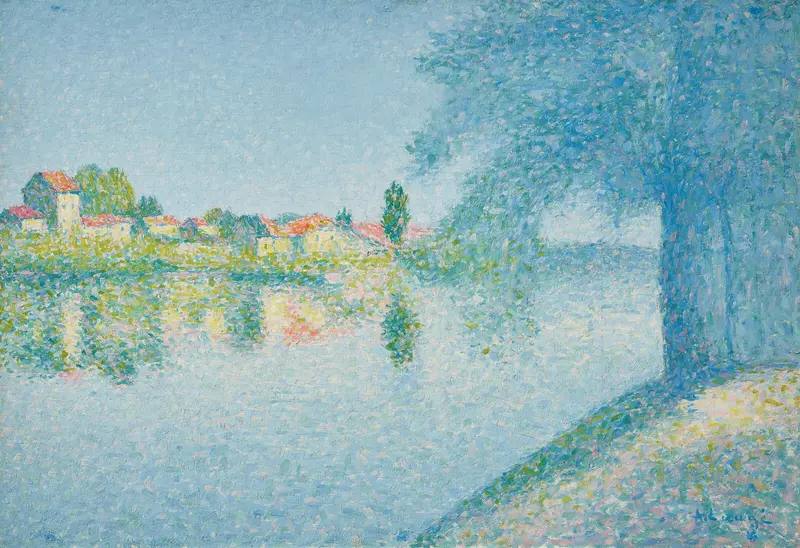
Vue des quais de la Garonne
Achille Laugé
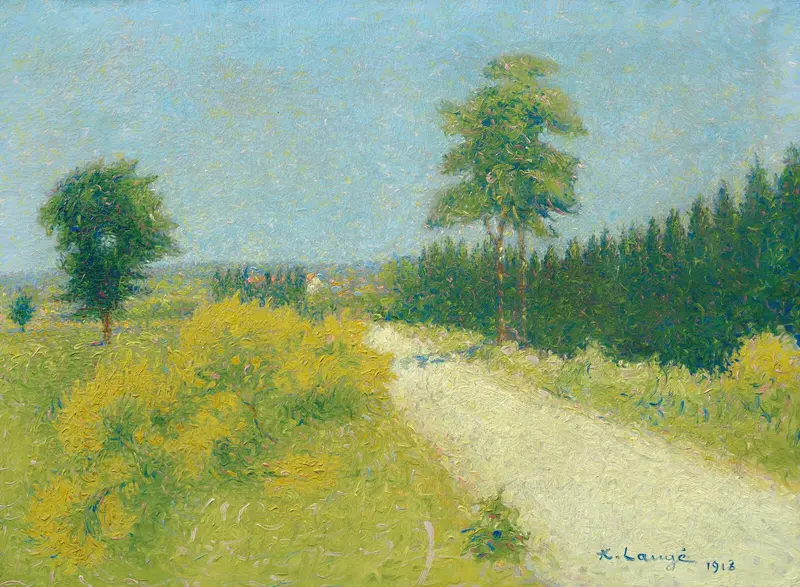
La route de Belvèze vers le relais
Achille Laugé
La route (The Road)
Achille Laugé
More Landscape Art

The Starry Night
Vincent van Gogh

View of Delft
Johannes Vermeer

Water Lilies
Claude Monet

The Grand Canal, Venice, looking north-west from the Ca' Corner to the Ca' Contarini degli Scrigni, with the campanile of Santa Maria della Carità
Canaletto

Windsor Castle
Canaletto

The Grand Canal looking North-East from the Palazzo Dolfin-Manin to the Rialto Bridge
Canaletto