
Le Vert Gallant — History & Facts
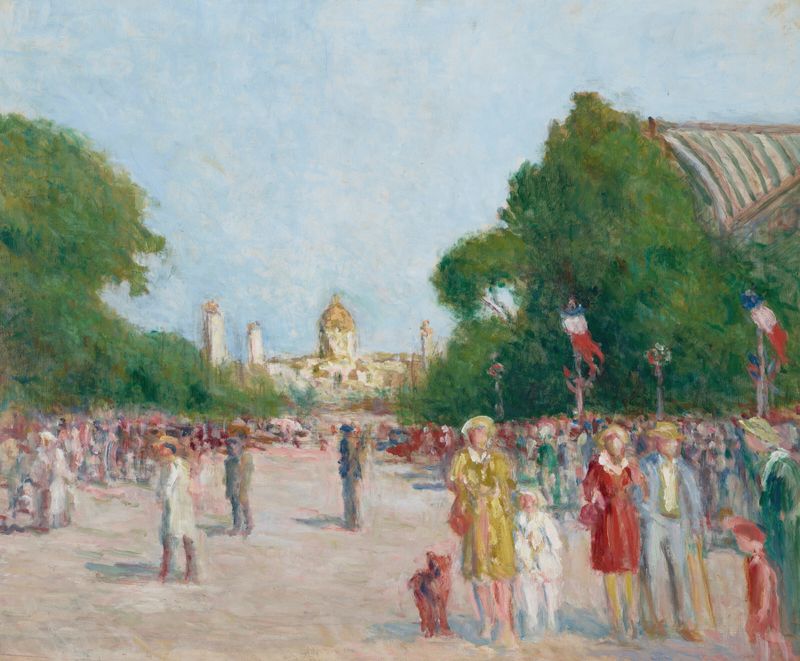
What if silence could speak through light? In Le Vert Gallant, the canvas resonates with an unspoken dialogue, where the vibrancy of nature intertwines with the whispers of human presence, crafting a realm of transcendence. Look to the left, where dappled sunlight filters through the foliage, illuminating the lush greens with a golden hue. The brushwork is dynamic yet tender, capturing the interplay of light and shadow that dances upon the figures and the grass beneath their feet. Notice how the artist employs a palette of verdant tones—emerald, jade, and lime—to evoke a sense of serenity, inviting viewers into this vibrant sanctuary where time seems to pause and breathe. Beneath the surface, contrasting elements emerge.
The figures, seemingly at ease, reflect both intimacy and isolation; their gentle gestures suggest connection, yet a subtle distance underlines a deeper yearning for connection with nature and each other. The way the light bathes the scene infuses it with a temporal quality, hinting at the fleeting moments of joy that shape our lives. This juxtaposition between warmth and distance creates an emotional tension that resonates long after the initial viewing. In 1926, amidst Paris’s artistic revival, Maximilien Luce painted this work as a response to both the evolving Impressionist movement and the modernist ideals of the time.
Living in Montmartre, he was surrounded by fellow artists and the vibrant culture that defined post-war France, where a renewed appreciation for leisure and nature flourished. This piece reflects not only his mastery of color and form but also a collective yearning for beauty and solace in a rapidly changing world.
More Artworks by Maximilien Luce
Browse all →
Le Quai Montebello Et La Colline Sainte-Geneviève
Maximilien Luce

Le Pont-Neuf, La Seine, Petit Bras
Maximilien Luce
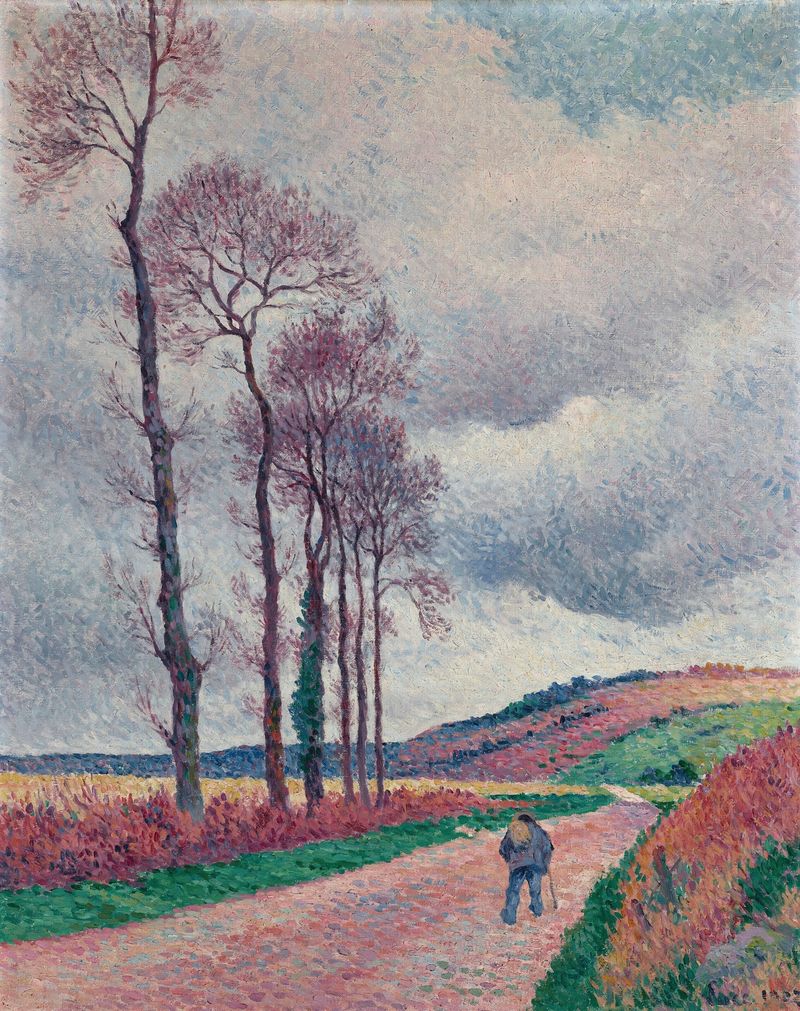
La route aux environs de Méréville
Maximilien Luce
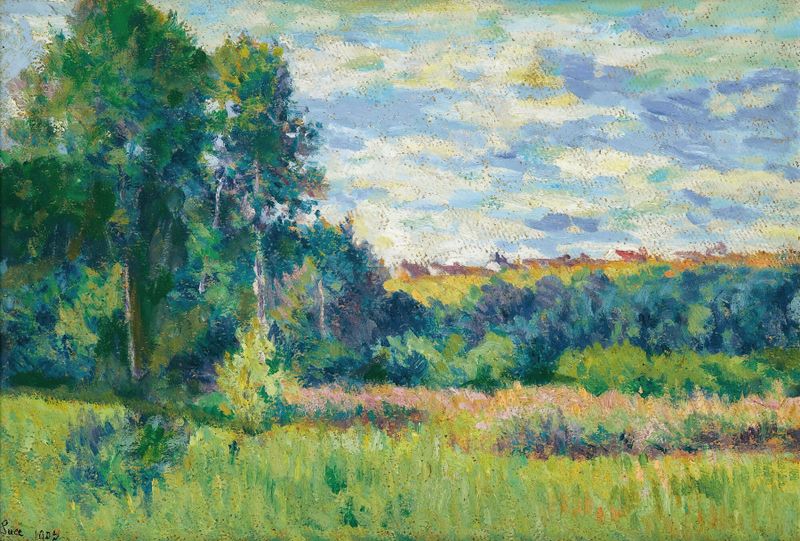
Paysage
Maximilien Luce
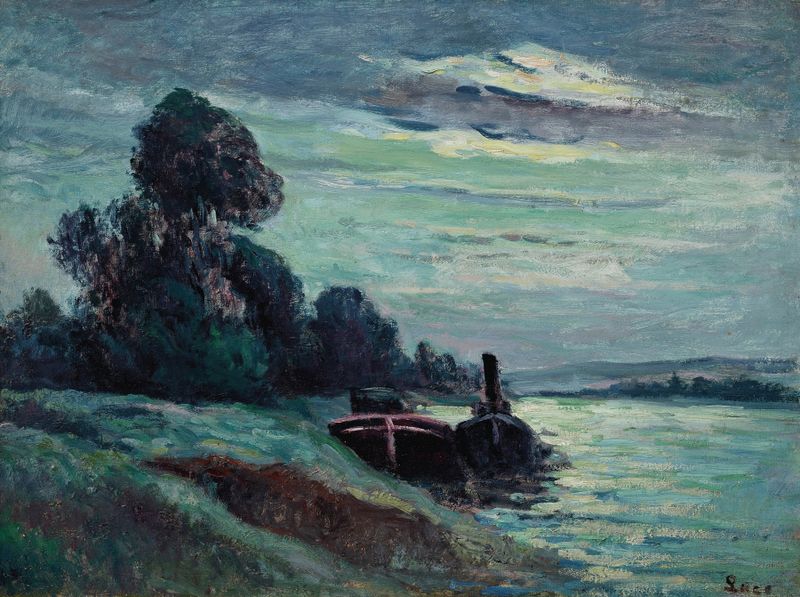
Péniches sur la Seine
Maximilien Luce

Notre Dame de Paris
Maximilien Luce
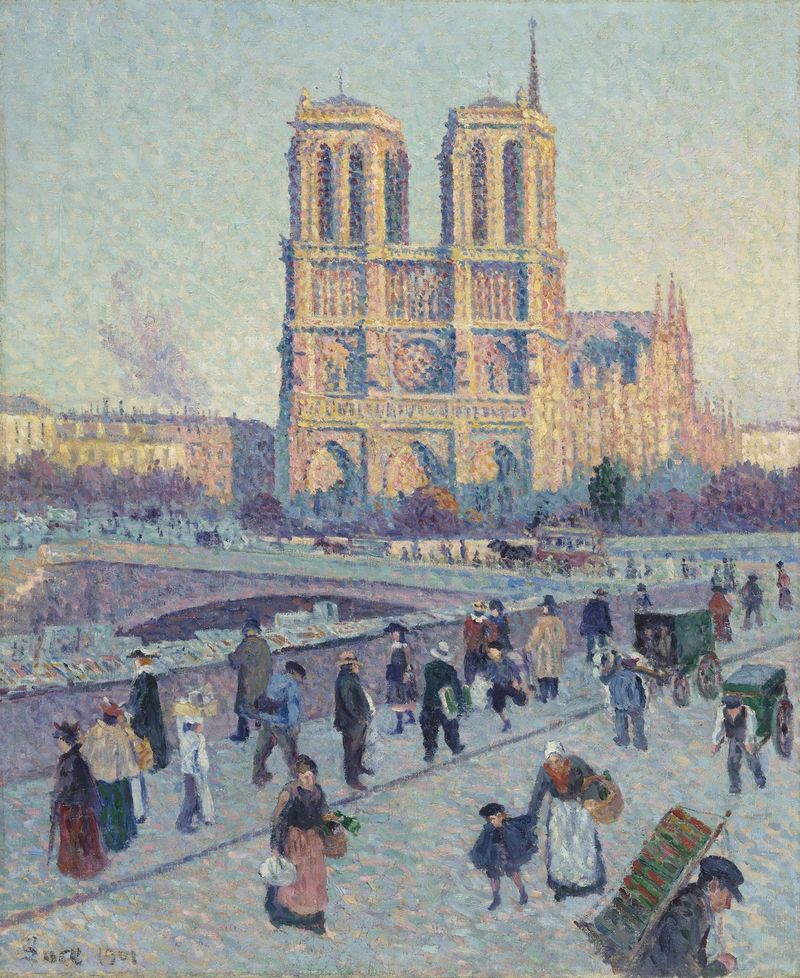
The Quai Saint-Michel and Notre-Dame
Maximilien Luce

La Seine au Pont Mirabeau
Maximilien Luce
L’avenue Winston-Churchill, Paris
Maximilien Luce

Paris, Le Quartier De Vaugirard
Maximilien Luce





