
Le Village de Fontaine avec vue sur le Néron — History & Facts
What if beauty was never meant to be finished? In the idyllic portrayal of a village, chaos and tranquility coexist in a delicate embrace, inviting contemplation about life’s impermanence. Look to the left at the intricate details of the village, where quaint homes punctuate the landscape. The brushstrokes are vigorous yet controlled, creating a vibrant texture that suggests movement and energy. Notice how the light dances across the rooftops, illuminating patches of earth and water with a soft glow, while shadows lurk in the corners, hinting at the underlying chaos that threatens to disrupt this serene tableau. Deeper observation reveals emotional tensions woven into the composition.
The contrast between the stillness of the village and the swirling clouds overhead evokes a sense of impending change. Jongkind’s choice of color—a blend of muted earth tones with splashes of vivid greens—captures the essence of nature’s unpredictability. The nearby river, reflecting the tumultuous sky, serves as a reminder that beauty can coexist with chaos, revealing both harmony and discord in life’s fleeting moments. In 1885, Jongkind painted this piece in the midst of an artistically rich environment in France.
He was establishing himself as a precursor to Impressionism, drawing inspiration from both the landscapes around him and the emerging artistic movements. As he grappled with the innovative techniques of his contemporaries, this work reflects his desire to capture not just a scene but the essence of emotion and atmosphere, marking a significant moment in his artistic journey.
More Artworks by Johan Barthold Jongkind
Browse all →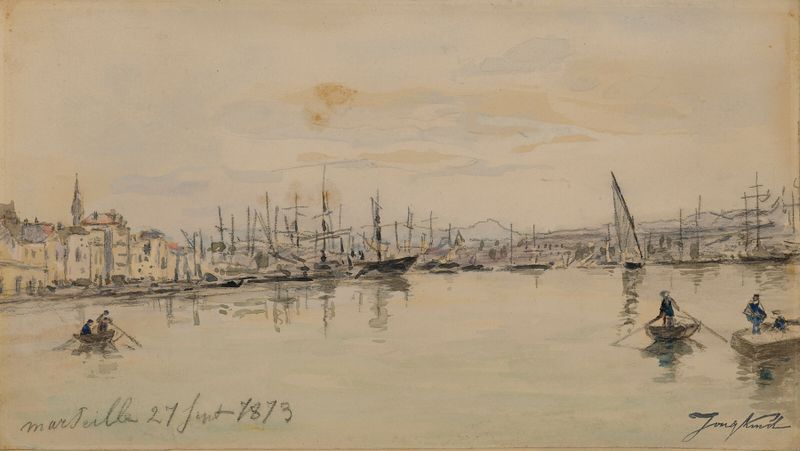
Le Port de Marseille
Johan Barthold Jongkind

Canal Saint-Martin
Johan Barthold Jongkind

Countryside near Brezins, between Grenoble and Vienne
Johan Barthold Jongkind

Notre-Dame vue du quai de la Tournelle
Johan Barthold Jongkind

Environs de Grenoble
Johan Barthold Jongkind

Clair de lune à Overschie (environs de Rotterdam)
Johan Barthold Jongkind

Port de Honfleur
Johan Barthold Jongkind
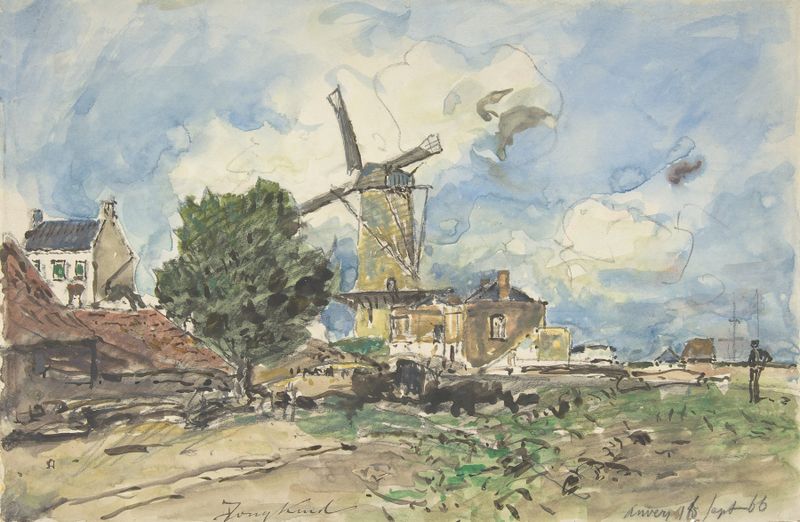
Wind Mill at Antwerp
Johan Barthold Jongkind

Le Havre
Johan Barthold Jongkind

The Church of Overschie
Johan Barthold Jongkind





