
L’Eglise d’Overschie — History & Facts
What if beauty was never meant to be finished? It lingers in the delicate brushstrokes and whispers through the soft hues captured in this serene landscape. Look to the left at the towering church spires, their silhouettes gracefully reaching toward an ever-changing sky. The gentle blues and whites blend seamlessly, suggesting an ephemeral moment just before twilight. Notice how the light bathes the foreground, illuminating a quiet village that seems to breathe under the watchful gaze of the church, inviting the viewer to pause and contemplate the stillness of the scene. Yet, beneath this tranquil surface lies a tension between the sacred and the mundane.
The church, with its steadfast presence, stands as a symbol of innocence and faith, while the scattered houses reflect the simple lives of those beneath its shadow. The contrast between the cool serenity of the sky and the warm earthiness of the village evokes a deep sense of longing—a connection to something greater, yet achingly distant. In 1857, Jongkind was living in France while navigating the evolving art scene that was beginning to embrace Impressionism. His work was influenced by the interplay of light and color, and L’Eglise d’Overschie reflects this transition from the traditional to the modern.
This painting captures a moment of introspection during a time when artists were seeking new ways to express their inner visions and the beauty of the world around them.
More Artworks by Johan Barthold Jongkind
Browse all →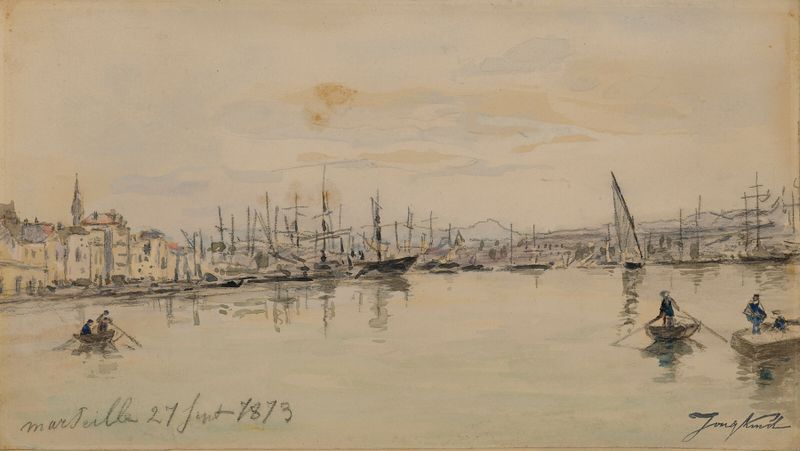
Le Port de Marseille
Johan Barthold Jongkind

Canal Saint-Martin
Johan Barthold Jongkind

Countryside near Brezins, between Grenoble and Vienne
Johan Barthold Jongkind

Notre-Dame vue du quai de la Tournelle
Johan Barthold Jongkind

Environs de Grenoble
Johan Barthold Jongkind

Clair de lune à Overschie (environs de Rotterdam)
Johan Barthold Jongkind

Port de Honfleur
Johan Barthold Jongkind
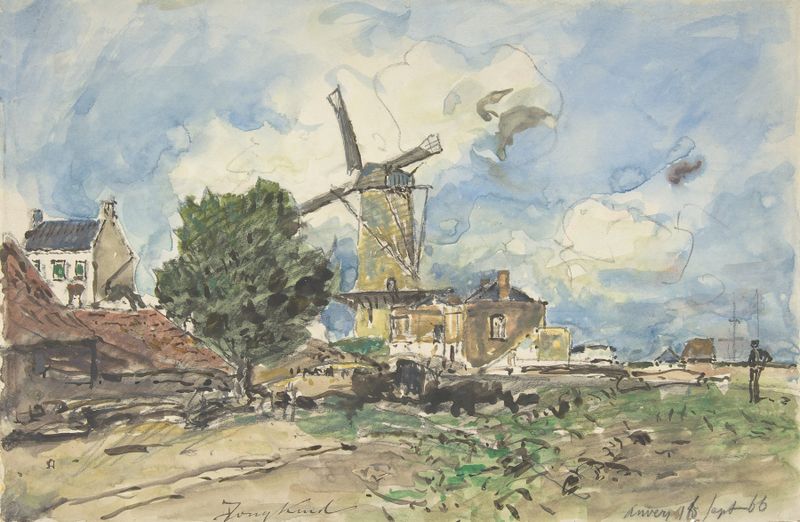
Wind Mill at Antwerp
Johan Barthold Jongkind

Le Havre
Johan Barthold Jongkind

The Church of Overschie
Johan Barthold Jongkind





