L’entrée De Giverny En Hiver — History & Facts
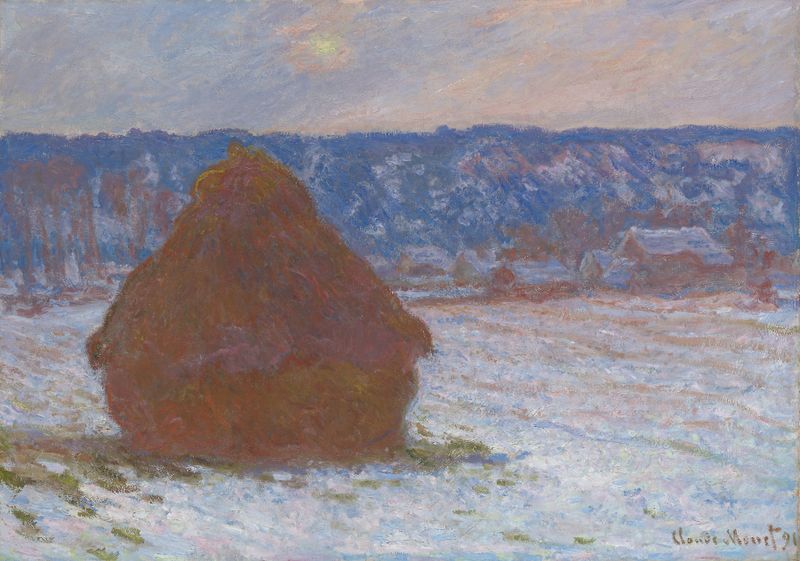
Where does light end, and longing begin? In L’entrée De Giverny En Hiver, the winter landscape whispers of beauty, yet beneath its serene surface lies an unsettling tension. Look to the left at the delicate interplay of cool blues and whites, where the snow-covered pathway beckons the eye. The gentle brushstrokes create an ethereal quality, as if the scene is suspended in time. Notice how the trees, their branches heavy with frost, frame the entrance to Giverny, leading us into a world both inviting and foreboding.
The soft glow of sunlight piercing through the clouds hints at warmth but simultaneously emphasizes the chill, drawing stark contrasts that evoke a sense of longing and unease. Beneath the tranquil veneer, the painting speaks to a deeper emotional landscape. The starkness of winter symbolizes both solitude and reflection, inviting viewers to contemplate the quiet violence of the season. The looming shadows and fragmented light suggest a struggle between warmth and cold, the promise of spring painfully distant.
It is as if Monet captures a moment caught between hope and despair, where the beauty of nature holds a sense of melancholy in its grasp. Created in 1885, this work emerged during a pivotal time for the artist, as he sought to capture the subtleties of light and atmosphere in his impressionistic style. Living in Giverny, Monet was deeply immersed in the changing seasons and their influence on his artistic vision. The late 19th century was marked by a growing appreciation for the natural world in art, yet it also experienced a tumultuous sociopolitical landscape, perhaps influencing the emotional depth found in this winter scene.